
 EN
EN  DE
DE The Decade That Defined Poker Part 3: 2007-2010

 PokerListings
-
 CoinPoker 150% up to $2000
18+ | Play Responsibly | T&C Apply
-
 Americas Cardroom 100% up to $2000
18+ | Play Responsibly | T&C Apply
-
 Ignition Poker 150% up to $1,500
18+ | Play Responsibly | T&C Apply
-
 Black Chip Poker 100% Welcome Bonus
18+ | Play Responsibly | T&C Apply
-
 Stake.US Poker $55 Stake Cash + 260,000 GC
18+ | Play Responsibly | T&C Apply

The end of the noughties saw strong field sizes continue, and legislation changing the landscape of the online poker industry. At the end of the previous article, 2006 saw the introduction of the Unlawful Internet Gambling Enforcement Act (UIGEA), changing the landscape of online poker over the course of the coming years. This led to several major operators exiting the U.S. market, the largest being PartyPoker, which had the highest U.S. traffic before its departure. With their exit, PokerStars and Full Tilt’s player base surged despite the legislation. The online scene in Europe was booming, and a new breed of poker superstars emerged.
A New Generation
Online poker birthed a new generation of players. With convenient access and the ability to play multiple tables simultaneously, players improved their skills more quickly as they could put in more reps. Training sites like BlueFire Poker and CardRunners emerged, featuring high-stakes pros providing their expertise in courses and videos, helping up-and-coming pros improve their game. Additionally, forums such as TwoPlusTwo attracted players looking to develop their skills by sharing hand histories with fellow players to get feedback on certain spots. Strategic developments occurred in this setting: light three-betting and continuation betting frequencies were commonly discussed topics on the forum, which took the game in a more tactical and aggressive direction.
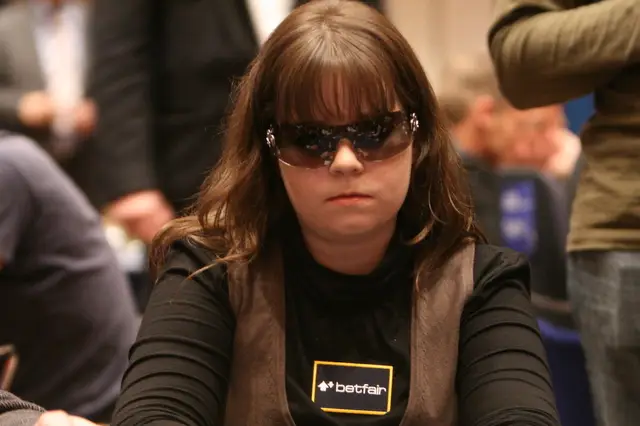
One of these players was Annette Obrestad, who took the online world and the live scene by storm. Obrestad was only 18 when she won her maiden WSOP Bracelet in the first WSOP Europe. The event was held in London in 2007, and Obrestad topped a strong field of 362 players in the £10,000 Main Event, taking home £1,000,000. This is a record that still stands today, and Obrestad remains the only player to win a WSOP Bracelet under the age of 21.
Before this success, she remarkably won a $4 180-Player Sit-and-go whilst playing effectively blind. She used a sticky note to cover her cards on the monitor, avoiding any peeking except for one critical hand, which featured a monotone spade flop. Stories of this success at such a young age inspired wannabee professionals around the world to take to the online felts to cut their teeth in the micro-stakes streets.
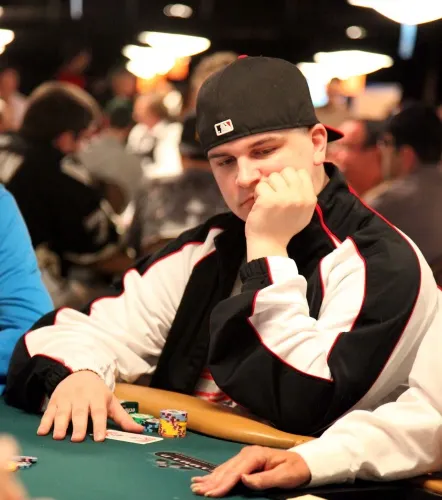
Poker became a young person’s game, as more youngsters took to the felt as online poker grew in popularity and accessibility outside of the United States. In the same year of Obrestad’s success, Steve Billirakis became the youngest player to win a WSOP bracelet in Las Vegas, as he won the $5,000 World Championship Mixed Hold’Em (Limit/No-Limit) for $536,287. Billirakis was 21 for just 10 days before banking over half a million dollars, and he followed up that success the following year by winning the $5,150 No Limit Hold’em – Championship Event for $208,885.

Satellite successes were still to be found on the biggest stage. Jerry Yang won his way to the Main Event through a $225 satellite at the Pechanga Resort and Casino in Temecula, California, his adopted hometown. Before winning the Main Event, he had four recorded cashes in events in California, and worked as a Psychotherapist and Healthcare worker, before going on to win $8,250,000 and the WSOP Bracelet. He came into the final table second-last in the counts, before ascending to the top after a marathon session.
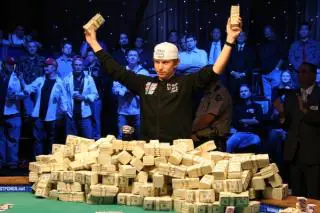
The trend of success for the younger player continued the following year, as Peter Eastgate, at age 22, became the youngest player to win the Main Event, taking home a staggering $9,152,416, and he qualified from a satellite held on Ladbrokes Poker. His record didn’t last long. The following year, a 21-year-old Joe Cada rose to the top of the pack to become the youngest Main Event champion. Eastgate and Cada were products of the online game, with both racking up healthy bankrolls on the online felts before taking their skills into the live arena. Cada was staked when he won the Main Event, with half of his winnings going to New York business partners Cliff Josephy and Eric Haber. This helped to give live poker a more professional look, as people like Joesphy and Haber saw players as potential vehicles for investment due to the potential for huge returns on a small stake.
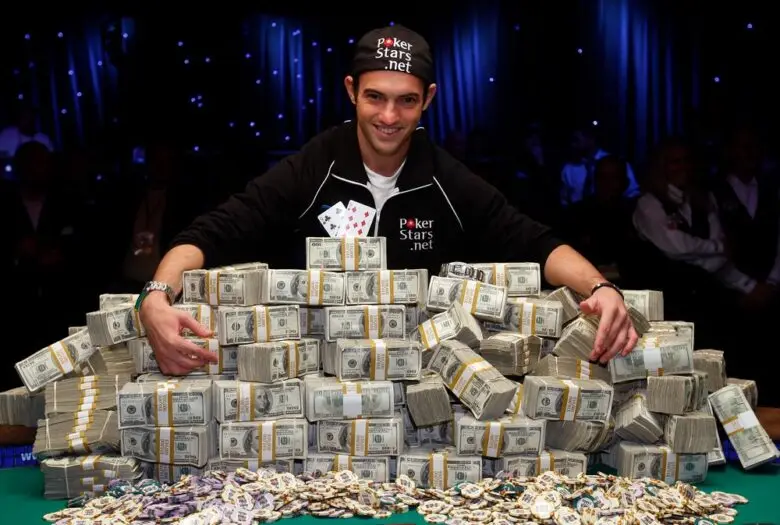
Main Event Winners 2007-2010
| Year | Winner | Prize (USD) | Field Size |
|---|---|---|---|
| 2007 | Jerry Yang (39) | $8,250,000 | 6,358 |
| 2008 | Peter Eastgate (22) | $9,152,416 | 6,844 |
| 2009 | Joe Cada (21) | $8,546,435 | 6,494 |
| 2010 | Jonathan Duhamel (23) | $8,944,138 | 7,319 |
TV Poker Takes Over
Many of the online crushers became celebrities as televised poker’s audience developed from a cult following to widespread viewership. Tom Dwan, Phil Ivey, Patrik Antonius, and many more showcased their skills on hit TV Shows High Stakes Poker and Poker After Dark. They became household names, boosted by their association with Full Tilt Poker. It perfectly showcased the range of characters that love the game and play at the highest levels. As well as the online grinders, there were members of the old school: The Godfather Doyle Brunson, Sammy Farha, Barry Greenstein, to name a trio.
The men responsible for this happening are, at least in this writer’s opinion, the two most influential men in modern poker: Mori Eskandani and Henry Orenstein. Their collaboration, which started back in 2004, was Poker Superstars. Eskandani had industry connections, production expertise, and a deep understanding of the game. He, like Duthie, utilised the hole-card camera, which debuted in 1999 on Late Night Poker. Orenstein was the man responsible for the hole-card camera that was used, having patented it in 1995. His story is worth an article alone. The Polish-born Orenstein moved to America after the Second World War and was a prolific creator, having filed 100 patents by the time of his passing in 2021. One of them changed poker forever.
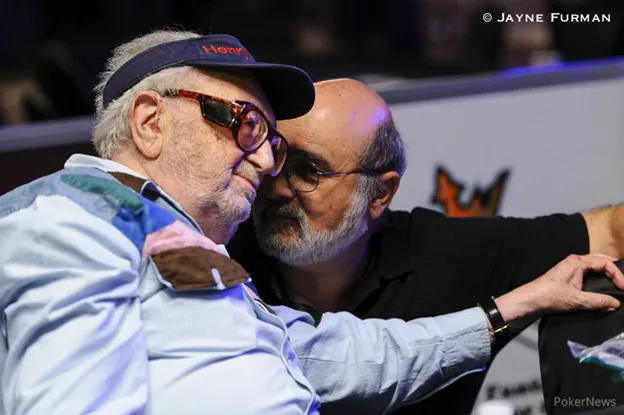
The games were set across a range of luxurious locations on the Las Vegas Strip: The Golden Nugget, The Palms, South Point Casino, and now the Aria have all hosted top cash-game players who sat around a table with bundles of cash, piles of chips, smiling, joking, raging, and tilting for our entertainment. Most emotions that could be expressed were on display across the hour-long runtime, with the added excitement of people playing for pots that could buy a house. Viewers loved it. And the players did too.
In Europe, the European Poker Tour showcased the region’s booming poker scene by broadcasting the Main Event, thereby attracting more players year on year. The slick production and glamorous venues added to the ballooning allure of live poker.
EPT Explodes
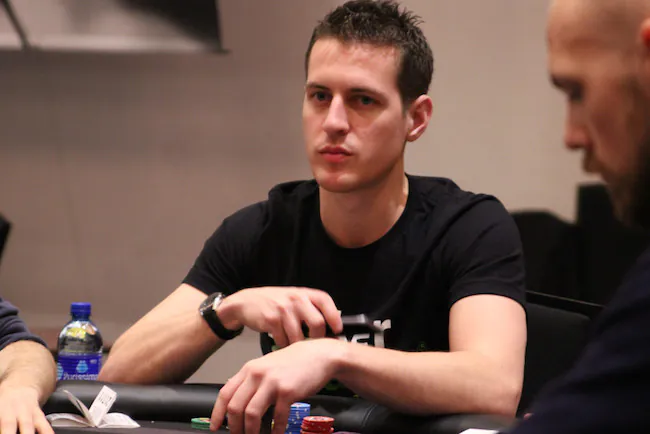
The EPT’s continued expansion and broadcasting helped grow the game’s appeal in Europe. Duthie was at the forefront of that operation, and coverage was shown on channels such as Eurosport. The shows would feature Main Event coverage and player interviews, helping develop a narrative for viewers to follow. EPT truly blossomed into the behemoth it is today, with massive prize pools and huge payouts.

Incredible stories emerged. In 2008, Mike McDonald became the youngest-ever EPT Champion at 18, a record that still stands today. He overtook then 19-year-old Jeff Williams, who won the 2006 EPT Grand Final in Monte Carlo for €900,000. Liv Boeree became the second female player to win the Main Event, banking a tasty score of €1,250,000.
| Year | Event | Winner | Prize |
|---|---|---|---|
| 2007 | EPT Grand Final Monte Carlo | Gavin Griffin | €1,825,010 |
| 2008 | EPT Dortmund | Mike McDonald | €933,600 |
| 2008 | EPT Grand Final Monte Carlo | Glen Chorny | €2,020,000 |
| 2009 | EPT Barcelona | Sebastian Ruthenberg | €1,361,000 |
| 2009 | EPT Sanremo | Constant Rijkenberg | €1,508,000 |
| 2009 | EPT Grand Final Monte Carlo | Pieter de Korver | €2,300,000 |
| 2010 | EPT Sanremo | Liv Boeree | €1,250,000 |
Scandal Central in the Online World
It wasn’t all sunshine and rainbows in the poker world, especially online. In September of 2007, players on forums noticed impossible win‑rates and bizarre betting patterns on a site called Absolute Poker. Investigations uncovered a “superuser” account that could see all players’ hole cards in real time, meaning the superuser accounts could never lose, as they always knew what their opponents had.

This resulted in customers being robbed of millions, and the cheating was traced to insiders within the company. Absolute Poker was forced to admit wrongdoing after community pressure, and trust in online poker took its first major hit. They weren’t the only company to be up to no good during this period.
Players on UltimateBet were on the receiving end of a similar experience. The cheating ran for years, far longer than the Absolute Poker scandal and at the helm was former Main Event Champion, Russ Hamilton. It is estimated that between $20-$50 million was taken from players, with Hamilton responsible for an estimated $22 million of these takings. Hamilton was based in Las Vegas, but the servers and company were offshore, allowing him to escape the US justice system through good geographic placement.

The Kahnawake Gaming Commission in Canada conducted investigations into both sites, and Hamilton was forced to pay a $1,500,000 fine, having confirmed the existence of the superuser account called “POTRIPPER”. UltimateBet’s former parent company, Excapsa Software, paid $15 million in a settlement to reimburse cheated players.
Hamilton was given a lifetime ban from all poker-related activities, and his banner was stripped from the walls of the Horsehoe, where Main Event Winners are displayed.
No one involved in the scandal was prosecuted.
Final Thoughts
Despite this, poker remained popular, both live and online. The decade birthed superstars, many of whom still perform at the highest level. With the continued growth of online poker in Europe, the EPT, televised poker, and the WSOP towards the beginning of the 2010’s perfectly set up poker to become the game it is today. The added accessibility of coverage and games at affordable prices meant the barrier to entry was low, which incentivised potential players to give the game a go. Online communities continued to grow in strength with forums and training sites popping up across the internet, most of which are still operational today.
If it weren’t for the boom of the 2000s, thanks to Moneymaker, Orenstein, and Eskandani, the game would not be in the place it is today.
That’s all for now, folks. Until next time.






Melden Sie sich an, um mitzudiskutieren
Teilen Sie Ihre Meinung und lesen Sie, was andere dazu sagen.