
 EN
EN  DE
DE The Decade That Defined Poker Part 2: 2004-2007

 PokerListings
-
 CoinPoker 150% up to $2000
18+ | Play Responsibly | T&C Apply
-
 Americas Cardroom 100% up to $2000
18+ | Play Responsibly | T&C Apply
-
 Ignition Poker 150% up to $1,500
18+ | Play Responsibly | T&C Apply
-
 Black Chip Poker 100% Welcome Bonus
18+ | Play Responsibly | T&C Apply
-
 Stake.US Poker $55 Stake Cash + 260,000 GC
18+ | Play Responsibly | T&C Apply

In continuation of last week’s article, which looked at the turn of the century and early 2000s, here is a look at the aftermath and the years that followed Chris Moneymaker’s canonical Main Event win. Without further introduction, here is what happened in the middle of the decade that defined poker in the modern age.
Beginning of the Boom
Moneymaker’s victory captured the imaginations of many, as evidenced by the massive field that entered the Main Event the following year, 2004. A staggering 2,574 entered the marquee Hold’em tournament of the series, a 4x increase on the year before. Here is a look at the progression from 2000 to 2007 in terms of entrants and prize pool.
| Year | Entrants | Prize Pool | First-Place Prize |
|---|---|---|---|
| 2000 | 512 | $5,120,000 | $1,500,000 |
| 2001 | 613 | $5,946,220 | $1,500,000 |
| 2002 | 631 | $5,931,000 | $2,000,000 |
| 2003 | 839 | $7,802,700 | $2,500,000 |
| 2004 | 2,576 | $24,224,400 | $5,000,000 |
| 2005 | 5,619 | $52,818,610 | $7,500,000 |
| 2006 | 8,773 | $82,512,162 | $12,000,000 |
| 2007 | 6,358 | $59,784,954 | $8,250,000 |
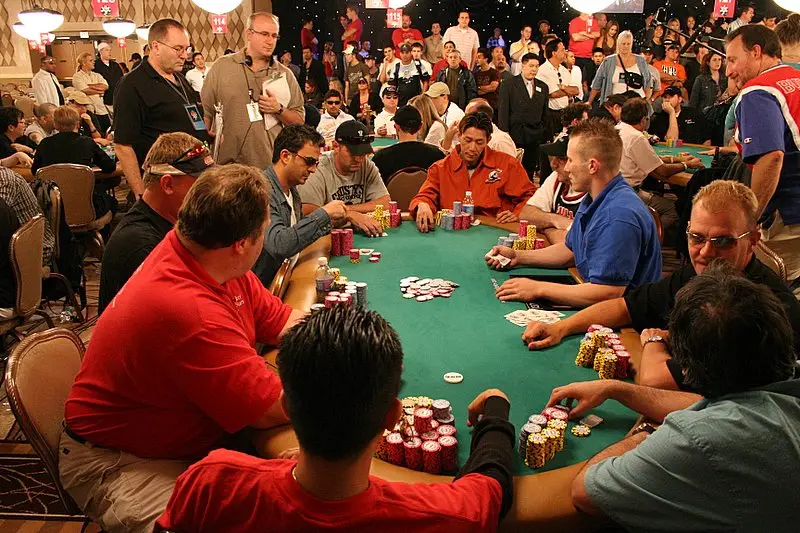
Many qualified through satellites, like Moneymaker did the year before. It was a huge driver, with PokerStars sending 315 players alone. The tournament was forced to extend to seven days, and two Day Ones were needed to accommodate the field inside the Horseshoe. Harrah’s Entertainment group bought the Horseshoe from the Binion family, mainly to acquire the WSOP brand. With the massive field size, the prize money went up. The first place was a staggering $5,000,000, and $3,500,000 was available for second place.

Ultimately, the Main Event went to the legendary Greg Raymer, who additionally won the $5,000,000 prize and a coveted Gold Bracelet. Raymer went by “Fossilman” at the tables because of his hobby of fossil collecting. The tournament concluded with David Williams bested in a cooler, as both had a full house when all the chips were in the middle. Raymer’s was superior as he had deuces full of eights, whilst Williams had deuces full of fives.
The 2024 WSOP was a success across the board, with numbers increasing in virtually every tournament. The appetite for the game was clearly insatiable. The next year was even bigger.
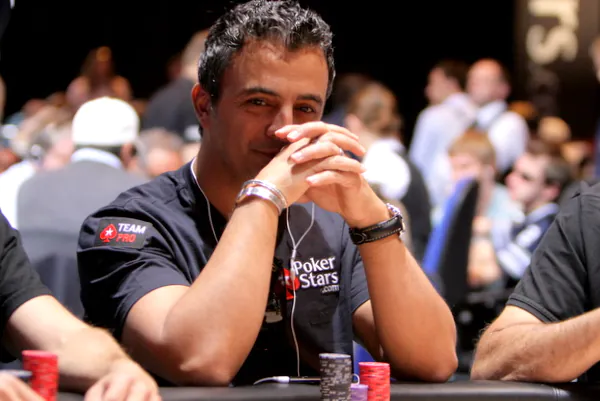
In 2005, a staggering 5,619 players took to the felt to emulate the likes of Raymer and Moneymaker, and even more money was on the line this time around, with $7,500,000 going to the eventual winner. That eventual winner was Australian Joe Hachem, who finished atop the payouts over a final table that featured Mike “The Mouth” Matusow and Andrew Black.
Meanwhile, in Europe, British Poker legend and innovator, John Duthie, in partnership with PokerStars, was launching their answer to the WSOP across the continent.
European Poker Tour Emerges
The European Poker Tour (EPT) hit the felt of Europe’s casinos for the first time in 2004. Duthie was a well-known figure in UK poker and had won £1,000,000 during a televised tournament called the Poker Million held on the Isle of Man in 2000.
Online poker was also exploding across Europe, and combined with the popularity of the WSOP and WPT TV show, it seemed natural to Duthie and PokerStars to set up a tour across the continent. Europe had strong poker scenes within countries like the UK and across Scandinavia, but not a unified continent-wide tour.
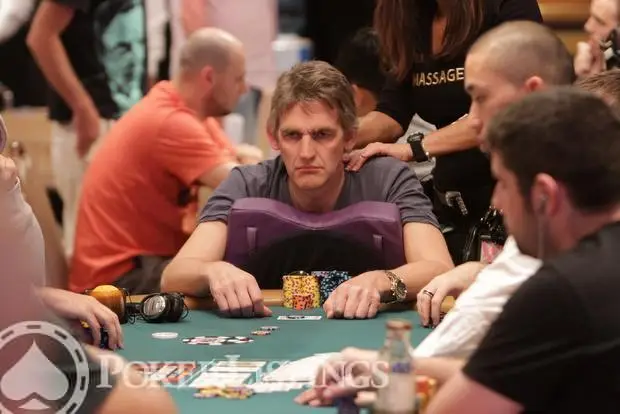
Duthie was the man to take this on, as he had worked on the TV production of Late Night Poker, which introduced the hole-card cameras in use today. This meant the EPT was designed and made for TV. Utilizing this technology, as well as including stories about the players in attendance, whether professionals or recreationals, gave the audience insight into their lives, which added to the appeal. This is why characters like Moneymaker are so important, as it shows that the everyman could win, and the broadcast of such successes added infinite appeal to the game. The culmination of these ingredients resulted in the premium, high-end production that we see on our screens today.
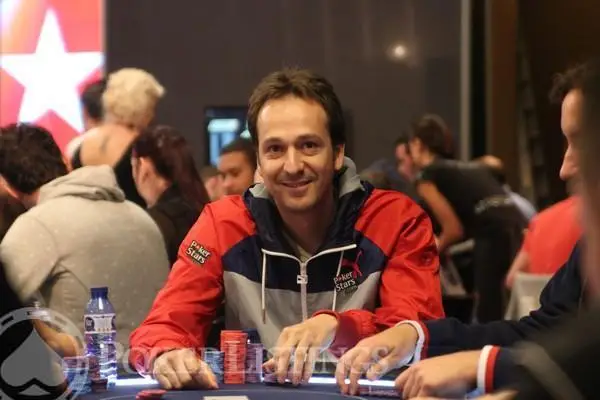
The first stops were held in Barcelona, London, Dublin, Copenhagen, and Monte Carlo. The first EPT Main Event was won at the beautiful Casino Barcelona by Sweden’s Alexander Stevic. He bested a field of 229 entrants in the €1,000 Barcelona Open, winning around €80,000. Despite the small payout compared to EPTs today, it proved to Duthie and PokerStars that the concept worked.
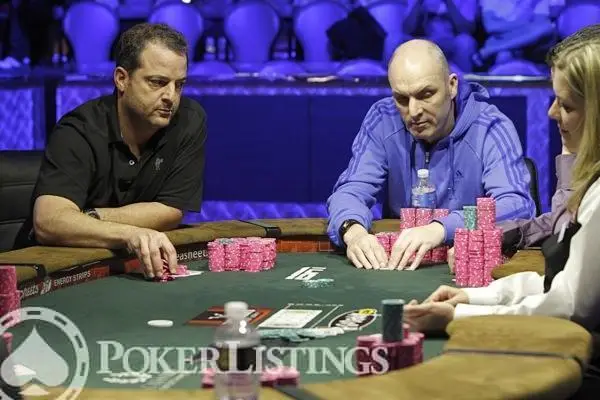
As the stops went on, the buy-ins increased at EPT. At the next stop in London, the trophy stayed in the UK as John Shipley took down the title at the Victoria Casino for £200,000. The buy-in was increased to £3,500, and the tournament attracted a field of 175. Two years earlier, Shipley finished seventh in the Main Event, which Robert Varkonyi won. Copenhagen saw a new record field come together, with 235 taking to the tables at Casino Copenhagen in a €4,000 event. Noah Boeken of the Netherlands was triumphant, taking home €150,000.
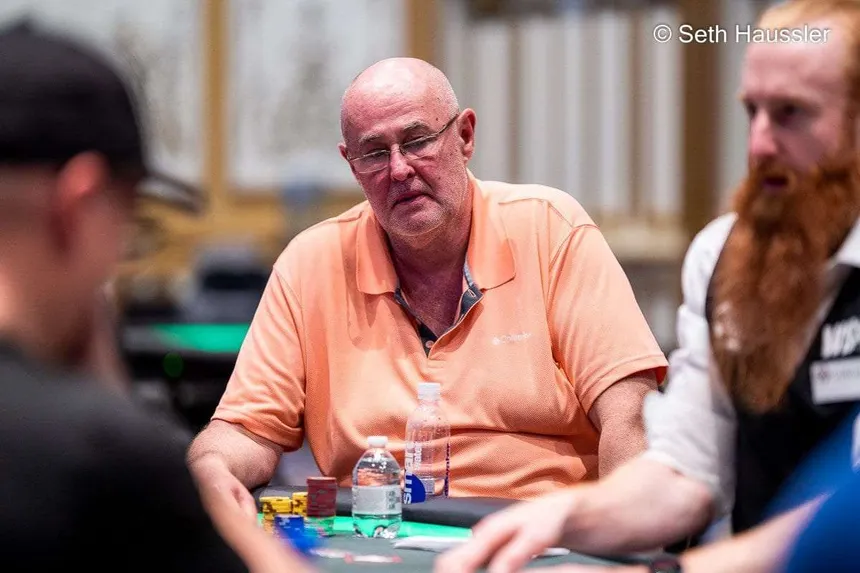
The EPT took things up a notch in terms of buy-ins at the 2006 Monte Carlo stop. The first €10,000 tournament was held at the world-famous Casino Monte Carlo, and was won by another Dutchman, Rob Hollink, for €635,000. Stevic again made the final table and finished third for €178,000, and Brandon Schafer was the runner-up, banking €350,000. These scores put the EPT on the map as the premier destination for poker players in Europe, and an option to be considered by players worldwide. This would be the biggest prize at the EPT until the event returned to Monte Carlo in 2006.
Poker Hits a New Peak
The 2006 Main Event saw a record 8,773 entrants take to the tables during the Summer in Las Vegas. It is reported that of that total, around 4,400 of those qualified online, with 1,600 getting into the tournament from PokerStars alone. One of those satellite qualifiers was Jamie Gold, a Television Producer and Talent Agent from Kansas City. He would go on to strike gold, winning the largest prize in poker history at the time of $12,000,000, catapulting him into the spotlight. Gold developed a reputation for his table talk during the event, getting opponents to fold when he was weak and call when he was strong. He did this by merging the truth with lies. In one case at the final table, Gold actually flashed one of his hole cards to an opponent (a face card), creating enough uncertainty that his opponent folded the better hand. He was never penalized. Below is an example of his table talk.
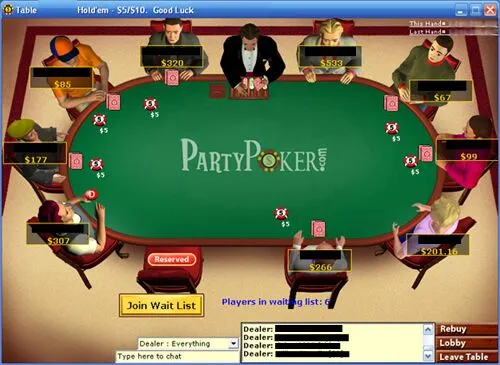
2006 saw record fields around the world, and poker’s popularity was at an all-time high. Online poker was booming, with PartyPoker, PokerStars, and Full Tilt the dominant forces. PartyPoker had most of the market share, with peak traffic often exceeding 100,000 players concurrently. PokerStars and Full Tilt were hot on its heels and were the nearest challengers to the UK-based company.
PartyPoker was known mainly for its tournament offerings, as was PokerStars, which held qualifiers to the WSOP and EPTS, as well as tournaments like the Sunday Million becoming mainstays in the schedules of online MTT grinders. With huge field sizes and frequent guarantees, it was clear that PokerStars and PartyPoker were the places to play tournaments during and throughout the online “Golden Age”.
Full Tilt was a different beast entirely, mainly focusing on the highest stakes cash games. Launched in 2004 by Ray Bitar, who served as CEO, in tandem with professional players Howard “The Professor” Lederer, Chris “Jesus” Ferguson, Andy Bloch, Mike Matusow, Jennifer Harman and Rafe Furst. They recruited the biggest names in the poker world to act as ambassadors for the brand, players like Phil Ivey, Tom “Durrrr” Dwan, Patrik Antonius and Phil Galfond being just some of the notable names.
They added to the site’s appeal and were shown during Full Tilt-sponsored televised cash games such as the Million Dollar Cash game. Online players could also rail their favourite high-stakes regs, as the site allowed players to observe the sessions of the Full Tilt pros. This helped birth the legendary status of players like Dwan, Viktor “Isildur1” Blom, Antonius and Ivey. As well as being a spectator, players could compete with the pros on the Full Tilt Pro tables. The site attracted millions of players, aided by the players on their roster and aggressive marketing and advertising campaigns.
However, it was all to change for PartyPoker. With its competitors growing in popularity at a relentless pace, PartyPoker withdrew from the US market after the passing of a game-changing piece of legislation in October 2006. The Unlawful Internet Gambling Enforcement Act (UIGEA) of 2006 had a huge impact on online poker in the U.S., and its effects rippled through sites like Full Tilt Poker, PokerStars, and others. This was part of the Safe Port Act of the same year, and it made it illegal for banks and payment processors to process transactions related to “unlawful internet gambling.” It didn’t criminalize players, but it changed the status quo of online poker in the US forever.
What’s Next?
To find out more about how the UIGEA affected online poker in the states, as well as the defining poker moments of the late 2000s, stay tuned to pokerlistings.com for the continuation of The Decade That Defined Poker, as well as much more from across the poker world.
That’s all for now, folks, until next time.
PokerListings Popular Articles

João Simão is Brazil’s biggest winner abroad. So why isn’t he a star at home?
How Do You Know When to End a Poker Session?
Does Stop-Win Have Place in Online Poker: Discussion




Log in to join the discussion
Share your thoughts and see what others have to say.