
 EN
EN  DE
DE How Much Is a Queen Worth in Blackjack: Card Values & Strategy

 PokerListings
-
18+ | Play Responsibly | T&C Apply
-
 ZumbaCards Casino 5 Free Cards
21+ | Play Responsibly | T&C Apply
-
 A1 Social Casino 1,000,000 GC
18+ | Play Responsibly | T&C Apply
-
 CrashDuel Casino 100% up to 200,000 GC + 50 SC
18+ | Play Responsibly | T&C Apply
-
 UpUp Casino 1,000,000 GC + 2SC
21+ | Play Responsibly | T&C Apply


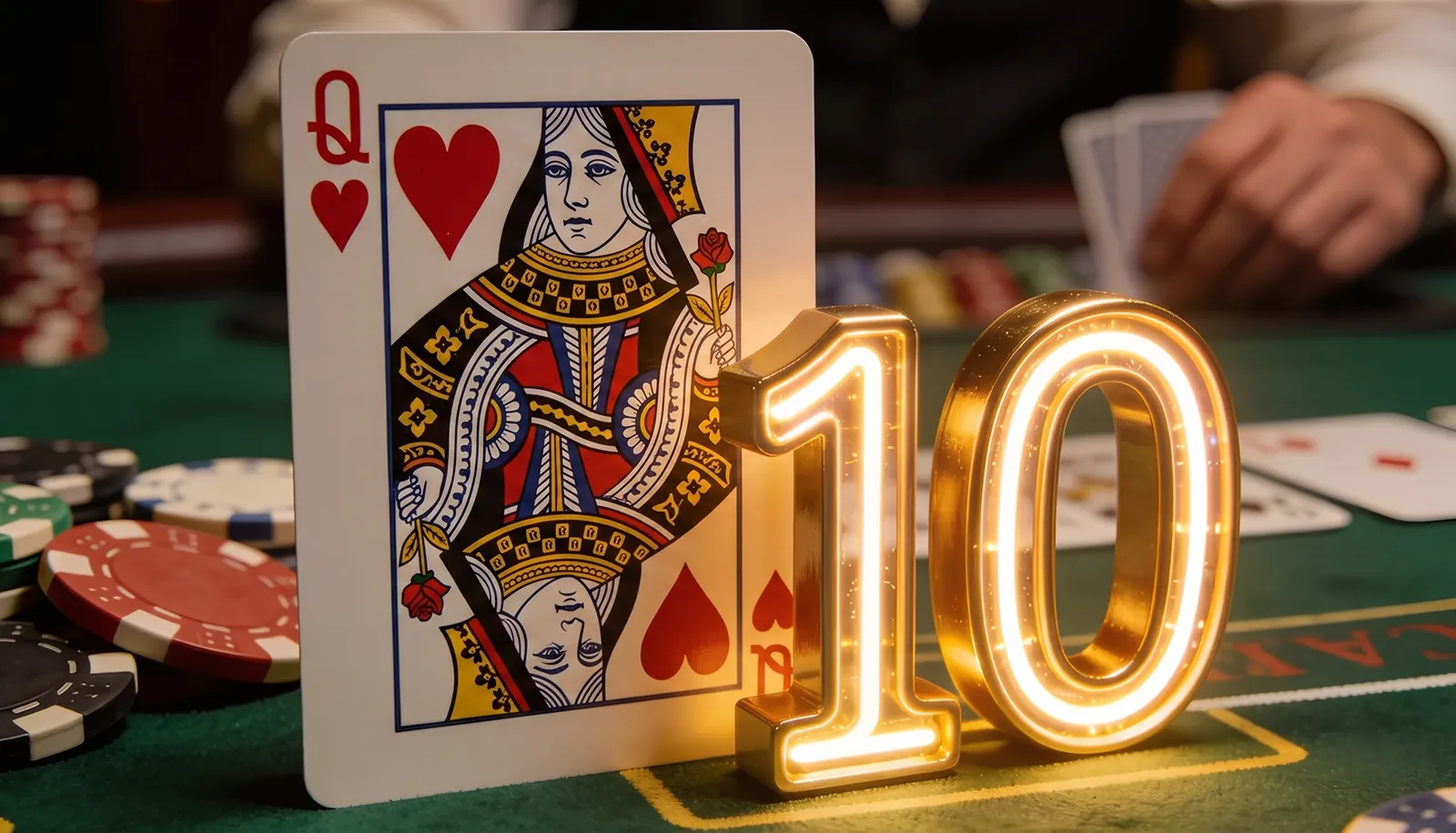
A Queen is worth 10 points in blackjack. This rule is absolute and applies across all standard variations, whether you play in Las Vegas, a European card room, or on an online casino platform. As a face card, the Queen shares this 10-point value with the Jack and the King, meaning all three hold identical weight regardless of suit.
The only rare exception occurs in the “Lucky Ladies” side bet market, where specific combinations, such as a pair of Queens of Spades, can trigger escalating bonus payouts.
Why Face Cards Carry a 10-Point Value
Assigning 10 points to Jacks, Queens, and Kings is a deliberate design feature that drives the mathematical structure of blackjack. In a standard 52-card deck, 16 cards carry a 10-value: the four numeric 10s and the 12 face cards. This high concentration of 10s shapes basic strategy, dictates player decisions, and directly influences the house edge.
Blackjack Card Values At a Glance
While the Queen, Jack, and King are locked at 10 points, other cards follow different mechanics:
| Card | Point Value | Notes |
|---|---|---|
| 2 through 9 | Face value (2–9) | Value equals the pip number |
| 10 | 10 | Numeric 10-value card |
| Jack | 10 | Face card; equal to Queen and King |
| Queen | 10 | Face card; equal to Jack and King |
| King | 10 | Face card; equal to Jack and Queen |
| Ace | 1 or 11 | Flexible value (depends on hand texture) |
Core Rules & Mechanics
The main objective in blackjack is straightforward: build a hand total closer to 21 than the dealer’s without going over. Knowing how card values interact is the minimum entry point for sound play.
The game runs on a strict set of actions and rules that govern both player options and dealer behavior:
- Hit: Request an additional card to increase your hand total.
- Stand: Keep your current hand and end your turn.
- Bust: Exceed a total of 21, resulting in an automatic loss.
- Push: Tie with the dealer, returning the player’s wager.
- Dealer Rules: In most standard games, the dealer must hit on any total of 16 or less and stand on 17 or more.
A common misconception among beginners is that a King in blackjack outranks a Queen. It does not. All face cards are mathematically identical.
The Power of the Ace
The Ace is the most flexible card in the deck, counting as either 1 or 11 depending on what benefits your hand.
When an Ace is valued at 11 without pushing the total over 21, the hand is called a “soft” hand (e.g., Ace + 6 = Soft 17). It is called soft because it cannot bust on the next hit. If you take a card and go over 21, the Ace automatically reverts to a value of 1, turning into a “hard” hand.
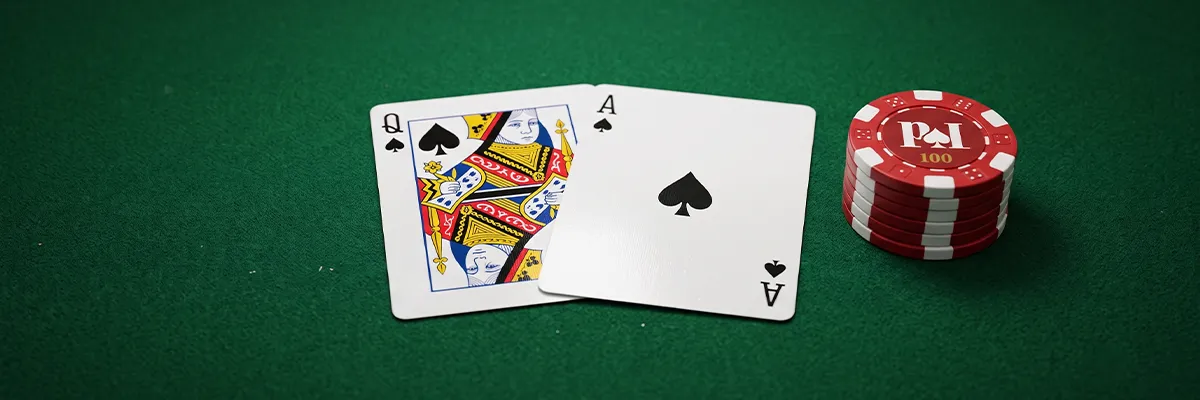
The most powerful application of this flexibility involves the Queen: pairing an Ace with a Queen produces a Natural Blackjack (a two-card 21), which is the strongest hand in the game and typically triggers a higher payout.
Key Hand Scenarios
Understanding the math is one thing; applying it under live table conditions is another. The following situations break down the most critical tactical hands involving a Queen.
Queen + Ace: Natural Blackjack
An opening deal of a Queen and an Ace yields a Natural Blackjack, giving you a perfect 21. This hand wins automatically unless the dealer also holds a blackjack, which results in a push.
While the standard payout sits at 3:2 (turning a $100 wager into a $150 profit), many modern tables, particularly single-deck setups, have downgraded this to 6:5. This shift returns only $120 on that same $100 bet, significantly widening the house edge. Always check the table rules placard before buying in.
Pair of Queens: Split or Stand?
Holding two Queens gives you a hard 20, one of the most formidable hands in blackjack. Perfect basic strategy is clear: always stand. Splitting a pair of 10-value cards is a fundamental mathematical blunder for several reasons:
- A hard 20 wins the overwhelming majority of rounds, as the dealer must hit precisely 21 to beat it.
- Splitting fragments a dominant position into two separate, weaker hands starting at 10. Statistically, you are far less likely to land a 20 or 21 on either split hand than you are to win with the original 20.
- Mathematical probability models consistently show that standing on a 20 yields a higher long-term expected value against any dealer upcard.
Queen + Low Cards: Navigating the Stiff Zone
When a Queen pairs with a low card (2 through 6), you land in the 12 to 16 range, frequently called the “stiff zone.” These are the most grueling hands to navigate: standing risks losing to a dealer’s pat hand, while hitting carries a high risk of busting.
Basic strategy cuts through this tension by dictating action based entirely on the dealer’s upcard. For instance, if you hold a Queen-6 for a hard 16:
- Hit if the dealer shows a 7 through an Ace.
- Stand if the dealer shows a weak upcard from 2 through 6, forcing the house to take the risk of busting.
Soft vs. Hard Totals with a Queen
Misreading a hand’s texture at a live table triggers immediate, costly errors. The presence of an Ace completely changes your tactical options:
- Soft Hands: Contain an Ace valued at 11. For example, Ace-6 is a Soft 17. If you hit and draw a Queen, your total does not become 27; the Ace instantly downshifts to a value of 1, reconfiguring your hand into a Hard 17.
- Hard Hands: Feature a rigid total with no flexibility. A Queen paired with a 9 is a Hard 19. Your score is locked, and hitting will cause an automatic bust.
Basic Strategy Decisions with a Queen
Basic strategy is the mathematically optimal framework for every decision at the table. Calculated through permutations of player totals against dealer upcards, these rules minimize the house edge over the long term. When a Queen is in play, basic strategy removes all guesswork.
Doubling Down Rules
Doubling down allows you to place a second wager equal to your original bet in exchange for exactly one additional card. This mechanic is highly profitable when you hold a hard 10 or 11 against a weak dealer upcard, as drawing a 10-value card secures a dominant total with zero bust risk.
However, when a Queen is part of your starting hand, doubling down is almost never the correct play. Since the Queen already contributes 10 points, your total is either too high for an extra card (such as a hard 20 with a pair of face cards) or requires multiple hits to improve safely. Even if a table offers a “Double for Less” option, the underlying math remains unchanged: never double down on a hard 20, as standing is the only sound move.
Splitting Pairs: Why Queens Stay Together
While blackjack rules dictate that you should always split Aces (to build two powerful starting totals) and always split 8s (to escape a hard 16), Queens sit on the exact opposite end of the spectrum.
A hard 20 is far too valuable to break up for speculative gains. Splitting them forces you to trade a near-guaranteed winning hand for two weaker starting positions of 10 each. Statistically, the long-term expected value of standing on a 20 always outpaces the returns of splitting them, regardless of the dealer’s upcard.
Insurance and Surrender Mechanics
Insurance and Surrender are two distinct risk-management options where the presence of a Queen drastically alters your expected value:
- Insurance: Offered when the dealer shows an Ace. You wager up to half your original bet that the dealer’s hole card is a 10-value card, paying out at 2:1. Since 10-value cards (including Queens) make up only roughly 31% of the deck, this bet carries a steep negative expected value and should always be declined by basic strategy players.
- Surrender: This option allows you to forfeit half your wager and exit the hand before drawing cards. When the dealer shows a Queen, they hold one of the strongest positions at the table, as their hidden card is highly likely to give them a total of 20. If you are dealt a weak hand like a hard 16 against a dealer Queen, surrendering is the best mathematical play to preserve your bankroll.
Facing a Dealer Queen
A dealer Queen upcard represents an immediate threat. Statistically, the house is heavily favored to finish with a pat 20, as any hidden 10-value card completes their hand.
When facing a dealer Queen with a stiff total between 12 and 16, basic strategy requires aggressive play. You must hit, accepting the risk of a bust, because standing on a low total against a projected 20 is a guaranteed losing strategy over time.
Multi-Card Soft Hands
While an opening Queen and Ace signify a Natural Blackjack, a Queen can also enter the equation mid-hand to alter its texture. For example, if you start with an Ace and a 3, you hold a Soft 14. If your next hit is a Queen, adding 10 points would push your total to 24 if the Ace remained valued at 11. To prevent a bust, the Ace automatically shifts to a value of 1, converting your hand into a Hard 14. Recognizing this mid-hand revaluation is essential for shifting your strategy from soft-hand flexibility to hard-hand caution.
The Queen’s Role in Card Counting
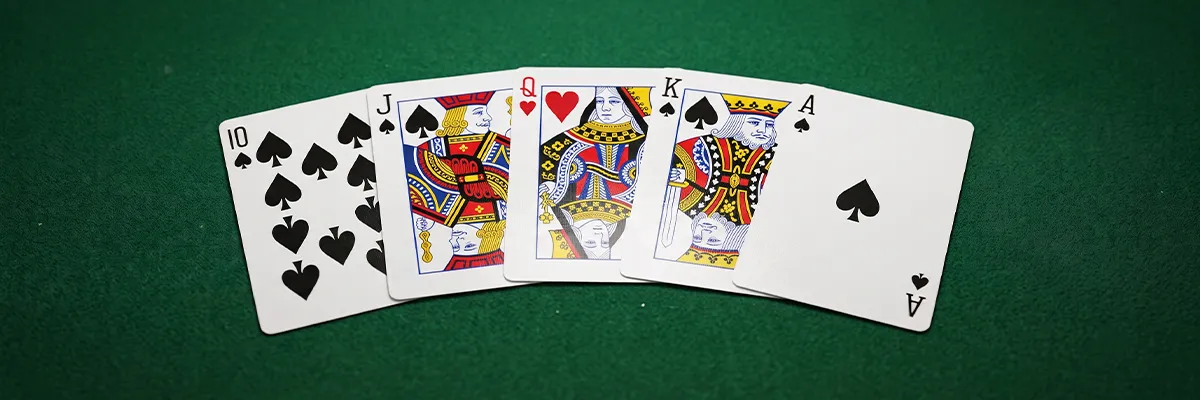
For players who have mastered basic strategy, card counting is the logical next step to gain an edge over the house. While casinos heavily discourage the practice and reserve the right to ask counters to leave, tracking card textures using your memory alone is entirely legal.
In the widely used Hi-Lo system, the Queen operates as a high-value asset. The system tracks the ratio of high-to-low cards by assigning a specific mathematical value to three distinct groups:
- Low Cards (2–6): Valued at +1. Their removal from the shoe is highly favorable for the house.
- Neutral Cards (7–9): Valued at 0. These cards do not alter the strategic landscape.
- High Cards (10, J, Q, K, A): Valued at -1. This group includes the Queen.
When a Queen hits the felt, the running count drops by one. Consequently, a high positive running count means a disproportionate number of low cards have already been cleared, leaving the remaining shoe rich in Queens, Kings, and Aces.
How a Queen-Heavy Deck Shifts the Odds
A shoe packed with remaining 10-value cards fundamentally alters table dynamics in favor of the player. Because dealers must hit on any total of 16 or less, a Queen-rich deck heavily increases the house’s probability of busting. Players can exploit this mathematical advantage by scaling up their bet sizes and modifying their strategy, such as standing on stiff totals when the dealer is highly likely to break.
Even without utilizing a formal counting system, intermediate players can practice basic deck awareness. Observing how many face cards have appeared in recent rounds provides an informal gauge of the remaining deck texture. This tracking is particularly effective in single-deck or double-deck games, where the early appearance of multiple Queens drastically reduces the remaining 10-value density.
Common Blackjack Queen Myths & Facts
| Myth | Fact |
|---|---|
| The Queen’s value fluctuates depending on the game variant. | The Queen equals 10 points across all standard blackjack variations, including European Blackjack, Spanish 21, and Blackjack Switch. |
| Queens possess high-ranking power similar to poker. | Blackjack uses a purely point-based mechanic. A Queen’s value is strictly numerical and has no mechanical connection to poker hand rankings. |
| Queens trigger payout bonuses in all blackjack side bets. | Queens only hold elevated significance in the “Lucky Ladies” side bet. In standard gameplay and other side markets, they function as ordinary 10-point cards. |
Blackjack Variants: How the Queen Behaves Across Different Formats
While a Queen maintains its baseline 10-point value in virtually every standard blackjack variant, the surrounding rule ecosystems change. Whether you are exploring virtual tables at a top-tier Non Gamstop Casino UK site or playing at a brick-and-mortar establishment, these structural shifts directly influence how you play hands containing a Queen.
Spanish 21
Spanish 21 utilizes a 48-card deck where all four numeric 10-pip cards are completely removed, though all face cards, including Queens, remain. Because the numeric 10s are gone, remaining face cards represent a larger overall percentage of the 10-value cards left in the shoe. To offset this reduced 10-density, the game introduces highly player-favorable rules: player 21s always win against dealer 21s, doubling options are highly flexible, and specific multi-card combinations trigger automatic bonus payouts.
European Blackjack
Typically dealt from a two-deck shoe, European Blackjack’s defining characteristic is its no-hole-card rule. The dealer receives only a single face-up card initially, drawing their second card only after all players have finalized their hands. When the dealer shows a Queen, you must navigate your strategy blindly, as you cannot be certain if a hidden card will automatically secure them a pat 20. On the plus side, the compact two-deck format makes informal card tracking significantly easier compared to standard eight-deck shoes.
Blackjack Switch
In this variant, you play two hands simultaneously and are permitted to swap the second card of each hand before making any hitting or standing decisions. If one hand pairs a Queen with a weak low card, the switch mechanic allows you to reassign that Queen to the other hand to optimize your starting totals. The card’s foundational value remains 10, but the unique ability to shift it between hands adds a distinct tactical layer.
Free Bet Blackjack
This variant allows players to split or double down on eligible totals for free, with the casino covering the cost of the secondary wager. Despite the lack of financial risk, splitting a pair of Queens remains a massive mistake. The logic is entirely mathematical: a hard 20 is a dominant starting hand, and eliminating the financial penalty does not change the probability model that makes breaking it up a losing long-term decision.
The Queen in Side Bets: Lucky Ladies and Rummy
The Lucky Ladies side bet is one of the few instances where a Queen holds value beyond its standard 10-point assignment. This wager pays out when your first two cards total exactly 20, with payouts scaling based on the specific texture of the hand:
- Any unsuited total of 20 sits at the lowest payout tier.
- A suited 20 triggers a higher return.
- A matched pair of identical Queens yields an elevated prize.
- A pair of Queens of Spades unlocks the maximum jackpot, often paying 125:1 or higher depending on table rules.
Other side options, like the Rummy bet, award payouts if your initial cards form a flush, run, or pair. Here, the Queen simply acts as a standard card to complete the combination. Keep in mind that all side bets carry a substantially higher house edge than the main game and should be treated strictly as volatile entertainment rather than core strategy.
Shoe Size Matters: How Deck Counts Affect the Queen
Standard casino blackjack tables typically utilize anywhere from one to eight decks, with six-deck shoes serving as the industry standard. While the number of decks in play does not alter the Queen’s proportional frequency (which stays locked at four cards per deck, or roughly 7.7% of the total shoe), the absolute volume scales significantly:
- 1 Deck: 4 Queens total
- 2 Decks: 8 Queens total
- 6 Decks: 24 Queens total
- 8 Decks: 32 Queens total
Fewer decks drastically favor basic strategy players and card counters. In a single-deck game, the removal of just two or three Queens causes massive, immediate shifts in deck composition and probability. In an eight-deck shoe, those same discarded Queens barely dent the remaining distribution, making card tracking far more complex.
Common Arithmetic Pitfalls at the Table
Even seasoned players can fall victim to miscalculations under the fast pace and distractions of live casino play. Two common errors involving the Queen frequently compromise player returns:
Miscounting Multi-Card Totals
While adding a single card to a Queen is simple, math errors spike when a hand stretches to three or more cards. For example, catching a Queen after starting with a 4 and a 5 results in a hard 19. Misinterpreting this under pressure as an 18 can lead to a disastrous, unnecessary hit. Always take a brief, deliberate pause to verify your exact total before signaling the dealer.
Mishandling Mid-Hand Ace Revaluations
Failing to reprocess the Ace’s value in multi-card hands is one of the most frequent mistakes at the table. If you hold an Ace and a 6 (Soft 17) and draw a Queen, your score is not 27. The Ace must immediately downshift to 1, solidifying your total as a Hard 17. Failing to recognize this shift can cause you to incorrectly hold onto soft-hand hitting strategies when you are actually holding a rigid, unyielding hard total.
Quick Reference: Master Queen Strategy
The following summary grid condenses the core Queen scenarios and their mathematically correct actions into an easy-to-read reference chart.
| Scenario | Queen’s Role | Correct Action |
|---|---|---|
| Queen + Ace (first two cards) | Contributes 10 to Natural Blackjack | Automatic win (no decision needed) |
| Queen + any 10-value card | Forms hard 20 | Always stand |
| Pair of Queens | Hard 20 | Never split; stand |
| Queen + low card (hard 12–16) | Anchor card; total depends on second card | Consult basic strategy by dealer upcard |
| Dealer shows a Queen | Dealer threat (likely 20 if hole card is 10-value) | Play conservatively; follow basic strategy dealer-10 column |
| Spanish 21 | 10-point face card retained in 48-card deck | Same value; apply Spanish 21 basic strategy |
| Lucky Ladies side bet | Special significance for paired Queens | Optional side bet; higher house edge applies |
| Ace + X + Queen (multi-card soft hand) | Forces Ace to revert to 1 (hard hand) | Recalculate total; apply hard hand basic strategy |
Final Thoughts: Building a Solid Strategic Foundation
Mastering the Queen’s 10-point value is a foundational step in blackjack strategy. This single rule governs everything from a Natural Blackjack to the rigid mechanics of a hard 20. Moving from basic table awareness to live-table execution requires understanding how this value interacts with different hand textures, dealer upcards, and game variations.
To build a sustainable edge, memorize the basic strategy chart for your specific game variant, use free online trainers to build muscle memory, and audit the table rules (such as deck counts and payout ratios) before risking any chips. In live blackjack, mastering these core fundamentals is what separates players who preserve their bankroll from those who exit early.
Frequently Asked Questions
How much is a Queen worth in blackjack, and does it differ from other face cards?
A Queen is worth exactly 10 points. It is functionally identical to Kings, Jacks, and numeric 10-pip cards. Suit and rank order have no impact on scoring in standard blackjack variants.
Can you split a pair of Queens?
Technically yes, but basic strategy universally advises against it. A pair of Queens yields a hard 20, which is an elite winning hand. Splitting forces you to abandon a dominant position for two speculative hands starting at 10.
What does a Queen plus an Ace equal?
An opening deal of a Queen and an Ace forms a Natural Blackjack (a two-card 21). This hand wins automatically and typically pays 3:2, unless the dealer also holds a blackjack, which results in a push.
How does the Ace’s dual value work when paired with a Queen?
On the initial deal, Queen-Ace is a fixed Natural 21. In multi-card sequences, if a Queen is dealt to a hand containing an Ace, and counting that Ace as 11 would push the total over 21, the Ace automatically converts to a value of 1 to prevent a bust.
When should you double down with a Queen?
Almost never on your starting hand. A pair of cards containing a Queen and another 10-value card is a hard 20, where standing is the only correct move. If a Queen drops during a multi-card sequence, consult a basic strategy chart based on your new cumulative total and the dealer’s upcard.е
What are the odds of being dealt a Queen?
The mathematical probability of drawing a Queen from a fresh shoe is roughly 7.7% (4 out of 52 cards). This baseline percentage remains identical whether you play a single-deck game or an eight-deck shoe, though live deck composition shifts as cards are dealt.
Does a dealer’s Queen have the same value as a player’s Queen?
Yes, the point value is always 10. Strategically, however, a dealer Queen upcard is a major threat, indicating a high probability that the house will finish with a pat 20.
Does the Queen’s point value change across different blackjack variants?
No. The Queen remains worth 10 points in Spanish 21, European Blackjack, Blackjack Switch, and Free Bet Blackjack. Only the table options and secondary payout structures shift between variants.
Should I hit or stand on a Queen and a 6?
A Queen and a 6 make a Hard 16, which is one of the most difficult positions in the game. Basic strategy advises hitting if the dealer shows a 7 through an Ace, and standing if the dealer shows a weak upcard from 2 through 6.
What is the correct play for a Queen and a 7?
A Queen-7 forms a Hard 17. You should always stand on a hard 17 against any dealer upcard. The risk of busting on a hit far outweighs the slim chance of improving the hand.
Is a Queen worth the same in blackjack as it is in poker?
No. Poker uses a relative ranking hierarchy to determine winning combinations, where a Queen outranks a Jack. Blackjack relies entirely on a fixed numerical point system where the Queen simply represents 10 units.
PokerListings 
Log in to join the discussion
Share your thoughts and see what others have to say.