
 EN
EN  DE
DE How Much Is a King Worth in Blackjack: Card Values & Basic Strategy

 PokerListings
-
18+ | Play Responsibly | T&C Apply
-
 ZumbaCards Casino 5 Free Cards
21+ | Play Responsibly | T&C Apply
-
 A1 Social Casino 1,000,000 GC
18+ | Play Responsibly | T&C Apply
-
 CrashDuel Casino 100% up to 200,000 GC + 50 SC
18+ | Play Responsibly | T&C Apply
-
 UpUp Casino 1,000,000 GC + 2SC
21+ | Play Responsibly | T&C Apply


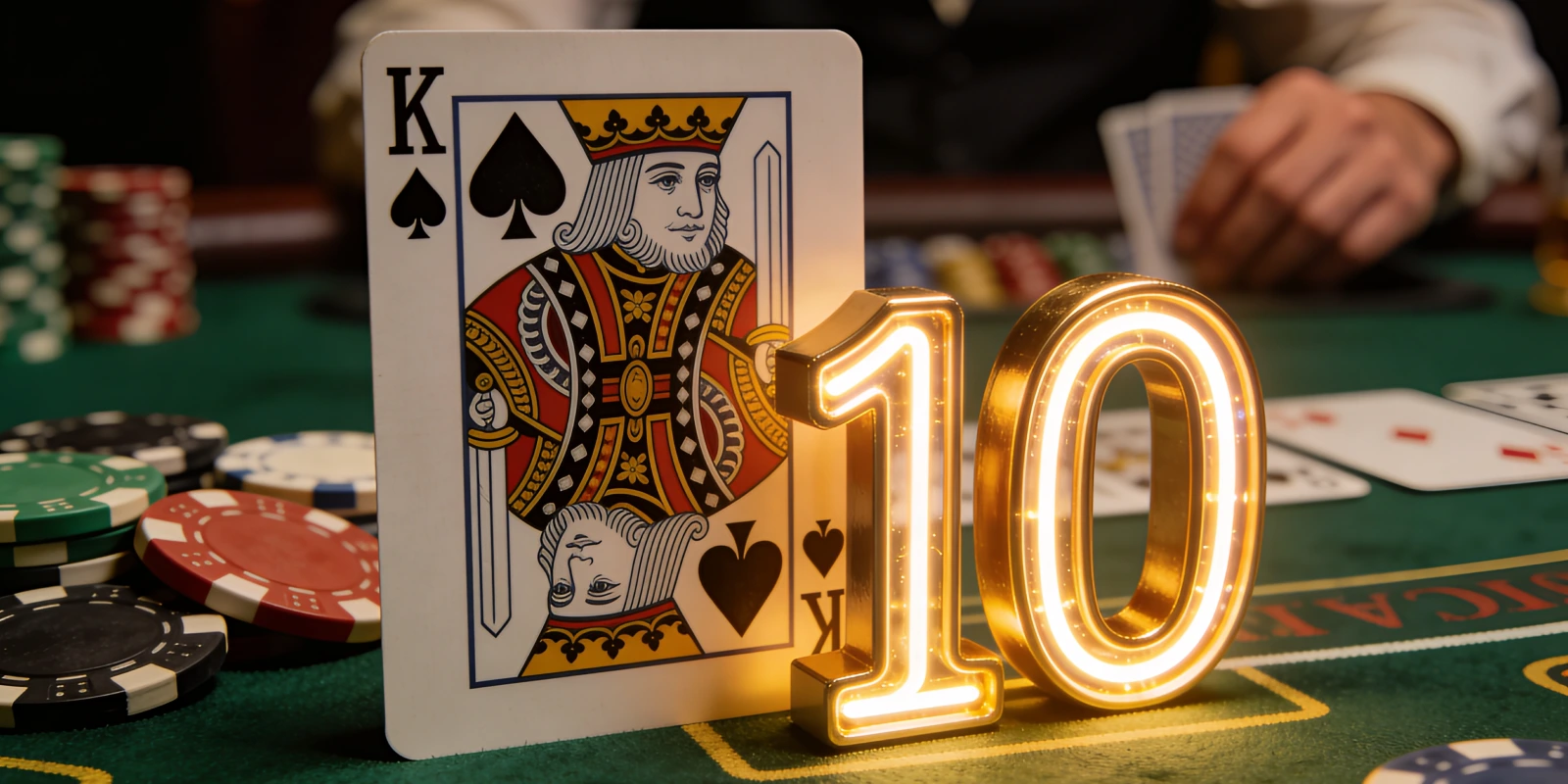
In blackjack, a King is worth exactly 10 points — always. Whether it is the King of Hearts, Spades, Diamonds, or Clubs makes no difference whatsoever; the point value is fixed. This ranks among the most searched blackjack questions, particularly from players transitioning from poker, where the King’s rank relative to other cards directly affects outcomes. In blackjack, that hierarchy disappears entirely at the point-value level.
How Blackjack Card Values Work
Blackjack uses a straightforward three-tier card value system. Understanding how each tier functions makes every subsequent decision at the table easier to read and execute.
Blackjack Card Values at a Glance
| Card Type | Cards Included | Point Value |
|---|---|---|
| Number Cards | 2 through 10 | Face value (2 = 2, 10 = 10) |
| Face Cards | Jack, Queen, King | 10 points each |
| Ace | Ace | 1 or 11 (player’s choice) |
Number Cards (2 Through 10): Worth Exactly Their Printed Value
Cards numbered 2 through 10 are each worth their printed face value, and suit plays no role — a 7 of Clubs and a 7 of Hearts are identical in point terms. A hand containing a 7 and a 3, for example, totals exactly 10 points. This is a useful baseline to establish before moving to face cards, which behave slightly differently in how players tend to perceive them.
Face Cards in Blackjack: Kings, Queens, and Jacks Are All Worth 10
The King, Queen, and Jack each carry a fixed value of 10 points. No face card outranks another in point terms — a common misconception among beginners who assume the King must be worth more than the Jack, as it is in online poker. That ranking simply does not apply here. All three face cards, together with the 10-pip card, form the group known as 10-value cards. This group of 16 cards in a standard 52-card deck becomes especially significant when examining card counting and basic strategy later in this article.
The Ace: The One Card With a Flexible Value
The Ace is the exception to every fixed-value rule in blackjack. It counts as either 1 or 11, whichever produces a better outcome for the hand. A hand containing an Ace that uses it as 11 without busting is called a soft hand. A hand with no Ace, or one where the Ace must count as 1 to avoid busting, is a hard hand. The King’s fixed value of 10 contrasts directly with the Ace’s flexibility — and when the two appear together on the first two cards, the result is the most powerful combination in the game. That pairing is explored in detail shortly.
How to Calculate Total Hand Value in Blackjack
Knowing the card values is step one. Applying them quickly and accurately at the table is where that knowledge becomes useful. The following examples show how King-inclusive hands calculate in practice:
- King + 5 → 10 + 5 → Hard 15
- King + 8 → 10 + 8 → Hard 18
- King + Ace → 10 + 11 → Natural Blackjack (21)
- King + Ace + 7 → 10 + 1 + 7 → Hard 18 (Ace drops to 1 to avoid bust)
These calculations become second nature with table experience, freeing mental focus for strategic decisions rather than arithmetic.
Why the King’s 10-Point Value Is So Powerful in Blackjack
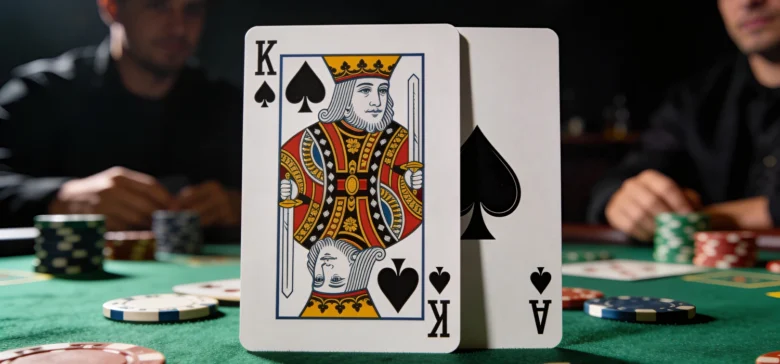
The King’s value matters beyond the obvious. Understanding its statistical weight in a standard deck changes how informed players read every hand — theirs and the dealer’s.
King Plus Ace: Natural Blackjack and the Best Hand at the Table
When a King and an Ace appear together as the first two cards dealt, the result is a natural blackjack — an automatic 21 that beats any dealer hand assembled from three or more cards, including a dealer total of 21. At standard tables paying 3:2, a $100 bet returns $150. At 6:5 tables — increasingly common in certain venues — that same bet returns only $120. The difference is not trivial over a session. A three-card total of 21 does not qualify as a natural blackjack and does not receive the premium payout; that distinction matters when evaluating table rules before sitting down.
Blackjack Payouts and Why the Table Rules Matter
At a 3:2 table, a $100 natural blackjack pays $150. At a 6:5 table, it pays $120. That $30 gap per natural blackjack significantly increases the house edge — 6:5 payout structures raise it by approximately 1.4 percentage points compared to 3:2 games. Before playing any hand, check the table placard or ask the dealer directly. Treating this as standard due diligence, not optional, is the mark of a prepared player.
How the King Directly Shapes Hand Decisions
The moment a King is dealt, the baseline is known: 10 points, fixed. The second card determines everything that follows. Three common scenarios illustrate this clearly:
- King + Ace: Natural blackjack. No decision required — collect the payout.
- King + 10-value card: Hard 20. Basic strategy says stand in virtually every situation regardless of the dealer’s upcard.
- King + 6: Hard 16. The most contested hand in blackjack — the correct action depends on what the dealer is showing.
The King’s fixed value removes one variable entirely. Strategic decisions then narrow down to the second card and the dealer’s upcard, which is covered in detail in the strategy sections below.
The Statistical Weight of 10-Value Cards in a Standard Deck
A standard 52-card deck contains 16 cards worth 10 points: four Kings, four Queens, four Jacks, and four 10s. That is approximately 30.8% of the entire deck — the single most statistically dominant value group by a meaningful margin. This density underpins one of blackjack’s foundational principles: when the dealer’s upcard is between 2 and 9, basic strategy assumes the dealer’s hidden card is a 10-value card. That assumption drives bust-risk calculations and dictates whether standing or hitting produces a better expected outcome.
Common Blackjack Hands That Include a King
Recognising common King-inclusive hands and knowing how to respond to each is where card value knowledge translates into table-ready skill. Here is a quick reference before breaking each scenario down:
- King + Ace = 21 (Natural Blackjack)
- King + King = 20 (Hard 20)
- King + 9 = 19 (Hard 19)
- King + 8 = 18 (Hard 18)
- King + 7 = 17 (Hard 17)
- King + 6 = 16 (Hard 16)
- King + 5 = 15 (Hard 15)
King Plus Ace: Natural Blackjack and Maximum Payout
When both player and dealer hold blackjack simultaneously, the hand results in a push — the original bet is returned with no net gain or loss. No player decision is required when a natural blackjack is dealt. On the question of insurance when the dealer shows an Ace: basic strategy does not recommend taking it, even with a natural blackjack in hand. The insurance side bet carries negative expected value over time and reduces rather than protects the player’s edge in this situation.
King Plus King: Hard 20 and the Case Against Splitting
Two Kings produce a hard 20 — a hand that wins against the dealer in approximately 85% of outcomes. The appeal of splitting is understandable: two hands each starting with 10 points sounds promising. The logic does not hold up. Each split hand would need an Ace to approach the strength of a standing 20, and that outcome is far from statistically reliable. The correct play is unambiguous: stand on hard 20. Do not split Kings.
King Plus Low Card: Navigating Hard 16 to Hard 17
King + 6 produces hard 16, widely regarded as the most difficult hand in standard blackjack. Basic strategy provides clear guidance based on the dealer’s upcard:
- Dealer shows 7 through Ace: Hit, or surrender where the table permits it.
- Dealer shows 2 through 6: Stand — the dealer faces meaningful bust risk, so forcing the dealer to draw is the better play.
Stiff hands (hard totals of 12 through 16) represent a genuine strategic challenge because drawing any card above 5 results in a bust. The dealer’s upcard, not player intuition, is what determines the correct response.
Stiff Hands in Blackjack: Understanding the King’s Toughest Pairings
A stiff hand is any hard total between 12 and 16 where drawing another card risks going over 21. With 30.8% of the deck carrying a 10-point value, the bust risk on these hands is real and calculable. The core principle is straightforward: the decision to hit or stand is driven by the dealer’s upcard and what it implies about the dealer’s probable outcome — not by how uncomfortable the hand feels. Detailed guidance for each scenario appears in the strategy section below.
Expert Blackjack Strategy When a Hand Includes a King
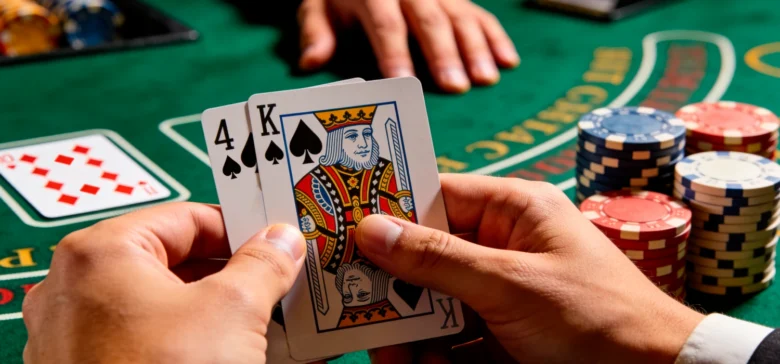
Blackjack strategy is built on mathematical optimisation, not instinct. The four subsections below address the primary decision types (standing, hitting, doubling down, and splitting) as they apply specifically to King-inclusive hands.
When to Stand With a King-Inclusive Hand
Hard 19 and hard 20 are always standing hands. There is no dealer upcard that changes this — the statistical case for drawing another card simply does not exist when holding 19 or 20. Beyond those premium totals, the dealer’s upcard drives the standing decision. When the dealer shows a 2 through 6, and the player holds a King with a moderate card producing a hard 13–17, standing is frequently the correct play. The dealer’s bust probability is high enough that forcing the dealer to draw is statistically preferable to taking on personal bust risk.
When to Hit With a King: Responding to a Strong Dealer Upcard
Holding a hard 12 through 16 against a dealer upcard of 7, 8, 9, a 10-value card, or an Ace — hit. This feels counterintuitive because the bust risk is real, but the logic is clear: a dealer showing a strong upcard is statistically likely to reach 17 or higher without busting. A stiff hand standing pat will not win that confrontation often enough to justify the passive approach. Consider King + 4 (hard 14) against a dealer’s King upcard. The dealer holds 10 showing, likely has a strong hand — hitting hard 14 is the correct basic strategy play, despite the discomfort.
When Doubling Down Makes Sense With a King in Play
Doubling down captures maximum value when the dealer is statistically vulnerable to busting. When the dealer shows a 5 or 6, and the player holds a strong but non-premium hand, doubling is the mathematically sound move — it commits additional wager precisely when conditions favour the player. One important boundary: do not double on hard 19 or hard 20. Those hands are already statistically dominant, and doubling introduces unnecessary stake risk for minimal additional expected gain.
Should Kings Ever Be Split?
No. Do not split Kings. Three reasons make this clear:
- Hard 20 wins approximately 85% of the time against the dealer — it is one of the strongest non-blackjack hands available, and splitting it voluntarily surrenders that statistical edge.
- Each split hand starts at 10 points — neither approaches the dominance of a standing 20 without drawing an Ace, which is far from guaranteed.
- A low card on either split hand produces a stiff hand — converting a near-certain win into a difficult strategic decision is the opposite of sound play.
Advanced card counters in narrow single-deck, high-count scenarios may find marginal grounds to split Kings, but this applies to a very small group of players operating in specific conditions.
How the King Fits Into Card Counting Strategy
The Hi-Lo system is the most widely used card counting method, and the King sits firmly in one of its three categories. Cards 2 through 6 carry a count value of +1, cards 7 through 9 are neutral at 0, and all 10-value cards (including Kings, Queens, Jacks, and the 10) along with Aces carry a value of -1.
Hi-Lo Card Counting Values
| Card | Count Value |
| 2 – 6 | +1 |
| 7 – 9 | 0 |
| 10 / J / Q / K / A | -1 |
As each card is dealt, the running count shifts. A rising positive count signals that low cards are being depleted — more 10-value cards remain in the deck, which favours the player. A declining or negative count signals the opposite. Even for players who do not count cards actively, understanding this framework explains why table dynamics shift as a shoe progresses.
On the legal and ethical dimension: card counting is not illegal, but casinos retain the right to ask players to leave if they identify it in use.
Does the King’s Value Change in Different Blackjack Variants?
The King retains its 10-point value across every standard blackjack variant. What changes between variants is the surrounding rule structure — and those differences affect strategy in ways worth knowing before playing.
- Classic Blackjack: Standard rules apply. King = 10 points, natural blackjack pays 3:2.
- European Blackjack: The dealer does not take a hole card until all players have acted (the “no hole card” rule). This affects doubling and splitting decisions — players risk losing doubled or split bets to a dealer blackjack that is confirmed only after the player has acted.
- Spanish 21: All four 10-pip cards are removed from the deck, but Kings, Queens, and Jacks remain and still carry 10 points each. The removal of 10s meaningfully reduces the density of 10-value cards and requires strategy adjustments.
- Blackjack Switch: Players receive two hands and may switch top cards between them. The King’s value remains 10, but switching decisions add a strategic layer absent from standard play.
- Double Exposure: Both dealer cards are dealt face up. The King’s value is unchanged, but full information about the dealer’s hand substantially alters basic strategy decisions.
Always verify house rules for any variant before playing. The King’s point value is constant; the optimal strategy around it is not
Dealer Rules and Their Impact on King-Inclusive Hands
Dealers in live blackjack operate without discretion. The rule is fixed: hit on any total of 16 or less, stand on 17 or more. This rigidity is actually useful for players — it makes dealer behaviour predictable. A dealer showing a 6 as an upcard, with the assumption of a 10-value hole card, would hold hard 16 and must draw again. That is the source of the dealer’s bust risk on low upcards.
The Hits Soft 17 (H17) rule modifies this slightly. At H17 tables, the dealer must draw again on Ace + 6 (soft 17) rather than standing. This increases the probability that the dealer reaches 18, 19, 20, or 21 on those hands, providing a modest but real increase in house edge.
Checking the table placard before playing takes seconds and identifies which rule set applies. The same habit matters on online and localized platforms such as Arabic casinos, where blackjack payouts, H17/S17 rules, and available variants can differ. Advanced players may adjust specific doubling decisions at H17 tables, though that level of adjustment is outside most players’ immediate scope.
The Dealer Hits Soft 17 Rule: What It Means in Practice
A soft 17 is specifically Ace + 6, where the Ace counts as 11 to produce 17 without bust risk. On H17 tables, the dealer draws another card on this total rather than standing. Drawing again increases the probability of the dealer reaching 18 through 21 on what would otherwise be a standing hand.
Common Mistakes Players Make With Kings in Blackjack
Even players with a working grasp of blackjack rules make consistent errors in King-inclusive situations. Four appear repeatedly:
- Confusing a three-card 21 with a natural blackjack: Reaching 21 with three or more cards does not qualify as a natural blackjack. It does not pay 3:2 — it pays 1:1 like any other winning hand. Only a two-card 21 earns the premium payout.
- Splitting a pair of Kings out of habit: Some players split pairs reflexively. With Kings, this directly conflicts with basic strategy. Hard 20 wins against the dealer in approximately 85% of outcomes — breaking that hand into two separate starting points is mathematically indefensible at standard tables.
- Failing to check table rule variations before playing: A 6:5 payout table, an H17 rule, or the absence of surrender all affect the expected value of King-inclusive hands. Sitting down without checking costs money over time.
- Accepting even money on a natural blackjack when the dealer shows an Ace: Even money locks in a 1:1 return rather than the 3:2 payout a natural blackjack earns if the dealer does not have blackjack. Basic strategy does not recommend accepting even money — the expected value of declining it is higher over the long run.
Final Thoughts: The King as a 10-Point Strategic Asset
The King is worth 10 points in blackjack — that is the answer, and it is the foundation of everything else. Three takeaways from this article are worth carrying to the table:
- The King’s fixed 10-point value anchors blackjack probability. Sixteen cards in a standard deck carry that value, shaping bust calculations and dealer assumptions on every hand.
- A King paired with an Ace on the first two cards is the game’s premium outcome. Always play at a 3:2 table to receive the full payout it earns.
- A pair of Kings is hard 20 — one of the strongest hands in blackjack. Do not split it.
Applying these principles consistently is what separates a player who knows the rules from one who plays them well. For those looking to build further, basic strategy charts, an introduction to deck composition, and bankroll management principles are the natural next areas to explore.
Frequently Asked Questions
How much is a King worth in blackjack?
A King is worth exactly 10 points in blackjack. This value is fixed regardless of the card’s suit — Hearts, Spades, Diamonds, or Clubs all produce the same result. The King’s point value never changes based on the table, the game variant, or the hand context.
Does a King plus an Ace equal a natural blackjack?
Yes. A King (10 points) combined with an Ace (11 points) on the first two cards dealt totals 21 and qualifies as a natural blackjack. This hand beats any dealer 21 assembled from three or more cards and pays 3:2 at standard tables — $150 on a $100 bet.
Do all face cards have the same value in blackjack?
Yes. The King, Queen, and Jack each carry exactly 10 points. No face card outranks another in point value, which differs from poker where the King outranks the Jack. Together with the 10-pip card, these form 16 of the 52 cards in a standard deck — approximately 30.8% of all cards.
Can a pair of Kings be split in blackjack?
Splitting Kings is technically permitted at most tables, but it directly conflicts with basic strategy. Two Kings produce hard 20, which wins against the dealer in approximately 85% of outcomes. Splitting converts that statistically dominant hand into two separate hands each starting at 10 points — neither of which approaches a standing 20 without drawing an Ace.
What is the recommended strategy when the dealer’s upcard is a King in blackjack?
A dealer showing a King holds 10 points visible, indicating a statistically strong position. On hard 12 through 16, basic strategy recommends hitting against a dealer King, as the dealer is likely to reach 17 or higher. On hard 17 or above, stand. Hard 20 stands regardless. A soft hand should follow standard soft-hand basic strategy guidelines for that total.
PokerListings 
Log in to join the discussion
Share your thoughts and see what others have to say.