
Online Bonus

  1. Monthly $5,000 freerolls at Titan Poker
    Read More
  2. Weekly $500 freerolls at Pacific Poker
    Read More
  3. Monthly $2,000 freerolls at Sportsbook Poker
    Read More
  4. Exclusive $650 Titan Poker sign-up bonus
    Read More
  5. Exclusive $600 Full Tilt Poker sign-up bonus
    Read More

What's Money Worth? Part 2

By Arthur S. Reber

 (132 votes)
Gotta Get that Paper, Dog
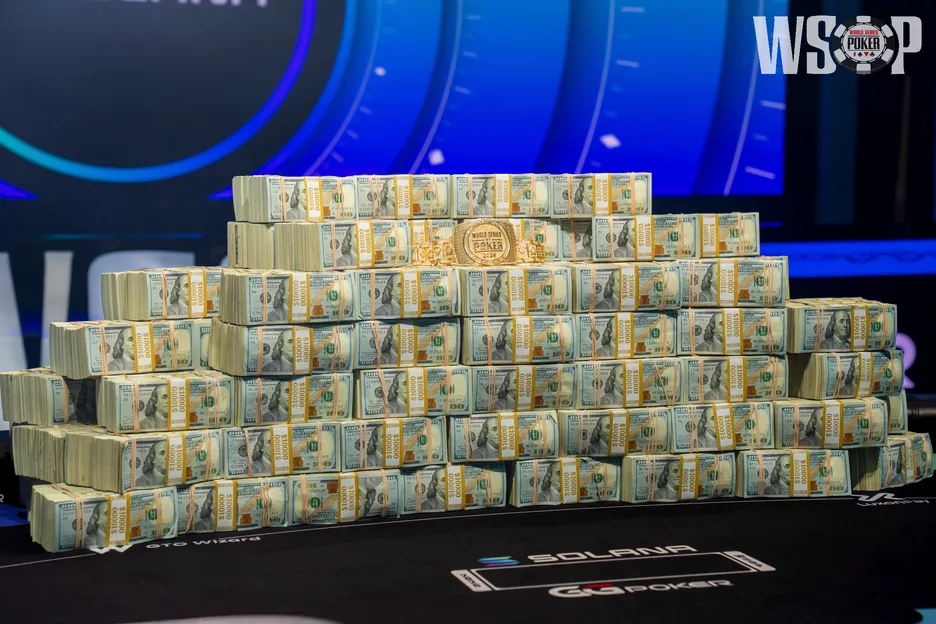
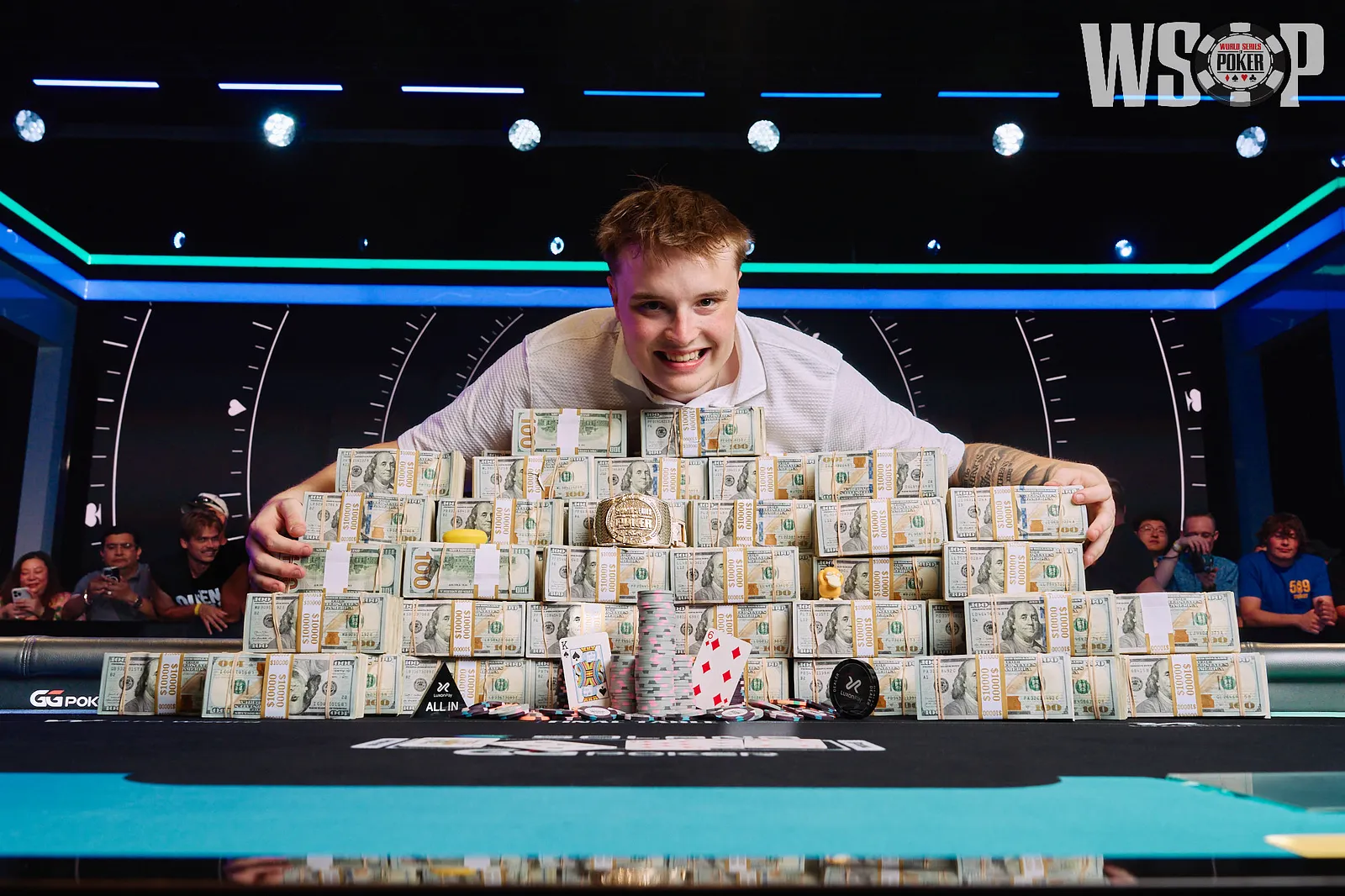
This money's worth about $8.25 million.
Last week we had a little chat about money and what it's worth, a topic sufficiently complex to warrant another look.

Editor's note: If you haven't already read it, make sure you catch up with part one of this series here.

The key idea here is that winning and losing are asymmetrical. Losing money produces psychological pain that is greater than the happiness that winning a comparable amount produces.

This asymmetry opens the door to a deeper understanding of some aspects of our game that often have experts scratching their heads, specifically bad beat jackpots, the popularity of tournaments, bankroll variance and nosebleed-level games.

Bad Beat Jackpots

From any rational point of view, bad beat jackpots are stupid. They drain money from the game and decrease everyone's long-term expectation. In the typical BBJ a dollar is taken from every pot over some amount.

Estimates vary but a good player probably wins about 2-3 raked pots an hour. Giving up $2-$3/hr is significant, and full-timers playing 2,000 hours a year are having $4,000 to $6,000 a year filched from them.

So: Why are BBJs wildly popular? Why do players flock to casinos when the word is out that the BBJ is "over a hundred grand?" And, importantly, why is this enthusiasm not found at higher stakes?

The answers to the first two questions are found in the asymmetry of the win/loss ratios. The loss is small - in fact, many low-limit players don't realize what's happening.

A surprising number of players don't know what the rake is in their rooms, so the additional takeout doesn't cause additional pain.

But the possibility of a big win exists. The result is a situation where the negative element is diminished but the positive one increased dramatically, for as we noted last week, the asymmetry effect holds even when losses and wins are merely imagined.


My secret? I play the big game for the BBJ.

Why do higher-stakes players hate them? Because they recognize the damage to their EV; they experience the downside of the asymmetry more intensely, and the upside is lessened because their "imagined" wins are accompanied by a footnote that says, "This is so unlikely that it shouldn't be part of your thinking."

This analysis also applies to other forms of gambling like lotteries and progressive-jackpot slot machines.

Tournaments

Ever wonder why tournament poker is so popular? A couple of weeks back I asked several regulars at a $90+$10 No-Limit Hold'em event why they like them.

The answers were interesting, if obvious. "Well, they're just fun" or "I like the competition" or "It's just become my way of spending Wednesday evenings" or "Hey, man, I've been killing this tournament for years now."

Then I got one that was more interesting, if less obvious: "Look, you know there's a pretty nice payout for top three spots for damn small investment."

Bingo. The asymmetry principle in play.

The allure of tournament poker is that your loss is limited and small compared with the potential win. The negative effect is under control whereas the positive one has an imagined upside that overcomes any qualms about losing the buy-in.

This works in the face of a significant negative expectation. The $10 house vig on top of the $90 that goes into the prize pool makes it a -11% game. Factor in dealers' tips and the EV is even lower.

The principle also gives us insight into rebuy tournaments. The vig only applies to buy-in; rebuys are zero-sum gambles.


Daniel is responsible for the exclusion of rebuys. Take it up with him.

However, potential loss increases, adding negative effect. Hence, rebuy tourneys are less attractive to players who are risk-averse.

Pros, for whom the asymmetry principle doesn't hold quite the way it does for most of us, love these tournaments, so much so that there won't be any in this year's WSOP.

Variance

Virtually every good poker strategy book has a section on variance, and all counsel adopting measures to reduce it. From a straightforward economic perspective it's not clear why this is good advice.

If your bottom line isn't changed by variance, why should it matter whether your swings are wild and crazy or small and manageable? Dollars/hr doesn't change and it's take-home pay that counts, right?

But it is good advice, and the reason is the asymmetry principle. Big losses hurt more than big wins feel good; as your variance goes up so will the number of times you have very bad days in emotional terms, in subjective experience.

You're just as rich or poor as you would be with a smaller variance, but you will be less happy overall.

Appreciate that this principle won't hold for those who have little aversion to risk, which is why players like Patrik Antonius or David Benyamine can win or lose hundreds of thousands in a session and not have it have (too) much of an impact on their psychological well-being.

The Really Big Game

Some years ago Andy Beal, a Texas billionaire, challenged the top pros to play heads-up for astronomical stakes. The story is fascinating (see Michael Craig's superb book, The Professor, the Banker and the Suicide King).

The professionals who agreed to the arrangement included, among others, the Brunsons, Phil Ivey, Jennifer Harman, Howard Lederer and Chau Giang, folks whose approach to the game is such that it usually lies outside of the impact of the asymmetry principle.


Licking his lips at the prospect of playing a Texas billionaire.

But before they agreed to play, the pros first formed a consortium, with each contributing to a common bankroll to be used in the game.

Why, you may ask, did they do this? Why didn't each of them just sit down and play with their own money like they normally do?

Because the stakes that Beal set were so high that these seasoned pros, who usually never experience risk aversion, were pushed to the point where the asymmetry effect kicked in.

Beal understood this. His goal was to take them out of their comfort zone, to the point where they would experience the same emotional swings as the rest of us. The consortium (partially) neutralized this move by lowering variance and reducing individual risk.

Eventually they won a huge chunk of change from Beal, but from a psychological perspective that's almost beside the point.

Author Bio:

Arthur Reber has been a poker player and serious handicapper of thoroughbred horses for four decades. He is the author of The New Gambler's Bible and coauthor of Gambling for Dummies. Formerly a regular columnist for Poker Pro Magazine and Fun 'N' Games magazine, he has also contributed to Card Player (with Lou Krieger), Poker Digest, Casino Player, Strictly Slots and Titan Poker. He outlined a new framework for evaluating the ethical and moral issues that emerge in gambling for an invited address to the International Conference of Gaming and Risk Taking.

Until recently he was the Broeklundian Professor of Psychology at The Graduate Center, City University of New York. Among his various visiting professorships was a Fulbright fellowship at the University of Innsbruck, Austria. Now semiretired, Reber is a visiting scholar at the University of British Columbia in Vancouver, Canada.

More poker strategy articles from Arthur S. Reber:

Article rating
 (132 votes)

Comment(s) on this article

Dennis Hands Mar 27, 2009

Brilliant article.

Dennis

England UK


Leave a comment


    Privacy Policy