
 EN
EN  DE
DE Why Are Gamblers Buying Losing Lottery Tickets on eBay?

 PokerListings
-
 CoinPoker 150% up to $2000
18+ | Play Responsibly | T&C Apply
-
 Americas Cardroom 100% up to $2000
18+ | Play Responsibly | T&C Apply
-
 Ignition Poker 150% up to $1,500
18+ | Play Responsibly | T&C Apply
-
 Black Chip Poker 100% Welcome Bonus
18+ | Play Responsibly | T&C Apply
-
 Stake.US Poker $55 Stake Cash + 260,000 GC
18+ | Play Responsibly | T&C Apply

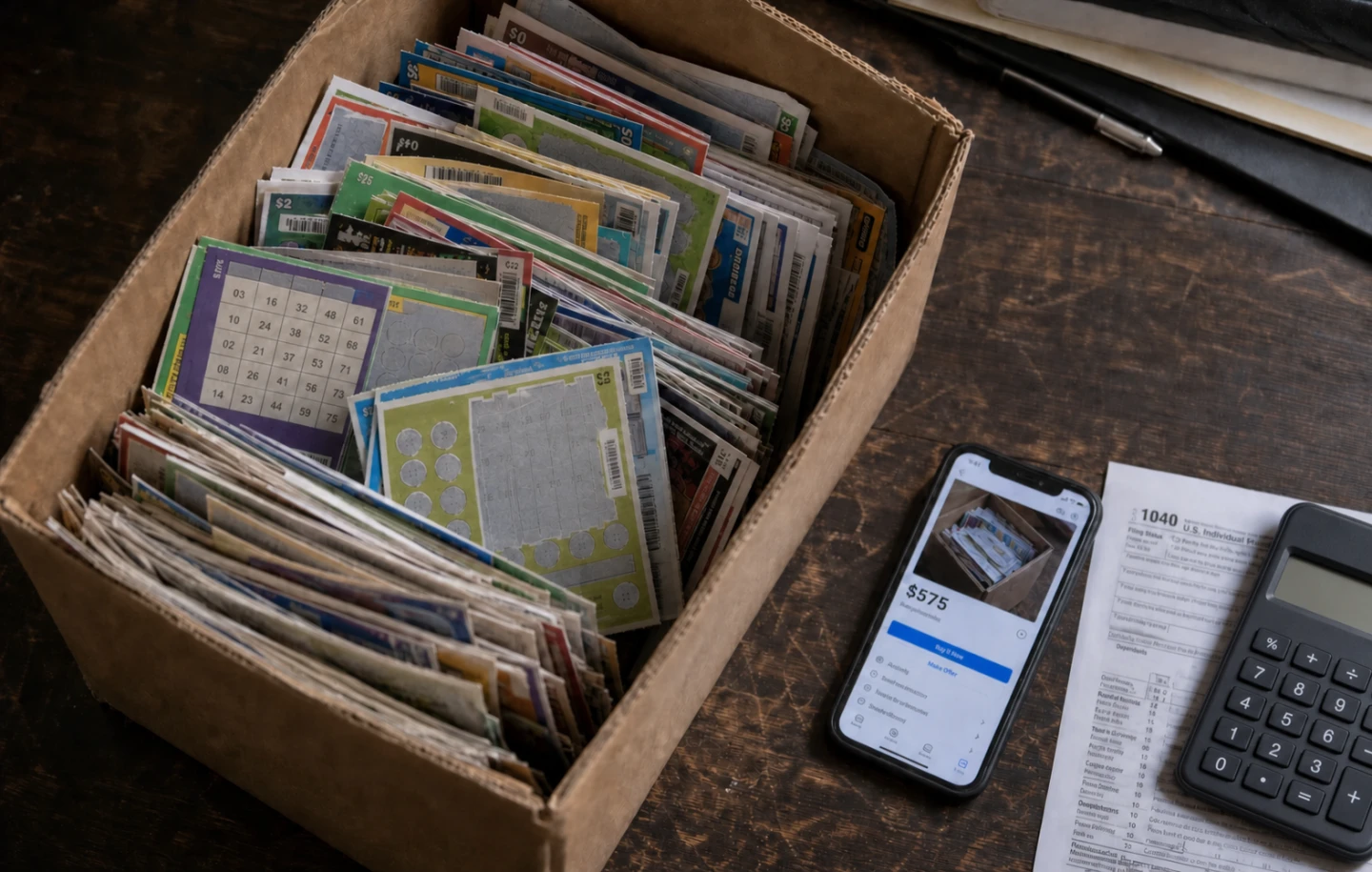
Losing lottery tickets aren’t worth the paper they’re printed on and yet bundles representing thousands — and sometimes tens of thousands — of dollars in losses have been turning up for sale online.
One eBay listing reportedly advertised around $5,200 worth of losing Ohio lottery tickets for $29.99. Another put approximately $90,000 in losing Florida tickets up for sale for $575.
There aren’t any overlooked jackpots hiding among them, and the tickets aren’t suddenly going to become winners. So why would anyone pay hundreds of dollars for somebody else’s losses?
The answer, may actually lie with the IRS.
$90,000 in Losing Tickets for $575
The market for losing lottery tickets isn’t exactly new, nor does every sale necessarily have anything to do with taxes. Old tickets have been bought as collectibles or used for crafts for decadey.
That said, some eBay listings appear to have a very different audience in mind. Some sellers reportedly advertised large collections of losing tickets using terms such as “tax write offs” and “tax deduction,” suggesting the value wasn’t in the tickets themselves but in the losses they appeared to document.
Gambling winnings are taxable in the US, while gambling losses, like lottery tickets, can be used as deductions under certain circumstances. The IRS requires gamblers claiming losses to maintain records, and its own guidelines list unredeemed lottery tickets among the documents that can help substantiate lottery losses.
Buying a stranger’s discarded tickets, however, doesn’t turn their gambling losses into yours.
Jeffrey Hoopes, an accounting professor at the University of North Carolina and research director of the UNC Tax Center, put it rather plainly:
This is a way to offset your taxes—clearly tax fraud.
Hoopes knows the unusual market firsthand. According to Yahoo Finance, he bought losing lottery tickets from eBay himself — not to claim them on his taxes, but for research and the university’s tax museum.
How Losing Lottery Tickets Can Reduce a Tax Bill
The idea behind these eBay listings starts to make a lot more sense once US gambling tax rules enter the picture.
Gambling winnings generally have to be reported as taxable income. Gamblers can also claim qualifying gambling losses, subject to the applicable deduction rules, but those losses need to be backed up with records. The IRS recommends keeping an accurate gambling diary alongside supporting material such as receipts, wagering tickets and statements. For lottery play specifically, these means records of purchases, dates, winnings and losses, with unredeemed tickets among the potential supporting documents.
That gives a genuine losing ticket a second purpose: it can help demonstrate that the person who actually bought it lost money gambling.
The IRS’s own examination guidance tells officials looking at unredeemed losing tickets to check whether they relate to the correct tax year and whether the tickets may have been discarded before being acquired by the taxpayer. In other words, simply arriving with a bag containing thousands of dollars’ worth of losing tickets doesn’t necessarily prove that you were the person who bought and lost on them.
eBay Draws the Line at Tax Write-Offs
There is also a distinction between selling an old lottery ticket and explicitly marketing it off as a tool for reducing somebody’s taxes.
eBay has already said listings promoting potentially improper uses of losing tickets aren’t permitted and can be removed. That leaves sellers of legitimate collectibles in a very different position from those advertising bundles specifically around their supposed value at tax time.
And for anyone considering the latter use, a pile of tickets isn’t the shortcut it might initially appear to be.
The IRS doesn’t treat a losing ticket as a deduction simply because someone happens to possess it. Its guidance calls for records of the taxpayer’s actual gambling activity, with tickets serving as supporting evidence rather than a substitute for that history.
So that $90,000 pile of losing lottery tickets really might be worth $575 to somebody.
Just probably not for the reason advertised.

Popular News

Third Time’s a Charm: ACR Poker Handles Yet Another RTA Controversy

The One: Millionaire Maker by CoinPoker

Scandal! Paul Gregg Sees Opponents’ Cards for Months, Wins Hundreds of Thousands of Dollars

Juan “Malaka$tyle” Pardo Wins GGMillion$ Final Table Packed With Top Pros ($410K)
Latest News

Andrew “BowieEffect” Wilson Wins GGMillion$ for the First Time, Eliminating 6 of 8 Final-Table Opponents ($437K)

Mid Month Madness Takes Over Stake.us This Saturday

Treats Without Tricks: ACR Poker Hosts Three Halloween Mystery PKO






Log in to join the discussion
Share your thoughts and see what others have to say.