
 EN
EN  DE
DE “I believe poker is a math game, always”: Victoria Livschitz Came to Reddit


 PokerListings
-
 CoinPoker 150% up to $2000
18+ | Play Responsibly | T&C Apply
-
 Americas Cardroom 100% up to $2000
18+ | Play Responsibly | T&C Apply
-
 Ignition Poker 150% up to $1,500
18+ | Play Responsibly | T&C Apply
-
 Black Chip Poker 100% Welcome Bonus
18+ | Play Responsibly | T&C Apply
-
 Stake.US Poker $55 Stake Cash + 260,000 GC
18+ | Play Responsibly | T&C Apply

One of the oldest debates in poker is whether it’s a game of logic or perception. Victoria “Trakker” Livschitz believes that these two are actually one and the same, since intuition is based on math.
In her AMA in March 2026, the IT entrepreneur, professional high stakes player and icon of the modern poker community talked about this and other aspects of poker, as well as shared her thoughts on other related topics.
We’re bringing you all the best parts of her AMA here.
Who Is Victoria Livschitz
Victoria is a software engineer, who worked for Ford and Sun Microsystems before creating her own start-ups Grid Dynamics (2006), Tonomi (2013), and RightOnTrek (2021)
One of her notorious achievements is being deeply involved in creating the first cloud with Sun Microsystems:
The first commercial cloud was built in Sun Microsystem’s Labs and launched in 2005. It was called SunGrid (later referred to as Sun Cloud) designed to run Java on Sparc/Solaris at the price point of $1/CPU/hour. Within a year, Amazon came out with EC2, which ran common web apps on Windows and Linux at $0.10/core/hour, and it was game over for Sun. I left Sun Labs in early 2006 to start the industry’s 1st known cloud engineering company. I called it Grid Dynamics (the word cloud was invented a few months after), which helped companies like eBay/Yahoo/Microsoft/Google and others build their own versions of cloud technology. It IPO’ed in 2020 and reached a $2.5B capitalization when I left in 2021.
Victoria came around to professional poker in 2021 — and started crushing high stakes tournaments without hesitation.
Over the following 5 years, she was not only a regular at the final tables but also won tournaments almost annually:
| Year | Tournament | Series/Festival | Prize |
|---|---|---|---|
| 2021 | $400 7PM Daily Deep Stack | Rio Daily Deep Stack Series | $9,246 |
| 2022 | $15K Venetian High Roller #7 | PGT Venetian High Rollers | $60,000 |
| 2022 | $10K Aria High Roller #13 | PGT Aria High Roller Summer Series | $162,790 |
| 2023 | €2,2K Single Re-Entry | EPT Paris | €119,220 |
| 2024 | $5,1K PGT High Roller #1 | PGT Texas Poker Open | $45,500 |
| 2026 | $800 UltimateStack | Venetian DeepStack Showdown | $50,044 |
However, she doesn’t just play poker, she’s also involved in making it better by co-founding Pocket Queens, an all-women’s poker study group, and Octopi Poker, a “one-stop shop for studying”.
Chess vs. Poker: Why So Different
Q: How do you feel that your chess study and play prepared you to be a better poker player?
Victoria Livschitz: There is some memorization involved with both – for example, preflop ranges in poker are similar to chess openings. They have structure and heuristics that become increasingly more clear with knowledge and experience, and eventually unlock in-game adaptations and creativity. Overall, the study patterns are similar – analytical work on theory at home; regular drills with the engine; review of hands/games played in tournaments; work on mental performance aspects; regular reflections and integration of it all.
Personally, I found poker to be a much more interesting game than chess, as the presence of variance and individual player’s tendencies create a lot more variability than in chess. In poker, literally every spot is unique in some ways, thus the problem solving is far more dynamic than in chess.
Q: Have you learned things from poker that have similarly changed the way you approach chess?
Victoria Livschitz: I quit chess 35 years ago. Before the computers. So, the actual mechanics of studying is vastly different now than it was in time of my youth, for both games. If I decided to take up chess again, I am sure poker experience would inform that to a significant extent, but I am not planning to. In poker, exploits specific to opponents is a huge part of the game until you get to playing vs the very elite (and even then it’s still a factor to some extent), much more so than it can ever be in chess IMO.
Q: Which game reveals more about someone’s personality?
Poker is way harder mentally because it violates your sense of “fairness” all the time.
Victoria Livschitz: You can do everything right, outplay everyone and still lose. Many days/weeks/months in a row. Get destroyed financially as well during a downswing. Grit, perseverance and confidence required to make it in poker is at totally another level. Chess is actually the exact opposite. The best player wins, period, and you always know where you stand, skills vs outcome.
Success and Edge in Poker
Q: What do you think about the state of women in poker today in a field largely seen as dominated by dudes and bros?
Women are massively under-represented for a variety of reasons, historic and cultural. However, I believe poker is a “woman’s game” more than a man’s game. It requires logic, intuition and control of one’s emotions, and women excel at it. I also believe that we are seeing the start of the tidal wave of women crushing poker. I’ve worked my entire life in male-dominated industries. It takes decades to enable a shift in demographics, but it’s inevitable.
Q: Coming from a background outside of poker/gambling what do you see as an edge vs a leak for what you bring to the table?
Victoria Livschitz: I think I have a perfect background for it, which is probably why I’ve fallen in love with the game so instantly and completely. Poker is all math at the core, and the math shifts based on a myriad of variables, so it’s absolutely fascinating to me to find formulas/heuristics that “solve” for optimal moves in practical game situations. Experience in studying chess is very helpful in terms of concentration and some mechanics.
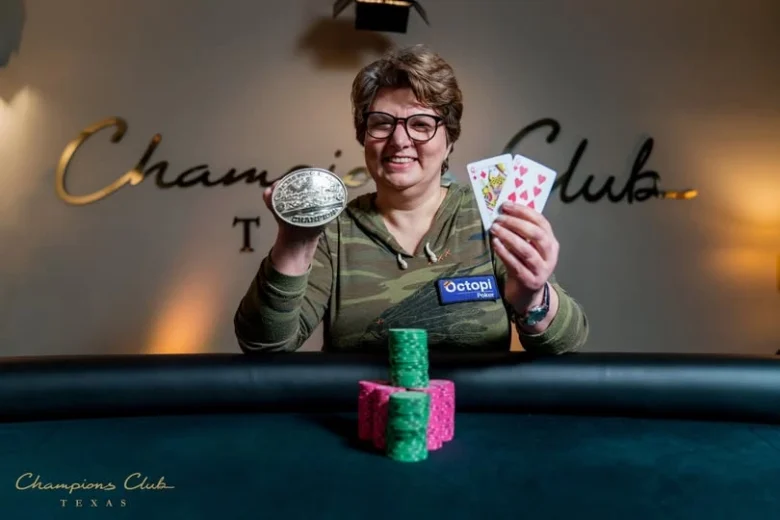
Then we have the need to read people. Decades of working with people in my companies, running sales and doing complex negotiations gave me some fairly refined skills – to notice and interpret micro-shifts in people’s energy – posture, body language, expressions and other things – to infer emotional state and “why” behind it. Very useful skills in poker!
Finally, ability to keep a cool head when variance is brutal, lose with grace and acceptance over the long stretches of downswings, never tilt, and generally handle the stress of “high stakes” gambles is a critical part of professional poker, and after being a professional entrepreneur, poker stakes are “small” by comparison, even when it’s millions.
Q: What decision felt right at the time but you later realized was completely wrong — and why?
When I started playing poker, I had no theoretical basis, but immediately could rely on reads to make huge exploitive decisions – make wild calls or bluffs on pure reads, “the old school style street poker”. It served me well in these early days. The more I learned the theory, the more “logic vs intuition” became at odds with one another for a while. Finally, I got enough knowledge and experience to integrate the two, which is a joyful place to be.
Q: You jumped right into the mix with the best in the world. Did you, or do you still, ever feel intimidated being at the table with them?
I felt extremely intimidated for a long time, with major imposter syndrome.
Victoria Livschitz: First time in the hand vs Stevie Chidwick I was dealt AA and had a total brain meltdown. First time playing Addamo, I was so nervous and afraid to be viewed as a nit that I took the most aggressive line in every spot, consequences be damned.
It’s all gone now, I just enjoy playing the best and working as hard as I can to erase their edge across all nodes of the game.
Q: Would you rather be really good at poker or extremely lucky at it?
Luck comes and goes, we can’t control it directly. I am not interested in the gambling aspect of poker; it’s a game of pure skill for me. So, skills definitely come first. I’d like not to be extremely unlucky, please.
Q: In your experience, are there a few underlying mental models (pattern recognition, decision-making under uncertainty, feedback loops, etc.) that transfer across disciplines and help people improve faster?
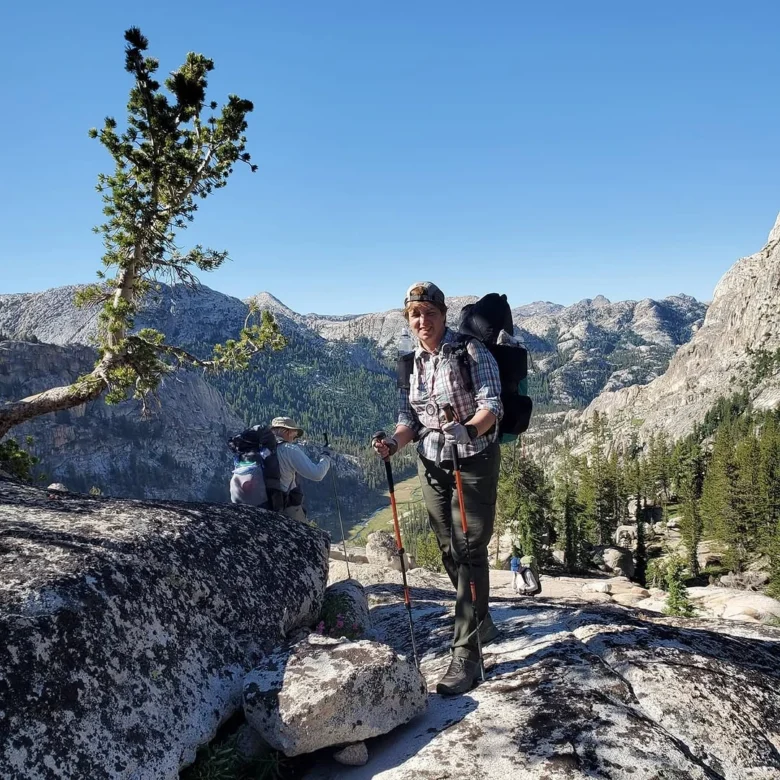
Victoria Livschitz: I think there is a lot of transfer learning happening when someone successful in field A moves to field B. Being successful is a skill, I am very convinced of that. When I hire people for jobs, I am more interested in their overall history of success in whatever fields they pursued over time than a specific success in a specific job. I think I used a lot of the same core principles to figure out how to summit Kilimanjaro early in my obsession with the mountains as in figuring out how to get good at poker.
Details are nuanced, but things like deep curiosity about all facets of the new “subject”, correct expectations that mastery doesn’t come instantly; be prepared to fail a lot, and take it in good spirits; trust in your own ability to figure this out and not take challenges and setbacks too seriously.
When the going gets tough, I always ask myself “would I rather be somewhere else, doing something else?” If the answer comes back as a resounding “no”, all is good with the universe. If the answer comes back as “yes! I’d rather be on the beach climbing towards this damn summit in summer heat, surrounded by the cloud of mosquitoes, suffering from altitude exhaustion and injured ankle”, then it’s time to hang up the boots and move to something else.
General Questions, Prospects and Tips for Poker Players
Q: What do you think it is about poker that attracts people from other strategy games to try?
Victoria Livschitz: Professional poker is about playing a game all day long for a lot of money. While living in your own world, on your own terms and schedule, and not having to conform to the social / corporate structure in order to achieve success. It’s a real mystery why gamers of all sorts discover poker and transition!
Being good at other games is also a natural selection. I think I am extremely fortunate not to discover poker earlier in life, or I wouldn’t have done any of the other things.
Q: Do you have any insights or advice on how to approach studying in general or games specifically?
I think it’s about a disciplined approach to study of a vast and complex field. Not being intimidated by that complexity, but rather excited about it, and having a correct expectation that it will take years of “grinding” the study of ideas and mechanics to get good at the thing.
Q: Do you think the future of competitive play lies in better GTO tools, or in designing environments where ‘tactical intuition’ and human psychology can’t be fully solved by an algorithm?
I believe poker is a math game, always.
Victoria Livschitz: The reads on specific players are just inputs into a math equation. So, to me, it’s always GTO all the way – but not in a sense that we always assume the equilibrium is vs another robot.
Every player has leaks, thus a perfect exploitive equilibrium vs that player exists in GTO plane. Our job is to find it, and apply to ITG decisions. The future of training tools is to build in models of player profiles to study. Intuition matters a lot, but I think that’s just analytical skills internalized and executed property in real time.
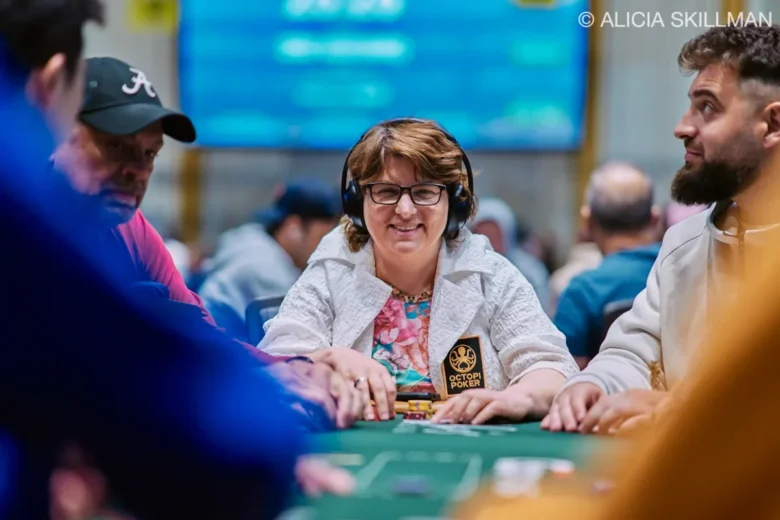
Q: How common is it to play in a daily tournament and be surrounded by a “poker stable” including X amount of players who are playing together and helping each other in one way or another?
It’s not a thing in tournaments. Poker community is pretty small overall. You get to know people, become friendly with many. Some at low stakes may try an angle from time to time, but it’s not systematic or widely spread. Cheating at live tourneys is not a concern I’ve ever had. Cheating is a lot more of the concern in private cash games.
Q: How good are Large Language Models (LLMs, AI-models) in poker?
LLMs are pretty bad at poker, and I don’t expect them to get much better.
Victoria Livschitz: It takes a neural net to learn to play poker for real. LLMs have a role in explaining poker, rather than playing it. One of the issues with current LLMs playing poker is that they are all about exploits, and not nearly as strong in GTO as necessary.
What is Octopi Poker and How it Works
Q: Why did you name your project Octopi Poker?
Victoria Livschitz: Octopi is a multi-pronged reference. It’s certainly a nod to math nature of the game (8 and “pi”). Yet perhaps more importantly…poker culture always refers to sea creatures (Sharks/whales/fish) to metaphorically describe characteristics of the players.
Octopus is the most intelligent animal on the planet — it is a highly adaptable shape-shifting danger-avoiding problem-solving predator, a perfect avatar to represent poker ambitions. Plus it is short, unique, memorable and clean as a trademark.
Q: I do not like solvers. Why might I like Octopi Poker?
Victoria Livschitz: We start from the same place. I found traditional poker solver interfaces highly unpleasant and ineffective, while the information contained within the solver brain absolutely fascinating. I did not want to spend years of my life staring at the solver outputs, while also believing that “the game of learning the game” can be as much fun as playing the game.
I decided it was faster and more fun to build better tooling instead, to power my own pursuit of poker mastery, and help everyone else as well, which surely will help grow the game.
This really was the main motivation to start Octopi poker – make poker study immersive, interactive, gamey, intuitive, joyful and social. It continues to be our North Star. Octopi Poker is already more fluid, intuitive and engaging than all prior solvers in that respect, with a lot of main gamification features on the roadmap yet to come. Give it a try and let me know what you think.
Q: What does Octopi offer that other similar services don’t?
Specifics aside, the focus is on building the trusted highest-quality study tools that are fun to use, support all skill levels from beginners to elite, and are affordable to everyone, anywhere in the world.
Q: Is Octopi using an AI based dev process or planning to?
Yes, AI has always been a deep part of Octopi Poker. Hint: our url is OctopiPoker.ai, right?
Victoria Livschitz: We use AI extensively in engineering and design – which constantly improves developer productivity and code quality.
We also use AI to build some unique features, for example computer vision allows us to extract Hand Histories from streams of live final tables for the Octopi’s flagship feature called The Vault.
The Vault is the best way to review Final Tables or find hands of specific players. It is used by a lot of High Rollers on the PGT/WSOP/Triton circle. We also run most of these hands through the solver, so you can see the mistakes even elite players are making and study the correct plays. It is also the basis of our ICM trainer, considered the best in the industry because it’s based on real hands played by elite players for highest stakes.
Last but not least, we also have LLM poker assistant – our lovable GTO endboss Octopus George. George is in the lab studying poker theory. In the race to build the perfect personal study assistant for poker, we hope George will also become the endboss, in due time 🙂

Popular News
Third Time’s a Charm: ACR Poker Handles Yet Another RTA Controversy

The One: Millionaire Maker by CoinPoker
Scandal! Paul Gregg Sees Opponents’ Cards for Months, Wins Hundreds of Thousands of Dollars
Juan “Malaka$tyle” Pardo Wins GGMillion$ Final Table Packed With Top Pros ($410K)
Latest News

Treats Without Tricks: ACR Poker Hosts Three Halloween Mystery PKO

GGPoker Breaks 11-Year Poker Record With 420,084 Ocean KO Entries

Full House of Horror and Monster Hand Hunt Take Over October at JackPoker




Log in to join the discussion
Share your thoughts and see what others have to say.