
 EN
EN  DE
DE Proven Double Deck Blackjack Strategy: Expert Tips for Beating the House

 PokerListings
-
18+ | Play Responsibly | T&C Apply
-
 ZumbaCards Casino 5 Free Cards
21+ | Play Responsibly | T&C Apply
-
 A1 Social Casino 1,000,000 GC
18+ | Play Responsibly | T&C Apply
-
 CrashDuel Casino 100% up to 200,000 GC + 50 SC
18+ | Play Responsibly | T&C Apply
-
 UpUp Casino 1,000,000 GC + 2SC
21+ | Play Responsibly | T&C Apply


After spending 15+ years playing blackjack across hundreds of casinos worldwide, I’ve concluded that double deck blackjack offers the best combination of player-friendly odds and practical playability. Unlike single deck games (which are rare and often feature terrible rules) or 6-8 deck shoes (with their significant house edge), double deck games hit the sweet spot – offering a house edge as low as 0.2% with proper strategy.
This isn’t just theory. Double deck games give observant players meaningful opportunities to gain an advantage that simply don’t exist in multi-deck games. The mathematics are straightforward: fewer decks mean less dilution of removed cards, creating more volatile and exploitable conditions for strategic players.
The Mathematical Edge: Why Double Deck Games Offer Better Odds
The mathematical superiority of double deck blackjack isn’t just opinion – it’s backed by hard numbers. In a typical double deck game where the dealer stands on soft 17 (S17), doubles after split are allowed (DAS), and blackjack pays 3:2, the base house edge sits at approximately 0.4%. Compare this to a six-deck game with identical rules at 0.6%, and you immediately gain a 0.2% edge just by choosing the right table.
This advantage stems from the simple fact that card removal has a more dramatic impact when fewer cards remain. Remove four Aces from a double deck and you’ve eliminated 15.4% of all Aces. Do the same in a six-deck game, and you’ve only removed 5.1%. This concentration effect magnifies both the natural fluctuations in card distribution and any strategic counting advantages.
If you’re looking to apply these principles in practice, playing blackjack online on slotozilla.com allows you to compare double deck tables, review rule variations, and test penetration conditions without the pressure of a live casino environment.
How To Evaluate Deck Penetration for Maximum Advantage
Deck penetration – the percentage of cards dealt before reshuffling – is the hidden factor casual players overlook. I never sit at a double deck table without first observing penetration depth. Ideal penetration is 65-75%, meaning the dealer places the cut card about half an inch from the back of the deck.
Why does this matter so much? At 50% penetration, any counting advantage is severely limited. At 75% penetration, your information becomes significantly more valuable, as you’ve observed three-quarters of the available cards before reshuffling. I’ve walked away from countless games with good rules but poor penetration – the math simply doesn’t work otherwise.
What Makes Double Deck Blackjack Different From Other Variants
Double deck blackjack occupies a unique middle ground between single and multi-deck games. Unlike single deck (which often features restricted doubling options and 6:5 payouts), double deck games typically maintain traditional rules while offering better odds than their 6 or 8-deck counterparts.
The physical gameplay also differs significantly. Double deck is usually hand-dealt from a dealer’s holder rather than from a shoe, with cards dealt face-down. This means you physically handle your cards, picking them up with one hand and tucking them under your chips to stand, or scraping them against the felt to hit.
The betting dynamics change too. While multi-deck games often allow mid-shoe entry, dealers frequently reshuffle after each hand in double deck if new players join mid-game, making team play and “Wonging” (entering only during favorable counts) more challenging.
Critical Rules To Look For in Double Deck Games
Not all double deck games are created equal. The first rule I check is the blackjack payout – I never play at tables paying 6:5 instead of 3:2. This single rule change adds a crushing 1.4% to the house edge, negating all the mathematical benefits of double deck play and then some. A $25 natural blackjack should pay $37.50, not $30.
Next, I check if the dealer stands on soft 17 (S17) rather than hitting (H17). This seemingly small rule difference is worth about 0.2% to the player. I also verify that doubling down is allowed on any first two cards and that doubling after splitting (DAS) is permitted – another 0.14% edge for players.
Late surrender, though increasingly rare, is another favorable rule worth about 0.06% to the player. Each rule might seem minor individually, but collectively they can transform a marginal game into a highly playable one – or vice versa.
How Rule Variations Impact Your Expected Return
Each rule variation directly affects your bottom line. Here’s the approximate house edge impact of the most common rule changes in double deck blackjack:
- 6:5 blackjack payout (instead of 3:2): +1.39% to house
- Dealer hits soft 17 (H17): +0.22% to house
- No doubling after split (No DAS): +0.14% to house
- Doubling limited to 9-11 only: +0.18% to house
- No splitting Aces: +0.07% to house
- No re-splitting pairs: +0.03% to house
These percentages might seem small, but remember – the baseline house edge in a good double deck game is only about 0.4%. Adding just two unfavorable rules can triple the casino’s advantage, turning a beatable game into a money pit.
Basic Double Deck Blackjack Strategy Foundation
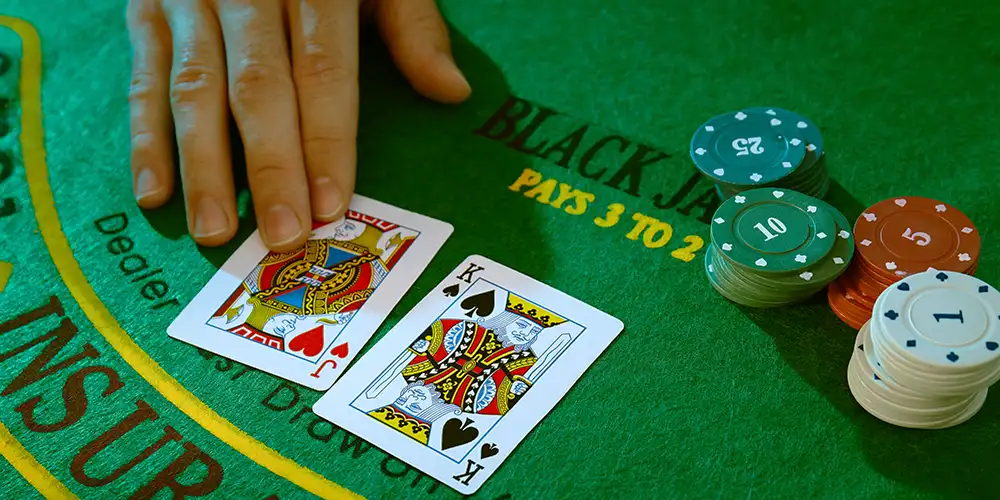
Perfect basic strategy is non-negotiable for serious double deck play. I learned this the hard way, losing thousands before acknowledging that my “hunches” were mathematically inferior to basic strategy. The chart itself looks intimidating at first, but it’s built on a simple premise: each decision (hit, stand, double, split) is made based on your hand total and the dealer’s upcard.
What many players miss is that double deck basic strategy differs slightly from single or six-deck strategy. For example, you’ll double down on 11 against all dealer upcards in double deck, but in six-deck games, you’d hit against a dealer Ace. These small differences add up over thousands of hands.
I recommend practicing with actual cards before hitting the best online casinos. Deal yourself different combinations and make decisions before checking the chart. Focus especially on the “boundary” decisions – those hands where the correct play changes based on the dealer’s card (like 16 vs 10 or A).
Hard Hand Strategies That Win Money Long-Term
Hard hands (those without Aces counted as 11) form the backbone of basic strategy. The most profitable hard hand decisions that many players get wrong:
- Always hit hard 8 or less regardless of the dealer’s card
- Double down with 9 against dealer’s 3-6, otherwise hit
- Double down with 10 against dealer’s 2-9, otherwise hit
- Double down with 11 against all dealer upcards in double deck games
- Stand on hard 12 when the dealer shows 4-6 (counter-intuitive but mathematically correct)
- Always stand on hard 17 or higher
The most commonly misplayed hand is 16 vs dealer’s 10. The correct play is to hit, not stand. Yes, you’ll bust often, but standing wins even less frequently.
How To Maximize Profit With Soft Hand Plays
Soft hands (containing an Ace counted as 11) provide unique opportunities for aggressive doubling. The flexibility of the Ace creates safety for doubling that doesn’t exist with hard totals. The key soft hand plays I see misplayed most often:
- Always hit soft 17 or less against dealer’s 7-A
- Double soft 18 against dealer’s 3-6, otherwise stand (except vs A, then hit)
- Stand on soft 19 or higher regardless of dealer upcard
- Double soft 13-16 against dealer’s 4-6
The most profitable play that recreational players miss is doubling soft 18 against a dealer’s 6. Many automatically stand with 18, failing to capitalize on the significant doubling opportunity.
Pair Splitting Decisions That Boost Your Win Rate
Pair splitting creates opportunities for transforming weak hands into strong ones. The core pair splitting rules for double deck:
- Always split Aces and 8s regardless of dealer upcard
- Never split 10s (or face cards) regardless of dealer upcard
- Never split 5s (better to treat as hard 10 and double when appropriate)
- Split 2s and 3s against dealer’s 2-7, otherwise hit
- Split 4s only against dealer’s 5-6, otherwise hit
- Split 6s against dealer’s 2-6, otherwise hit
- Split 7s against dealer’s 2-7, otherwise hit
- Split 9s against dealer’s 2-6 and 8-9, but stand against 7, 10, or A
The most counterintuitive play is splitting 8s against a dealer’s 10. You’ll lose money either way, but splitting loses less in the long run than hitting a 16.
How To Navigate Casino Rule Variations
Casinos constantly tinker with blackjack rules to increase their edge. When faced with non-standard rules, I adjust my strategy accordingly:
- No doubling after split (NDAS): Be more selective with pair splitting, especially with hands like 6-6 or 7-7
- No re-splitting: Similar adjustment – the value of splitting initial pairs decreases slightly
- No surrender: Play more conservatively with 16 vs 10 or 15 vs 10 (you must hit these hands)
- Dealer hits soft 17 (H17): Double down more aggressively against dealer 6, as the dealer will bust less often
Remember that each rule variation requires specific strategy adjustments. What works at the Bellagio might not be optimal at Caesars Palace or the neighborhood casino. I keep a small strategy card noting these adjustments in my wallet.
Advanced Card Counting System for Double Deck Games
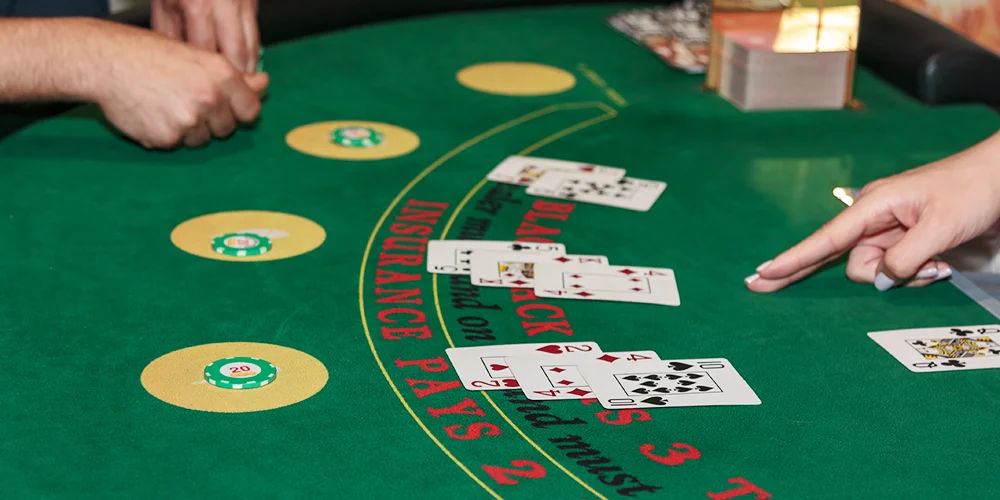
Card counting in double deck games isn’t just for math geniuses or MIT students. I use the Hi-Lo count system, which assigns +1 to cards 2-6, 0 to cards 7-9, and -1 to 10s, face cards, and Aces. Starting at zero with a fresh deck, I track the running count as cards are played.
In double deck games, converting the running count to the true count is straightforward: divide your running count by the number of decks remaining (usually 0.5, 1, 1.5, or 2). A running count of +6 with one deck remaining yields a true count of +6 – a highly favorable situation.
When the true count rises, I increase my bets. At +2, I double my base bet. At +3 or higher, I triple or quadruple it. This betting correlation is where the real money is made in card counting, not in fancy strategy adjustments. I’ve found that keeping my spread relatively modest (1-4 units) attracts less attention while still capturing most of the advantage.
How To Simplify the Hi-Lo System for Double Deck
The secret to successful counting isn’t mathematical brilliance but practice and simplification. I’ve developed several shortcuts specifically for double deck games:
- Start with a fresh shuffle (count = 0)
- Count cards in groups where possible (+1 and -1 cards in the same round often cancel out)
- For true count conversion, I use rough estimates: half deck remaining = multiply by 2; one deck remaining = count stays the same; deck and a half remaining = multiply by 0.67 (or just reduce by a third)
- Focus on extremes – very positive counts (+3 or higher) or very negative counts (-3 or lower) drive most decisions
The biggest hurdle for new counters isn’t the counting itself but maintaining accuracy while appearing to be a normal player. I practice while watching TV to build this split attention capacity.
Strategy Adjustments Based on the Count
While betting correlation drives most of my advantage, certain strategy deviations add significant value when the count changes. The top five strategy adjustments I make based on count:
- Take insurance when the true count is +3 or higher (it’s actually profitable then)
- Stand on 16 vs dealer 10 at true count of 0 or higher
- Stand on 15 vs dealer 10 at true count of +4 or higher
- Double 9 vs dealer 2 at true count of +1 or higher
- Stand on 12 vs dealer 3 at true count of +2 or higher
I avoid complex strategy matrices that require memorizing dozens of adjustments. These five deviations capture about 80% of the strategic advantage available through count-based play.
Simplified Counting Systems Recommended for Beginners
For players intimidated by full card counting, I suggest starting with the Ace-Five count – the simplest effective system. Just track two cards: add +1 for each 5 seen and -1 for each Ace. When your count is positive, increase your bet.
The Ace-Five method captures about 60% of the advantage of more complex systems with just 20% of the effort. It’s an excellent entry point into advantage play, particularly in double deck games where the impact of these key cards is magnified.
For slightly more ambitious players, the Red Seven count adds one more rule to Hi-Lo: red 7s count as +1, black 7s as 0. This eliminates the need for true count conversion while maintaining reasonable accuracy.
How To Spot the Most Profitable Double Deck Games
Finding good double deck games requires strategic reconnaissance. Before sitting down, I verify these critical elements:
- 3:2 payout for blackjack (never 6:5)
- Dealer stands on all 17s (S17)
- Doubling allowed on any first two cards
- Doubling after split allowed (DAS)
- Deep cut card placement (65%+ penetration)
- Reasonable table minimums ($15-25 is ideal)
I also watch several hands before sitting down, noting how deep the dealer places the cut card. In Vegas, Treasure Island, El Cortez, and Golden Nugget often offer good double deck games. In Atlantic City, Borgata and Hard Rock typically have player-friendly options. Always check current conditions though – casinos frequently modify rules.
Advanced Blackjack Techniques
Beyond basic card counting lie more sophisticated advantage techniques. Shuffle tracking involves following clumps of high or low cards through the shuffle to predict their reappearance. This works especially well in double deck games where the shuffle is simpler.
Ace sequencing focuses specifically on tracking Aces through the shuffle. Since blackjacks pay 3:2, knowing when Aces will appear provides an enormous advantage. The technique requires intense concentration and a good memory for card positions.
Team play combines individual skills for greater effectiveness. One player might count down a table without betting much, then signal teammates to jump in with large bets when conditions become favorable. While casinos watch for this behavior, small teams of 2-3 players can still operate effectively in many venues.
Bankroll Management System for Double Deck Success

Even perfect strategy execution can’t overcome inadequate bankroll. For double deck blackjack, I recommend a minimum bankroll of 100 times your average bet for recreational play, and 300 times your maximum bet for serious advantage play.
My personal betting system ties wagers directly to bankroll size. I never risk more than 1% of my bankroll on a negative count, but will risk up to 2% on strongly positive counts. This approach balances aggression with sustainability.The mathematical concept of “risk of ruin” explains why proper sizing matters. With a 100-unit bankroll and flat betting, the risk of losing everything (despite having a small edge) is about 14%. Increase to 200 units, and that risk drops to 2%. Proper bankroll management isn’t about avoiding all risk – it’s about ensuring that short-term variance doesn’t wipe you out before your edge manifests.
Common Mistakes Players Make in Double Deck Blackjack
After thousands of hours at blackjack tables, I’ve witnessed the same costly errors repeatedly:
- Taking even-money on blackjack (this seemingly safe bet costs about 4% long-term)
- Standing on soft 17 against a strong dealer card (always hit!)
- Not splitting 8s against a dealer’s 10 (splitting loses less money than hitting 16)
- Playing at 6:5 payout tables (this single rule costs players 1.4%)
- Varying from basic strategy based on “feelings” or previous hands
- Increasing bets after losses to “get even” (the infamous Martingale system)
- Playing while tired, distracted, or intoxicated
I made many of these mistakes myself when starting out. The most expensive was playing at 6:5 tables simply because they had lower minimums – a classic false economy that cost me thousands.
Approach to Online Double Deck Blackjack
Online double deck blackjack differs significantly from live play. Most importantly, online games reshuffle after every hand, eliminating any counting advantage. However, they often offer better rules and lower minimums than physical casinos.
When selecting online casinos, I prioritize these factors:
- Licensed in reputable jurisdictions with strong regulatory oversight
- Independent auditing of random number generators (RNG)
- Clear documentation of rules and payouts
- Reasonable bonus terms with attainable playthrough requirements
- Prompt, reliable payouts
I’ve had positive experiences with BetMGM and Borgata online, both offering fair double deck games with standard 3:2 payouts and S17 rules. Always verify the specific rules and payouts before playing at any online casino.
Experiences With International Double Deck Blackjack Variations
International blackjack variants often feature unique rules requiring strategy adjustments. European No-Hole-Card blackjack is common overseas – the dealer doesn’t check for blackjack until after players act, meaning you can lose additional bets on doubles and splits when the dealer has a natural. This rule adds about 0.1% to the house edge and requires more conservative doubling and splitting against dealer 10 or Ace.
Australian Pontoon uses different terminology (Twist = Hit, Stick = Stand) and often features no dealer hole card. Spanish 21, found worldwide, removes all 10-spot cards (but keeps face cards) and adds bonuses for specific hands, requiring a completely different strategy approach.
Before playing internationally, I always research local rule variations and adjust my strategy accordingly. The fundamentals remain the same, but the optimal plays can differ significantly.
Practical Gameplay Tips for Your Next Double Deck Session
Success at double deck blackjack extends beyond mathematical strategy to practical table management:
Arrive well-rested and focused – mental fatigue leads to costly errors.
Set specific win goals and loss limits before playing to ensure you stay within your budget and keep your emotions under control throughout the session.
Observe several hands before sitting down to verify rules and penetration.
Stack chips neatly in your betting circle – messy bets invite dealer questions.
Use hand signals along with verbal instructions – “hitting” by tapping the table, “standing” by waving your hand horizontally.
Tip the dealer periodically, especially when winning (but include it in your hourly cost calculation).
Take regular breaks away from the table to clear your head, stretch, and maintain the high level of concentration required for optimal play.
Keep conversations with other players or staff minimal during active hands to avoid distractions and prevent making preventable tactical mistakes.
Document your sessions with time played, average bet, and results.
Leave the table while you are still mentally sharp and disciplined, even if you are on a winning streak, to avoid the fatigue-driven losses.
These practical aspects of gameplay are just as important as knowing when to hit or stand.
Conclusion: How to Put Double Deck Strategy into Action
Implementing effective double deck strategy requires a gradual approach. Start by mastering basic strategy through repeated practice – until the correct play becomes automatic for every possible hand/dealer combination. Then progress to simple counting systems, adding complexity only after each level becomes second nature.
Begin with small stakes to minimize the cost of inevitable early mistakes. Track your results meticulously, focusing on decisions rather than outcomes. A correct play that loses is still correct; a mistake that wins is still a mistake.Remember that double deck blackjack offers one of the best opportunities in the casino to minimize, eliminate, or even reverse the house edge. With disciplined strategy application, proper casino game selection, and sound bankroll management, you can transform blackjack from gambling into skilled play.
Double Deck Blackjack Strategy FAQs
How to win in double deck blackjack?
Win by playing only 3:2 payout games with good rules (S17, DAS), using perfect basic strategy, and if possible, implementing a simple counting system. Increase bets when the count is favorable, decrease when unfavorable. Proper bankroll management and discipline prevent short-term variance from depleting your funds.
Is double deck blackjack beatable?
Yes, double deck blackjack is beatable with proper strategy, game selection, and card counting. The house edge in favorable games (3:2 payout, S17, DAS) starts at only 0.4%, and can be overcome with moderate counting skills, especially in games with 65%+ deck penetration.
What is the basic strategy for double deck blackjack?
Double deck basic strategy includes standing on hard 12 vs dealer 4-6, doubling 11 against all dealer cards, doubling soft 18 vs dealer 3-6, and splitting 8s always. It differs slightly from single or six-deck strategy. Use a strategy chart specific to the double deck with your game’s exact rules.
How does card counting work in double deck blackjack?
In a double deck, assign values to cards as they’re played (+1 for 2-6, 0 for 7-9, -1 for 10s and Aces). Divide your running count by decks remaining for the true count. Bet more with positive counts (more high cards left) and less with negative counts. The smaller deck makes counting more effective than in 6-8 deck games.
What bankroll should I have for double deck blackjack?
For recreational play with basic strategy only, bring at least 40 times your average bet (e.g., $1,000 for $25 average bets). For advantage play with counting, bring at least 100 times your maximum bet to withstand short-term variance (e.g., $10,000 for maximum $100 bets).
What are the key differences between double deck blackjack and single/multiple deck games?
Double deck offers better odds than 6-8 deck games (0.2% less house edge) and more availability than single deck. Double deck is typically hand-dealt face-down, while multi-deck uses face-up shoe dealing. The strategy differs slightly between variations, particularly for doubling and splitting decisions.
Should I avoid tables that pay 6:5 for blackjack in double deck games?
Absolutely avoid 6:5 payout double deck games. This single rule change adds a massive 1.4% to the house edge, negating all advantages of double deck. At a $25 table, each blackjack pays $7.50 less than it should, making the game unbeatable regardless of skill level.
How does the dealer’s decision to hit or stand on soft 17 affect double deck blackjack strategy?
When dealers hit soft 17 (H17), the house edge increases by about 0.2%. This requires adjusting some strategy decisions, particularly being more aggressive when doubling against dealer’s 6, as the dealer is less likely to bust. Dealer hitting soft 17 also makes insurance slightly better.
How do I recognize a favorable double deck blackjack table?
Look for 3:2 blackjack payouts, dealer stands on soft 17, doubling after split allowed, deep deck penetration (65%+), and reasonable minimums. Check the felt for printed rules or ask the dealer to confirm specific rules before sitting down.
Do you split 6s against a 7 in a double deck?
No, don’t split 6s against a dealer’s 7 in double deck blackjack. The correct play is to hit. Split 6s only against dealer’s 2-6. Against 7 or higher, hitting 12 is mathematically superior to creating two hands starting with 6.
PokerListings 
Log in to join the discussion
Share your thoughts and see what others have to say.