EN
EN  DE
DE Why Marketing Poker Is So Problematic

 PokerListings
-
 CoinPoker 150% up to $2000
+18 | T & C apply | Play responsible
-
 Stake.US Poker $55 Stake Cash + 260,000 GC
18+ | Play Responsibly | T&C Apply
-
 Americas Cardroom 100% up to $2000
18+ | Play Responsibly | T&C Apply
-
 Betonline Poker 100% Up to $1,000
18+ | Play Responsibly | T&C Apply
-
 SportsBetting Poker 100% up to $1000

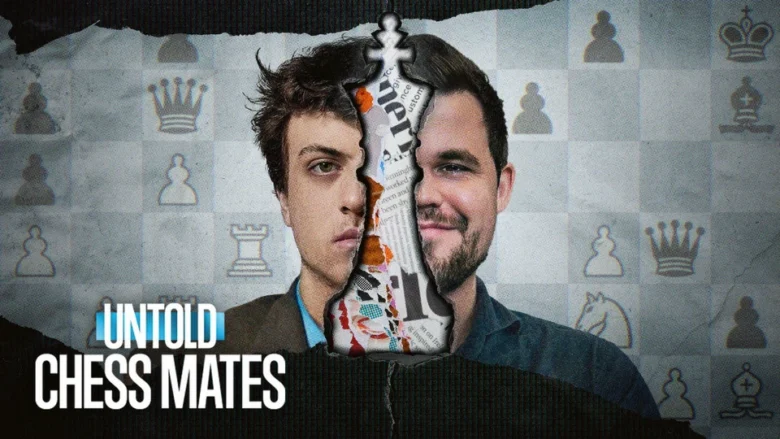
While even the “anal beads” chess scandal got its own documentary on Netflix — Untold Chess Mates aired on April 7th, 2026 — poker continues sitting in the background and waiting for something similar to happen to it.
Unfortunately, chances are that it is not meant to be since poker has specifics that make the game hard to market among the general public. Maybe, it is time to look at poker with a fresh pair of eyes and see why its marketing has limits.
Scandal PR Works for Chess But Not for Poker
On April 4th, 2026, Derek Kwan commented on a new Netflix chess documentary sharing an interesting observation:
A pretty good barometer for where poker is right now is the chess anal beads scandal that got a Netflix documentary, while Robbie or Postle did not.”
While we can’t agree with him about Robbie Jade Lew — her “cheating” has not been proven by any investigation, unlike Postlegate — this thought inevitably raises the question: Why can chess successfully use cheating and scandals for marketing but poker can’t?
The shortest answer is money. Poker is first and foremost a money game, and only second a battle of skills and minds. Chess, on the other hand, is a known mind game where making money isn’t the goal for the 99% of players.
So, when chess can use cheating scandals to show how someone can’t bear not being “smart” enough to win in this grand battle of strategic minds, any scandal in poker leads to people losing money and doubting the purpose of playing.
Just check general public response to the recent reveal of the Ignition/Bovada bot farm: among confusion and anger, people were also disgusted by cheating that costs others money and questioned why someone would even want to play poker if this type of behavior is so wide spread. Money has always been a sensitive topic for most of the population, but in the current economy, fewer and fewer are interested in increasing the risk of losing it. Seeing news about cheating in poker doesn’t exactly increase its attractiveness as a profession either.
This is also among the main reasons why poker rooms usually don’t disclose any specific information about different forms of cheating. They’re trying to create a general perception of fairness with generic statements about the fight against fraudsters without details.
Transparency in this industry costs brands a lot of money — you can’t just say publicly how many cheaters you detected, how much money they’ve made and how exactly they cheated because this information:
- Scares potential customers who may decide to never play in your poker room because it is a “scam”
- Let cheaters know which dirty methods are known and which are not
- Creates a feeling of insecurity among existing players
- Raises doubts among investors about whether the room itself operates responsibly
Chess has a luxury of exposing cheaters without damaging the game. Poker doesn’t; almost every scandal here harms the game’s reputation more than any cheater’s image.
Poker Requires Too Much Knowledge to Entertain
We can’t just sit an average person down to watch poker and expect them to figure out what a blind, limp, or donk is.
Poker — especially live — requires a lot of knowledge beforehand: rules of betting rounds for specific game formats, from order of action to sizing of bets, combination names and strengths, name and appropriateness of different bets, what is considered to be a bluff, etc.
Moreover, you have to, at least superficially, know the difference between poker formats and their nuances, otherwise you will be confused with Short Deck if the only information you know is about Texas Hold’em, Omaha or Stud.
Chess is much easier to understand because even without knowing the names of the pieces a person can quickly figure out how each piece moves, what the goal of the game is, and basics of how to play it. And it doesn’t matter what format of chess you play or observe — the rules are always the same.
Poker Is Not Fair or Just
As Victoria Livishitz said, comparing poker and chess, poker is way harder mentally because it violates your sense of “fairness” all the time:
You can do everything right, outplay everyone and still lose. Many days/weeks/months in a row. Get destroyed financially as well during a downswing. Grit, perseverance and confidence required to make it in poker is at totally another level. Chess is actually the exact opposite. The best player wins, period, and you always know where you stand, skills vs outcome.
In general, people don’t like to lose, especially when they do everything in their power to be proficient in something. And while gambling can be fun, overall poker is a game of disappointment for the majority who loses no matter how hard they try. The variance doesn’t care that someone did everything right against an all-around-wrong opponent.
We can all agree that it’s hard to sell the idea of the importance of poker skills when luck, aka variance, has a significant impact on even seasoned professionals.
Famous Poker Players Are Just Names
While we’re on the topic of top poker players: let’s conduct an experiment. Go outside of your current bubble and ask other people to name any poker player.
It’s a miracle if people outside the gambling US states can name anyone other than the movie villain Le Chiffre — or Kylie Jenner, who made a peculiar half-naked promotional video about poker in 2026.
The only exception, perhaps, is Chris Moneymaker — and he, while a rather pleasant person, was remembered mainly for the fortunate coincidence of his last name and his win in the WSOP Main Event.

Even poker legends like Phil Hellmuth, Doyle Brunson, Phil Ivey and Daniel Negreanu are just names for the wider public — especially, in comparison to famous chess players as Magnus Karlsen, Bobby Fischer, Garry Kasparov, Anatoly Karpov, and José Raúl Capablanca.
The younger generation also recognizes chess influencers such as the Botez sisters, Levy Rozman or Dina Belenkaya because they are popular do a lot to popularize chess through social media, including directly and indirectly creating memes understandable for non-chess folks.

Chess has characters for whom the average person can relate.
Poker often has caricatures living a life that is unrealistic for the average person. Poker streamers look like they’re doing the most boring job in the world, where results aren’t guaranteed no matter how hard you try. Poker ambassadors look like they’re trying to justify spending your time and money but not promote the game.
The spotlight on live streams often is for dubious characters like William Kassouf, Martin Kabrhel, Nik Airball, Sammy Farha or Senor Tilt — who may be wonderful people in life, but as poker personalities mostly evoke negative emotions.
It’s hard to say what the real problem is — that poker is too narrow a field, or that there hasn’t been someone who can take the game to the next level yet.
It’s still interesting that even when chess personalities transition to poker, as Magnus and Alexandra Botez did, their personalities stop attracting people — most likely because the main problem of marketing is precisely the nature of the game.
Poker Has No Certainty Even at the Legal Level
Regulators restrict not only who can play what in poker rooms, but how operators can promote their services. These restrictions are susceptible to change worldwide with alarming regularity throughout the history of this game.
In 2026, we continue seeing a trend toward further tightening restrictions for both players and operators — as a result, poker remains inaccessible to the general public not only legally but also in terms of social acceptance.
You can’t promote poker as a game of skill if your state considers it gambling. The general public is more likely to believe the law than an advertising campaign by some company making money from a game.
You can’t promote poker as a decent career choice if your state does not guarantee players any labor and legal protection for this professional path. The general public will look with suspicion and prejudice at those who try to play poker, stigmatizing it as a waste of time and money on a fake job.
You can’t promote poker if your state declares it illegal or forbidden. Not only is this dangerous for the company and its employees, but it also creates a sense in people that they are being lured into something criminal, even if there is nothing criminal in the game itself.
Chess has virtually none of these problems in most parts of the world. The game is respected and considered an intellectual sport in most countries. Only a few consider it gambling, as its variance is extremely low and the money factor is not significant. Governments themselves sponsor chess schools for children from an early age, viewing it as a useful activity.
Only a few Islamic countries of the world have issues with chess, seeing this game as a variant of gambling which is haram. At the same time, the only known country in the world where chess is officially banned in 2026 is Afghanistan.
Poker can only dream of such a level of global acceptance. And until it is, expecting poker marketing to be as effective as chess is rather naive.
PokerListings Popular Articles

How to Transition From Play Money to Real Money Poker Smoothly

Work on Yourself and Be Boringly Skillful: Dan Cates Advises
Do WSOP Bracelets Still Carry as Much Prestige as They Used To?