EN
EN  DE
DE How to Play Poker: Basic Rules for New Players

Here, you’ll find all the fundamental rules of poker, clearly explained and easy to understand. By mastering this material, you’ll be well on your way to outperforming 60% of other players. Dive in and start your journey to becoming a poker pro today!



 PokerListings
Poker is more than just a game of luck—it’s a thrilling mix of strategy, psychology, and timing. Whether you’ve watched it on TV, heard friends talk about it, or simply want to try something new, poker offers an exciting challenge that anyone can learn. But before you sit down at the table, it’s essential to understand how the game works.
In this guide to poker rules for beginners, we’ll walk you through the basic rules of poker in a clear, beginner-friendly format. From hand rankings and betting rounds to game types and strategy tips for beginners, you’ll get everything you need to start playing with confidence. Ready to learn how to play poker and join the action? Let’s begin with the fundamentals.
What is Poker?
Poker is a popular card game that combines strategy, skill, psychology, and a bit of luck. It’s played in casinos, homes, and online platforms across the world. The goal in poker is to win chips or money by forming the best poker hand or convincing your opponents to fold. Whether you’re playing casually with friends or entering a competitive tournament, learning how to play poker can be a fun and rewarding experience.
Some versions, such as draw poker, allow players to discard and replace cards to improve their hands. Other formats, like Texas Hold’em, rely more on shared community cards and betting tactics. No matter the type, understanding the rules is key to long-term success.
Basic Poker Rules for Newbies
To start, every player is dealt a set number of cards (depending on the variant), and betting rounds occur where players choose to check, bet, call, raise, or fold. Once the cards have been dealt, the game begins with strategic decision-making. The best five-card hand wins the pot—unless everyone else folds. The basic flow includes dealing, betting, showdown, and determining the winner.
Positions at the Table
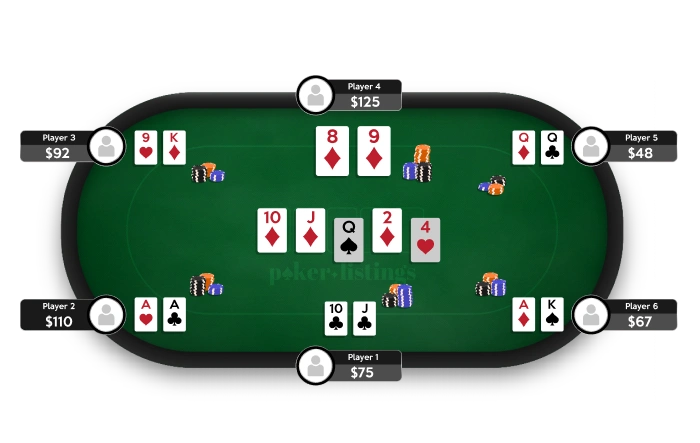
In poker, your table position refers to where you sit in relation to the dealer. This seemingly simple detail has a huge impact on your decisions, strategy, and overall success. The earlier you act in a betting round, the less information you have about your opponents’ intentions—making your position weaker. The later you act, the more information you can gather from other players’ actions—giving you a significant strategic advantage. Let’s explore the main table positions in detail:
In pre-flop play, the first players to act after the big blind are typically referred to as Under the Gun (UTG) and UTG+1. The UTG player is the first to act, followed immediately by the UTG+1 player. Acting from these positions is challenging because you have little to no information about how the other players will respond.
These are considered the toughest seats at the table and require a tight, disciplined approach. It’s essential to play only strong hands, such as AA, KK, QQ, or AK, while avoiding marginal holdings. Bluffing from these positions is especially risky since so many players have yet to act.
The players in the middle positions, such as MP1 and MP2, vary based on the total number of players at the table. These positions offer slightly more information than early positions, allowing for a wider range of playable hands. However, caution is still necessary, as players in later positions may have stronger advantages. A good strategy in these positions is to loosen up your range slightly, including hands like AQs, AJs, KQs, and medium pairs.
Late position in poker refers to the last few players to act during each betting round, including the cutoff (CO), which is the seat just before the dealer, and the button, which is the dealer position and considered the most favorable seat at the table. These positions are highly valuable because they provide maximum visibility of other players’ actions before you make your move.
From late position, you can often steal blinds with a wider range of hands, making it easier to bluff and control the size of the pot. The best strategy in these spots is to play a wider variety of hands, especially when earlier players have shown weakness. Hands like suited connectors, one-gap hands, and lower pairs can frequently prove profitable from late position.
Blinds and Antes
In poker, blinds, and antes are forced bets used to create action and build the pot. Blinds are posted by the two players to the left of the dealer button before any cards are dealt. The small blind typically equals half the minimum bet, while the big blind equals the full minimum bet. These positions rotate clockwise after each hand to ensure fairness.
Antes, on the other hand, are small forced bets that every player at the table must post before the hand begins. Antes are often used in tournaments or later stages of cash game sessions to increase the pot size and encourage more aggressive play. Both blinds and antes ensure there’s always something to compete for, even if no one has a strong starting hand.
Limit vs. No Limit Games
Poker games differ based on their betting structure. The three most common formats are:
- Limit Poker: All bets and raises are fixed. For example, in a $2/$4 game, bets are exactly $2 in early rounds and $4 in later rounds. This format reduces risk and focuses on strategy.
- No Limit Poker: Players can bet any amount of their stack at any time. It’s the most aggressive and popular format, especially in Texas Hold’em.
- Pot Limit Poker: Players can bet or raise up to the current size of the pot. Common in Omaha poker games, it offers a balance between Limit and No Limit styles.
Each format changes the game’s pace, risk level, and strategy, so it’s important to choose one that fits your comfort and style.
Common Traits of Most Poker Rules
While poker has many variants, most follow a shared foundation of core rules. No matter which version you play, you’ll usually find the following elements:
- A standard 52-card deck is used.
- Betting rounds occur, allowing players to check, bet, raise, or fold.
- Bluffing is a key part of the game and can win pots without a strong hand.
- The highest-ranked hand at showdown wins if multiple players remain.
- Chip management is essential—knowing when to risk chips and when to conserve them can greatly impact long-term success.
Understanding these universal traits will help you transition easily between different poker formats and build a solid foundation for more advanced strategy.
Learn How to Play Poker
Getting started with poker may seem overwhelming, but the game becomes much easier once you understand the basic steps. Check out our guide to help you learn how to play online poker games with confidence:
Before anything else, understand which hands beat others. Knowing the difference between a flush and a straight is essential for making the right decisions.
Start with a popular version like Texas Hold’em. It’s widely played, beginner-friendly, and supported by countless tutorials and practice games.
Where you sit affects your strategy. Players who act later in a round have more information and control over the hand.
Understand the forced bets that start the action. Knowing how these work helps you recognize your investment before any cards are dealt.
Learn the four main stages: Pre-flop, Flop, Turn, and River. Each round offers new opportunities to bet, fold, or raise.
You can win by having the strongest five-card hand at showdown or by making all other players fold through strategic betting or bluffing.
Test your skills on free poker platforms before risking real money. This helps you build experience without financial pressure.
Poker rewards patience, observation, and smart decision-making. Start with the basics, keep practicing, and soon you’ll feel at home at any table.
Important Poker Terms to Know
Learning basic poker terminology is essential for following the action and making the right decisions. Here are key terms every new player should know:
- Fold: To give up your hand and exit the current round. You can no longer win the pot once you fold. It’s a good option when your hand is weak or the bet is too high.
- Check: To pass the action without betting, as long as no one else has bet in the current round. It’s a way to stay in the hand without committing more chips.
- Call: To match the current highest bet. Calling allows you to stay in the hand without raising the stakes.
- Raise: To increase the amount of the current bet. Raising applies pressure on opponents and is often used with strong hands or as a bluff.
- Pot: The total amount of chips in the center of the poker table that players are competing for during a hand. It grows with each bet or raise.
- All-In: To bet all your remaining chips in a single move. You can no longer make additional decisions during the hand, but you still participate in the showdown if called.
- Muck: To fold or discard your hand without revealing it to others. Usually done after losing at showdown or when folding without needing to show your cards.
- Showdown: The final stage of the hand when all remaining players reveal their cards. The player with the highest-ranking hand wins the pot.
Basic Poker Hand Rankings
Understanding hand rankings is one of the most important foundations of poker. No matter which variant you’re playing, the strength of your hand determines whether you win at poker showdown. Below is a quick overview of standard game of poker hand rankings, listed from the strongest to the weakest:
| Hand Rank | Description | Example |
|---|---|---|
| Royal Flush | A, K, Q, J, 10 of the same suit |
A
 A
K
K
Q
Q
J
J
10
10
A
K
K
Q
Q
J
J
10
10
|
| Straight Flush | Five cards in sequence, same suit |
9
9
8
8
7
7
6
6
5
5
|
| Four of a Kind | Four cards of the same rank |
K
 K
K
K
K
K
K
K
K
 K
K
K
K
 K
6
6
K
6
6
|
| Full House | Three of a kind + a pair |
A
A
A
A
A
A
K
K
K
K
|
| Flush | Five cards of the same suit |
A
A
K
K
Q
Q
8
8
2
2
|
| Straight | Five cards in sequence, any suit |
Q
Q
J
J
10
10
9
9
8
8
|
| Three of a Kind | Three cards of the same rank |
Q
Q
Q
Q
Q
Q
A
A
10
10
|
| Two Pair | Two different pairs |
A
A
A
A
Q
Q
Q
Q
K
K
|
| One Pair | One pair of same-ranked cards |
A
A
A
A
Q
Q
J
J
10
10
|
| High Card | Highest single card if no other hand formed |
K
K
Q
Q
10
10
9
9
5
5
|
Popular Poker Variants and Their Rules
Poker comes in many variations, but a few stands out as the most widely played across the world. Each has its own poker rules, pace, and strategy, so it’s useful to understand the basics of the most popular formats.
How to Play Texas Hold’em
Texas Hold’em is the most popular and beginner-friendly poker variant. Each player is dealt two private cards, known as hole cards, which only they can see. Then, five community cards are placed face-up on the table in three stages: the flop (three cards), the turn (one card), and the river (final card). Players can use any combination of the two hole cards and the five community cards to make the best possible five-card hand. The simplicity of the rules and the depth of strategy make it the go-to game for most players.
| Number of Players | 2-10 (typically 6-9) |
| Game Variants | No-Limit, Pot-Limit, Fixed-Limit |
| Poker Rules | How to play Texas Holdem |
| Game Formats | Cash, Tournaments, SNG |
| Poker Strategies | Learn Texas Holdem strategies |
| Odds Calculator | Free Texas Holdem odds calculator |
| Where to Play | Best sites to play Texas Holdem |
How to Play Omaha
Omaha is similar to Texas Hold’em, but with a key difference: each player receives four hole cards instead of two. However, players must build their hand using exactly two hole cards and exactly three community cards. This rule creates more possibilities for strong hands and leads to more frequent big pots. Omaha requires more attention to hand combinations and can be more action-packed, making it a favorite among experienced players.
| Number of Players | 2-10 (typically 2-8) |
| Game Variants | Omaha Hi, Omaha Hi-Lo |
| Poker Rules | How to play Omaha |
| Game Formats | Cash, Tournaments, SNG |
| Poker Strategies | Learn Omaha strategies |
| Odds Calculator | Free Omaha odds calculator |
| Where to Play | Best sites to play Omaha |
How to Play Seven Card Stud
Seven Card Stud poker is a popular form of poker game that does not use community cards. Instead, each player receives a total of seven cards, some dealt face up and some face down, over multiple betting rounds. There is no flop, turn, or river. Players must create the best five-card hand out of their seven cards. Because everyone sees part of their opponents’ cards, the game emphasizes memory, observation, and hand-reading skills. It’s slower than Hold’em or Omaha but rich in strategy.
| Number of Players | 2-8 (typically 5-7) |
| Game Variants | Seven Card Stud Hi, Seven Card Stud Hi-Lo |
| Poker Rules | How to play Seven Card Stud |
| Game Formats | Cash, Tournaments |
| Odds Calculator | Free Seven Card Stud odds calculator |
| Where to Play | Best sites to play Seven Card Stud |
Other Poker Types to Learn

How Bluffing in Poker Works
Bluffing is a fundamental part of poker strategy, where a player pretends to have a stronger hand than they actually do in order to pressure opponents into folding. A successful bluff depends on timing, table position, and reading your opponents’ behavior. It’s most effective when you’re in a late position, allowing you to observe others before acting, and when the community cards support the idea that you could have a strong hand of poker.
Bluffing also works well against cautious players who show hesitation. However, relying too heavily on bluffing can backfire. If you’re caught bluffing too often, opponents may start calling your bets more frequently, which can lead to significant losses and damage your overall table image.
How Betting in Poker Works
Poker betting is structured around several distinct rounds, each offering players a chance to assess their hands, react to new cards, and make strategic decisions. Understanding when and how to bet is key to long-term success. Here’s how the betting rounds work:
- Pre-flop: This round begins right after players receive their hole cards. Betting starts with the player to the left of the big blind and continues clockwise.
- Flop: After the first three community cards are revealed, another round of betting takes place. Players evaluate how the flop affects their hand.
- Turn: A fourth community card is dealt, followed by a new round of betting.
- River: The fifth and final card appears. This is the last chance to bet before the showdown.
Different Types of Poker Games
Poker can be played in numerous formats, each with its own structure, pace, and level of risk. Understanding the differences between these types will help you choose the game style that best fits your goals and preferences—whether you’re playing for fun, experience, or serious winnings.

Cash Games
Cash games are the most straightforward format, where each chip has real monetary value. Players can join or leave the table at any time, and the blinds stay the same throughout the session. The focus here is on deep stack strategy and consistent decision-making, since there’s no increasing pressure from rising blinds.

Tournaments
Tournaments offer a competitive format where players pay a buy-in and receive the same number of chips to start. Unlike cash games, you cannot leave with your chips; the goal is to outlast everyone else. As the tournament progresses, blinds increase over time, forcing action and rewarding survival. The last player remaining usually wins the biggest share of the prize pool.

Spin & Go
Spin & Go tournaments are a relatively new and fast-paced option, typically involving just three players. Before the game starts, a random prize pool is determined, which can range from double to thousands of times the buy-in. The winner takes the entire prize, making it an exciting format for players who enjoy quick games with high variance and potential for big rewards.
Best Poker Strategies & Tips
To become a stronger player, it’s important to apply key poker strategies that help you make better decisions and avoid costly mistakes. Here are some essential poker tips to guide your gameplay:
- Play tight-aggressive: Focus on strong starting hands and play them aggressively. This style puts pressure on opponents and helps you control the pot.
- Pay attention to your position: The later you act in a hand, the more information you have. Use this to your advantage when deciding whether to bet, call, or fold.
- Read your opponents’ behavior: Watch for betting patterns, timing, and body language in live poker games. These cues can reveal hand strength or hesitation.
- Learn pot odds and implied odds: Understanding these concepts helps you determine whether a call is profitable in the long run based on the potential reward.
Top 5 Beginner Mistakes in Poker
New players frequently make avoidable mistakes that cost them chips and confidence. Recognizing these errors early can help you improve faster and make smarter decisions at the table. Avoid these common poker pitfalls:
- Playing too many hands: One of the biggest mistakes is getting involved with weak or marginal hands. Quality matters more than quantity in poker.
- Not understanding position: Acting early without enough information puts you at a disadvantage. Many beginners overlook how powerful late position can be.
- Bluffing too much or too little: Bluffing without purpose or avoiding it entirely makes your play predictable. Use bluffing selectively and based on context.
- Ignoring bankroll limits: Playing stakes that are too high can lead to quick losses. Proper bankroll management keeps you in the game longer.
- Failing to adjust to opponents: Sticking to one strategy doesn’t work against all players. Adapting to different playing styles is key to long-term success.
Importance of Poker Etiquette
Beyond the official rules, poker is guided by a set of unwritten principles known as etiquette, which help maintain fairness and respect at the table. Good poker etiquette means being mindful of your behavior and how it affects others. For example, revealing a winning hand slowly on purpose—known as slow-rolling—is considered disrespectful and unsportsmanlike. Players should avoid talking during a hand they’re not involved in, as it may influence active decisions.
It’s also important to act in turn, without rushing or delaying the game, and to avoid string betting—placing chips in multiple motions without clearly declaring a raise. Above all, respecting the dealer and fellow players helps create a friendly, professional, and enjoyable poker environment for everyone.
Free Poker vs. Real Money
When starting out, many players wonder whether to play free poker or dive into poker for real money games. Both have unique benefits, depending on your goals and experience. Free games are great for learning the basics without risk, while real money games add pressure, strategy, and rewards. Here’s a quick comparison of the key differences:
| Aspect | Free Poker | Real Money Poker |
|---|---|---|
| Risk | No financial loss | Potential to lose money |
| Skill Level | More casual players | Competitive and skilled |
| Experience | Great for learning | Real strategy and pressure |
| Rewards | No monetary gain | Can win real cash |
Where to Play Poker Online?
There are countless online platforms where you can begin your poker journey, whether you’re a total beginner or looking to improve your skills. When choosing an online poker site, it’s vital to prioritize platforms that are reputable and fully licensed to ensure fair play and security. Look for poker rooms that cater to all skill levels, offering both low-stakes and competitive games.
Many poker sites also provide generous bonuses for new players, helping you get started with extra value. A smooth, mobile-friendly app is a huge plus if you prefer playing on the go. Lastly, the best platforms offer different variants of poker, allowing you to explore different formats like Texas Hold’em and Omaha, or fast-paced tournament modes—all in one place. Here are our favorites we suggest for you to get to know:
Our content may include affiliate links, and we may earn a commission from registrations and deposits made through them. However, it's important to note that PokerListings only endorses licensed casinos that follow the necessary regulations. We do not promote any site that has not passed our thorough evaluation and testing process.

18+ | Play Responsibly | T&C Apply

18+ | Play Responsibly | T&C Apply

18+ | Play Responsibly | T&C Apply

18+ | Play Responsibly | T&C Apply

18+ | Play Responsibly | T&C Apply
FAQs
Is it hard to learn poker rules?
Not really. The basics are simple, but mastering strategy takes time and practice.
Can I play poker with two people?
Yes, it’s called heads-up poker. It’s a fast-paced and strategic format.
What is the highest hand in poker?
A royal flush (A, K, Q, J, 10 of the same suit) is the strongest from possible poker hands.
How many poker chips do players start with?
It varies. In home games or tournaments, organizers set the starting chip count.
Are poker rules different in live and online games?
The rules are mostly the same, but the pace and player behavior can differ.
What does muck mean in poker?
To muck a hand means to fold or discard your cards without showing them.
Is one suit higher than another in poker?
No. All suits are equal in rank, unless used as tiebreakers in rare formats.
What are the poker card rules I need to know?
You need to understand hand rankings, betting rules, and table positions.