
 EN
EN  DE
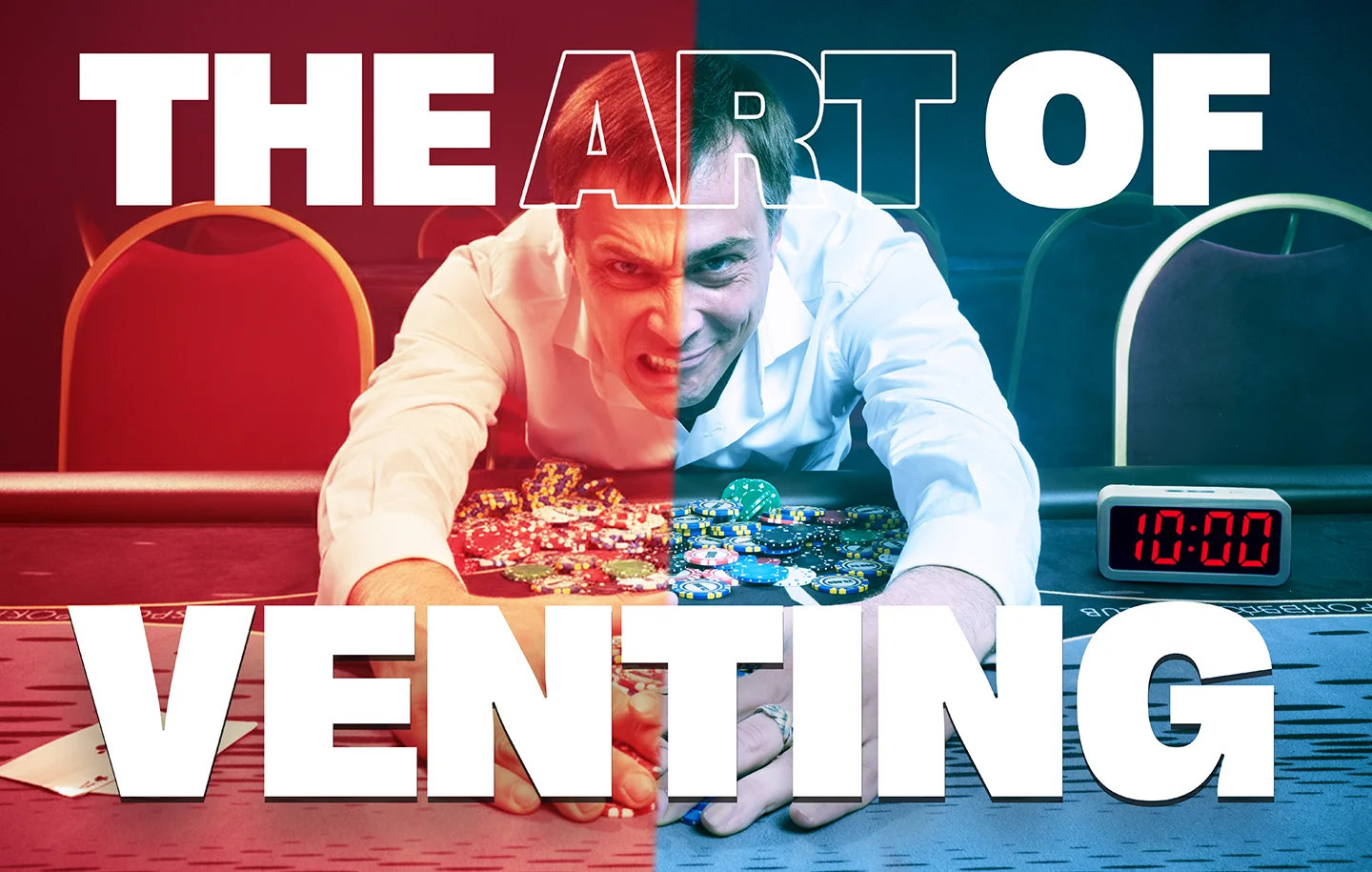
DE The Art of Venting in Poker

 PokerListings
-
 CoinPoker 150% up to $2000
18+ | Play Responsibly | T&C Apply
-
 Ignition Poker 150% up to $1,500
18+ | Play Responsibly | T&C Apply
-
 Stake.US Poker $55 Stake Cash + 260,000 GC
18+ | Play Responsibly | T&C Apply
-
 Americas Cardroom 100% up to $2000
18+ | Play Responsibly | T&C Apply
-
 Betonline Poker 100% Up to $1,000
18+ | Play Responsibly | T&C Apply

Thinking straight when your emotions are elevated is hard. That’s why a lot of poker players try to suppress their feelings during the poker session but regulars will confirm: this strategy isn’t helping in the long run. It actually hurts people by making them emotionally confused and unregulated enough to interfere with their decision-making process.
So, what do you do if you’re consumed in your emotions in the moment? Meditation, breathing exercises, and mindfulness techniques can help but these also demand learning how to use them in the most efficient way possible. There is one alternative for short-term results — one of the most ancient practices to relieve emotional pressure: venting.
What is Venting?
If you ask Daniel Negreanu, he says: venting is to go “full Hellmuth” meaning let yourself rant and whine in the moment instead of trying to brush off your emotions:
One of the biggest mistakes people make, in both poker and life, is not truly experiencing the moment. I let myself vent, feel it — but once I’ve processed it, I shift my focus and ask: alright, what’s next, what are we going to do about it? The answer is simple: we show up, wake up the next morning, and get right back in there. But this isn’t for everyone. A lot of people can’t handle the stress and the pain of losing over and over again.
Psychotherapy defines venting in a similar way, as a technique of talking about your negative experiences and living out your emotions all the way through so that they are no longer a burden.
Fun Fact: Therapists use different words for venting: catharsis, the talking cure or chimney sweeping, thanks to Sigmund Freud as well as Josef Breuer’s patient Bertha Pappenheim who invented two of these poetic terms.
Why Poker Players Have to Vent
Properly executed venting isn’t a miracle cure for your outbursts but it can definitely help you with your emotional regulation:
- Moderate venting facilitates the release of internal tension thus prevents bottling-up emotions.
- By garmenting reactions in words, we make them objects to evaluate from different points of view.
- Talking, especially outloud, helps us to distinguish real problems from irrational reactions to triggers.
- Sharing our emotions with others gives us an outside perspective to learn more about ourselves.
- Letting emotions be fully accepted and felt reduces the load of stress hormones, especially cortisol. As a result, the distress lives less and torments the body and mind for a shorter time.
However, there is always a catch and in this case it’s when you vent too much.
The Harm of Excessive Venting
In 2002, Brad J. Bushman Ph.D. uncovered that people who over-vent are not learning to manage their negative feelings in the long run. Instead, they’re adding fuel to the fire, solidifying unhealthy “schemes” in their brain.
When someone complains regularly, it creates an ill connection between:
- Negative emotions
- Release of the tension by talking
- Being rewarded for venting with dopamine
The alleged spiral here is: the more you vent —> the more dopamine you get —> the more “desirable” feeling of negative emotions becomes.
Also, by venting too much and too intensely, people use up their mental energy to the point of exhaustion, leaving themselves without enough internal resources to change unpleasant situations.
Finally, too much venting affects inter-personal relationships, often by turning a person into a whiner who doesn’t want to do anything except complain. With a reputation like that, a lot of people will avoid helping this person while others will diminish and devalue their reactions and emotions.
How to Vent in Poker Ecologically & Safely
- Vent for a limited period of time. No more than 10 minutes, less is better.
- Do not vent on others / in their presence without consent. Even your friends and family may not be ready or willing to listen to your complaints and show empathy, let alone strangers — especially other players at the poker table. That’s why we have priests, therapists and bartenders. And Reddit. And also Twitter.
- Practice intentional inner monologue. Talk to yourself inside your head when you feel emotional overload (and if you can’t vent to someone or outward).
- Ask yourself questions. Don’t just talk emotional gibberish, yell or curse without self-reflection — instead, take your time to process why your response was the way it was, what part of the situation affects you the most and what aspects of it are under your control.
- Use negative energy for positive changes. Negative reactions create an enormous amount of energy — they are powerful enough to take control over the most grounded of us. But it also means they make you powerful too — you just need to learn how to direct energy to achieve your goals. If you are self-sufficient enough, you can find a way to do so by yourself — or just hire a therapist or mental coach to help.
PokerListings Popular Articles

How to Transition From Play Money to Real Money Poker Smoothly

Five Slot Games Worth Checking Out at TonyBet Casino

Barbara Akemi: Brazil’s Best Poker Player Right Now?




Log in to join the discussion
Share your thoughts and see what others have to say.