
 EN
EN  DE
DE Should You Set a Volume Goal Rather Than a Winnings Goal?


 PokerListings
-
 CoinPoker 150% up to $2000
18+ | Play Responsibly | T&C Apply
-
 Ignition Poker 150% up to $1,500
18+ | Play Responsibly | T&C Apply
-
 Stake.US Poker $55 Stake Cash + 260,000 GC
18+ | Play Responsibly | T&C Apply
-
 Americas Cardroom 100% up to $2000
18+ | Play Responsibly | T&C Apply
-
 Betonline Poker 100% Up to $1,000
18+ | Play Responsibly | T&C Apply

In poker, many players like to set themselves specific goals. That might mean winning €1,000 in a month, reaching a certain bankroll before the end of the year, moving up in stakes within the next six months, or beating the results achieved the previous season. On paper, this approach seems perfectly logical. After all, if you play poker with the goal of making money, it seems natural to measure success by how much you win.
The problem is that poker results, and the money you make from them, do not depend entirely on the quality of the decisions you make. Even an excellent player can go through several losing weeks while playing extremely well. That is precisely why many professional poker players prefer to set goals they can actually control, such as a certain number of hands played, hours spent at the tables, or sessions played per week or per month. In this article, we are going to try to answer one question: should you set a volume goal rather than a winnings goal in poker?
A Financial Goal Seems Logical Until Variance Comes Into Play

Typically, if a cash game player decides they want to win €2,000 during the month, they will probably make sure to select their tables properly, respect their bankroll, and continue working on their game away from the tables. Yet after two weeks, their tracker shows a loss of €800. At that point, their original goal can start to become a problem!
The player is no longer thinking only about the quality of their decisions. They are also thinking about how much they still need to win before the end of the month. They no longer simply need to play well; they now have to “make back” €2,800 to reach their goal. This is exactly where a financial target can become dangerous, because it creates artificial pressure over a period the player cannot control at all.
Poker also has no reason to follow a monthly calendar. Variance does not know that there are ten days left before the end of the month, and it will not stop simply because a player planned to win a certain amount. Even a player who is a big long-term winner can go through a losing stretch, and trying to force results can quickly lead to bad decisions and seriously affect their mental game.
As a result, some players may increase their volume excessively, extend their sessions, play when they are tired, or even move up in stakes in the hope of recovering their losses more quickly. In that case, the goal that was originally supposed to motivate the player starts to damage the way they play.
Winnings Are Much Less Controllable Than Volume
This is probably the main difference between a winnings goal and a volume goal. A player can control many aspects of their poker activity, but they can never decide how much they are going to win over the next thirty days.
They can decide how many hours they want to play, choose the tables they sit at, decide how much time they spend studying, and even end a session when they feel their concentration dropping. They can also work on their mental game, improve their lifestyle, or organize their schedule more effectively. On the other hand, they have no direct control over the immediate financial outcome of their sessions.
Let’s take an example to illustrate this. Imagine an online cash game player who decides to play 40,000 hands during the month. At the end of the period, they can see very clearly whether they reached their goal. If they played 42,000 hands, they exceeded it, whereas if they played only 27,000, they fell short. The financial result may be positive or negative, but it does not change the reality of the work completed.
With a winnings goal, the situation becomes much more ambiguous, because a player can play badly for several weeks and still finish the month with a €5,000 profit. Conversely, that same player can play extremely well and still finish slightly down across all of their sessions.
Volume Makes It Easier to Measure the Work You Have Done
One of the main advantages of a volume goal is that it is based on something concrete that you can control. In online cash games, that might mean a certain number of hands played. Live, you can count the number of hours spent at the table, for example. A tournament player, meanwhile, can track the number of events or sessions played.
This approach also makes it much easier to structure your poker activity. A player who wants to play 100 hours of cash games during the month can spread that time over several weeks, schedule rest days, include study time, and organize sessions around personal commitments.
From there, poker starts to look much more like a genuine professional activity. Instead of simply waiting to see how much money they win or lose, the player creates a clear working framework. They know what they need to accomplish and can then analyze the quality of that volume.
Playing More Does Not Necessarily Mean Winning More
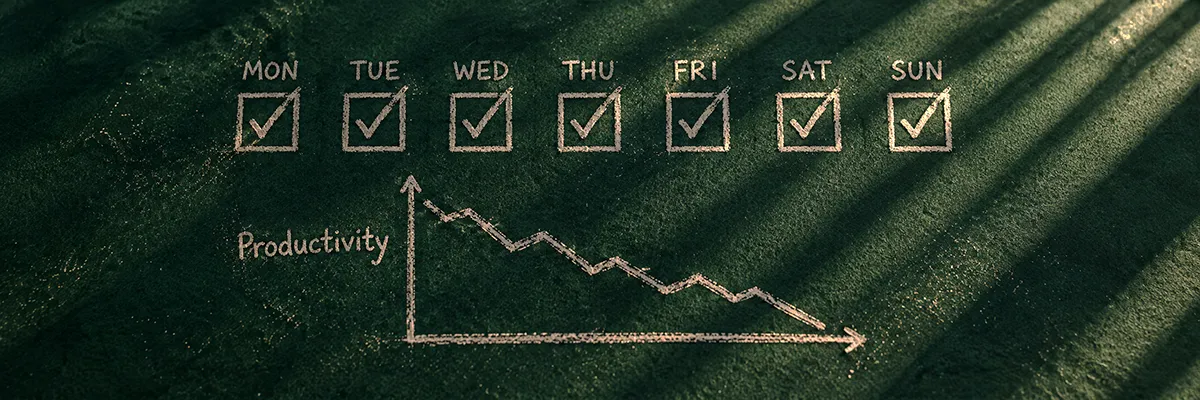
However, it is important not to go too far in the opposite direction. If winnings goals can be problematic, a poorly designed volume goal can be just as harmful. Being determined to accumulate thousands of hands or dozens of hours of play can end up being just as bad as trying to reach a precise amount of money.
Imagine a player who sets a target of 60,000 hands for the month. With only a few days left, they have played just 48,000. To reach the target, they start adding more tables, launching sessions while tired, or accepting games that are much less attractive than usual. In that case, the problem is actually very similar to the one created by a financial goal. The number becomes more important than the quality of play, and that is a huge mistake. Building volume only has value if the player is able to maintain a sufficiently high level of performance.
In cash games, this is particularly important, because a player who is determined to reach a hand target may be tempted to play every available table, or to play far more tables at once than they are used to. Yet, as we discussed in another article about the importance of table selection, 10,000 hands played in excellent conditions can sometimes be more valuable than 20,000 hands played in mediocre games.
The Right Goal Also Depends on Your Ability to Stay Sharp
It is therefore not enough to ask how much volume you should produce. You also need to know how much volume you can handle while maintaining a good level of play. Some players can stay fully focused for five or six hours, while others start to lose sharpness after two hours. Online, some grinders can play several tables at the same time without significantly affecting the quality of their decisions, while others become far less attentive as soon as they increase their table count.
So remember this: a volume goal should always be adapted to the player you are. It should be ambitious enough to create discipline and consistency, but not so demanding that it pushes you to play when the conditions are no longer good. Over the long term, the quality of your volume is probably far more important than the raw number of hands or hours accumulated.
Winnings Goals Can Be Devastating for Your Mental Game
Another major problem with financial goals is psychological. For example, imagine a player who wants to win €3,000 during the month. They start very well and quickly reach €2,500. They are now very close to their target, but one bad session costs them €1,200. Psychologically, they may suddenly feel as though they have lost something they already considered almost secured. Instead of being only €500 away from their goal, they are suddenly much further from it.
This type of situation can encourage tilt and make the player want to win back the lost money immediately. They may extend a session that should have ended, stay at a bad table, or even increase the stakes. The financial goal therefore becomes an emotional reference point that gradually influences decisions that should remain rational.
The opposite can also happen when a player reaches their goal much earlier than expected. If they wanted to win €3,000 during the month and reach that figure on the 18th, they may be tempted to reduce their volume significantly in order to “protect” their results. Yet if an excellent game is available the next day, the fact that they have already reached their goal changes absolutely nothing about the profitability of that game.
In Poker, the Process Is Often More Important Than the Short-Term Result
This is probably what makes this question so interesting. Poker is a game in which a good decision can lose money and a bad decision can make money. In the short term, it is therefore very difficult to measure the quality of your work based solely on the financial result.
As we have seen, a well-designed volume goal allows a player to focus on what they can actually control, such as playing enough, working on their game, selecting the right games, maintaining concentration, and respecting their bankroll.
Of course, a professional player will need to make money over the long term. Nobody can live forever on excellent volume combined with permanent losses. But trying to force a specific amount of profit every week or every month can quickly become counterproductive.
Ultimately, rather than deciding how much you absolutely need to win, it often makes more sense to define what you need to accomplish to maximize your chances of being a winning poker player. In a game so heavily influenced by variance, that difference can matter far more than it may seem.
PokerListings Popular Articles

How to Transition From Play Money to Real Money Poker Smoothly

Five Slot Games Worth Checking Out at TonyBet Casino

Classic, Rush, or AOF: Where to Start Your Poker Career






Log in to join the discussion
Share your thoughts and see what others have to say.