
 EN
EN  DE
DE How Do You Know When to End a Poker Session?

 PokerListings
-
 CoinPoker 150% up to $2000
18+ | Play Responsibly | T&C Apply
-
 Ignition Poker 150% up to $1,500
18+ | Play Responsibly | T&C Apply
-
 Stake.US Poker $55 Stake Cash + 260,000 GC
18+ | Play Responsibly | T&C Apply
-
 Americas Cardroom 100% up to $2000
18+ | Play Responsibly | T&C Apply
-
 Betonline Poker 100% Up to $1,000
18+ | Play Responsibly | T&C Apply

Knowing when to start a poker session is relatively simple. You sit down at a table, launch a few online poker games or head to your usual casino with the intention of playing for several hours. However, figuring out the right time to stop can be much more complicated! In a tournament, you leave the table when you are eliminated, but in cash games, it is a completely different story. Should you leave the table after losing several buy-ins? Keep playing when a game seems particularly profitable? Or leave after making a significant profit?
The answer obviously depends on many factors. But one thing is certain: the amount won or lost should not be the only element you take into account. In this article, we are going to point you in the right direction so that you can understand when it is the right time for you to leave a poker table!
Your Level of Play Is Probably the First Indicator to Watch
When a player starts a session, they generally have a certain level of concentration. They observe their opponents, think about their ranges, take the time to analyze situations and avoid making impulsive decisions. But over time, the quality of that thought process can gradually decline. After several hours, fatigue may begin to set in, decisions become more automatic, certain details are overlooked and the player may start choosing moves they probably would not have made a few hours earlier.
These signs are very good indicators of when to end a session! After six hours of play, it is certain that our concentration drops, that we are much less attentive to what is happening at the table, and we therefore need to know how to identify when we are no longer capable of playing our A-Game.
The question is therefore no longer whether we are better than our opponents, but whether our edge is still large enough to justify continuing to play! Unfortunately, in poker, a few slightly worse decisions can be enough to gradually turn an excellent situation into a much less profitable poker game.
For example, imagine that you start a game with two recreational players who make a lot of mistakes. A few hours later, both players leave the table and are replaced by two experienced regulars. Even if you are still perfectly focused, your edge at the table may have decreased considerably. In that situation, continuing to play simply because you had planned a long session does not necessarily make much sense!
Fatigue Can Be a Particularly Insidious Enemy
One of your main opponents at the poker table will be fatigue! It does not necessarily show itself through feeling sleepy at the table. It can appear in much more subtle ways. For example, you may start checking your phone more regularly and pay less attention to hands you are not involved in. You may spend less time thinking before making a decision or start getting annoyed by fairly ordinary situations!
Online, it can also result in a desire to think less and play much more automatically, especially if you play a lot of poker tables at the same time. Overall, all the behaviors we have just mentioned can signal a drop in concentration and a certain level of fatigue.
An experienced player must therefore gradually learn to recognize their own signs of fatigue. Some become too passive when they are tired. Others, on the contrary, become much more aggressive or impatient. The goal is not necessarily to define a universal number of hours after which everyone should leave the tables, because two players can have very different levels of concentration endurance.
The most important thing is to know how to identify the moment when your own level genuinely starts to decline at the poker tables!
Should You Automatically Stop Playing After Losing Several Buy-Ins?
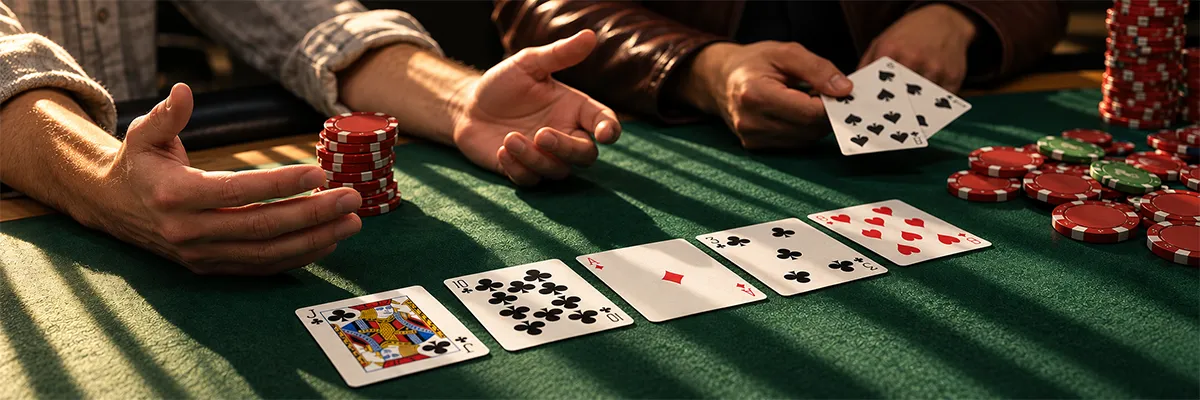
Personally, and I know I am not the only one, I use what is known as a stop-loss. It is very important to decide in advance how many buy-ins you are prepared to lose before leaving the table. This method has one obvious advantage: it prevents a bad session from turning into a complete disaster under the effects of tilt! But a stop-loss should not necessarily be considered a universal strategic rule.
Imagine losing three buy-ins in an hour in an extremely profitable poker game. You have suffered several setups and bad beats, but you feel perfectly focused. Your bankroll is appropriate for the stakes and several opponents are making a huge number of mistakes. Based on that, losing three buy-ins does not suddenly make the game less attractive, and leaving could actually be a mistake!
Conversely, imagine that you lose three buy-ins and your only motivation for continuing is to win back the money you lost. You start constantly checking your profit/loss in the tracker, and you tell yourself that you will only leave the table once you are back to even. In this situation, the problem is no longer necessarily the amount you have lost, but the reason why you are continuing to play. Desperately trying to recover your losses can push you to prolong a bad session and make decisions you probably would not have made in a normal state of mind.
A stop-loss can therefore be an interesting discipline tool, particularly for players who know they tend to lose control after certain losses. But it absolutely does not replace analyzing your mental state and the quality of your play.
Being Up Is Not a Reason to End the Game Either
The opposite mistake also exists! Sometimes, we like to leave the table after making a significant profit in order to lock in our winnings. After winning three buy-ins, some players may feel that it would be a shame to continue and risk giving back some of the profits they worked hard to earn. Psychologically, this reaction is perfectly understandable. Strategically, it is much more questionable.
The money you have won over the past three hours is now part of your bankroll. It should not be treated differently from the money you had before you started playing.
If you are in an excellent game, you are focused and you still have a significant edge over your opponents, being up is not in itself a reason to leave!
However, there is one situation in which your winnings can indirectly change the way you see things. For example, if you start a game with 100 big blinds and, a few hours later, you have 400 in front of you. If you are not used to playing with such a deep stack, some decisions can become much more complex and mistakes potentially more costly! In this situation, it is not the fact that you are winning that may justify leaving the table, but rather the fact that you are no longer comfortable with the conditions in which you are playing.
Overall, this is probably one of the most important ideas to remember: a session should not continue simply because you want to get back to even, just as it should not necessarily end because you have reached a certain profit.
The Best Decision Is Not Always the One That Maximizes Your Playing Hours
Poker players talk a lot about volume, and rightly so, because for a winning player, playing more also allows them to exploit their edge over a larger number of hands. But not every hour of play has the same value.
An hour spent playing with perfect concentration in an excellent game can be extremely profitable. An extra hour spent tired against good opponents may, on the other hand, have very little value, or even become losing!
The real goal is therefore not necessarily to play for as long as possible, but to maximize the number of hours during which you are able to make good decisions in attractive situations.
So, When Should You Take a Break or End Your Session Completely?
It all depends on the type of player you are. But overall, here are a few simple questions you can ask yourself that may help you take a step back:
- Am I still capable of playing my A-Game?
- Are fatigue or my emotions starting to influence my decisions?
- Am I continuing only because I want to recover my losses?
- Is the game still as attractive as it was at the start of my session?
- Could a short break help me regain a better level of concentration?
- Are the players who made the table particularly profitable still there?
Ultimately, knowing when to end a session is a skill in its own right. The amount won or lost can obviously influence your psychological state, but it should not be the main decision-making criterion. Your level of concentration, your fatigue, your emotional state and the quality of the game are probably much more relevant indicators!
PokerListings 







Log in to join the discussion
Share your thoughts and see what others have to say.