
 EN
EN  DE
DE Is Live Poker Experiencing a New Golden Age?

 PokerListings
-
 CoinPoker 150% up to $2000
18+ | Play Responsibly | T&C Apply
-
 Americas Cardroom 100% up to $2000
18+ | Play Responsibly | T&C Apply
-
 Ignition Poker 150% up to $1,500
18+ | Play Responsibly | T&C Apply
-
 Black Chip Poker 100% Welcome Bonus
18+ | Play Responsibly | T&C Apply
-
 Stake.US Poker $55 Stake Cash + 260,000 GC
18+ | Play Responsibly | T&C Apply

In the mid-2000s, poker experienced what many still consider its golden age. Thanks to Chris Moneymaker’s incredible performance, the explosion of online poker and televised broadcasts turned poker into a genuine cultural phenomenon. Twenty years later, the situation is somewhat different among the general public, the online ecosystem has become fragmented as regulations have evolved, and poker’s biggest names are less well known outside the community.
And yet, when you look at what is happening at live poker events in 2026, poker has never been so active, with more and more players travelling to take part in major events. Festivals are multiplying, the biggest tournaments continue to attract thousands of players, and high-stakes circuits keep breaking their own attendance records year after year. In this article, we are therefore going to try to determine whether poker in 2026 is experiencing a new golden age or not!
Numbers That Are Hard to Ignore
The first indicator to look at is obviously attendance at live poker events. In 2026, for example, the WSOP Main Event attracted 9,208 players. That is below the record of 10,112 entries set in 2024, but it still makes it the fourth-largest Main Event in history. In 2025, 9,735 players travelled to Las Vegas to try their luck in the most prestigious poker tournament in the world. The contrast is striking when compared with the period between 2006 and 2022, when the tournament generally attracted between 6,500 and 8,000 participants.
Of course, the Main Event only represents one part of the phenomenon. In total, the 2025 WSOP recorded 246,960 entries and awarded more than $481 million! Some tournaments with more affordable buy-ins have also reached gigantic proportions, such as the 2025 Mystery Millions, which attracted 19,654 entries, or the $300 Gladiators of Poker, which recorded 24,629 entries.
Of course, the phenomenon does not stop in Las Vegas! For example, the 2025 EPT Barcelona Main Event became one of the three biggest in the history of the tour, with a prize pool of almost €10 million. In December, the WPT World Championship at Wynn attracted another 1,865 entries, generating a total prize pool of $18 million.
Ultimately, on a global scale, it is clear that live poker has shown a remarkable ability to fill tournament rooms that would have seemed completely oversized only a few years ago.
Festivals Have Become Real Competitions
Part of this success comes from the fact that organizers are no longer selling just one tournament. They are selling an experience lasting several days. Modern major events often run for ten days, two weeks and sometimes much longer! Players can choose between dozens of tournaments, satellites, Mystery Bounties, High Rollers, lower buy-in events or more unusual formats.
The destination itself has also become a selling point, and unique places such as Barcelona, Monte Carlo, Las Vegas, Cyprus or Jeju are no longer simply places where people play poker. They have also become genuine destinations that players love!
This evolution brings poker closer to some major sporting or music events. Players no longer travel only to take part in a competition; they come to spend several days surrounded by their passion. For recreational players, this changes a lot, because a festival allows them to build their trip around their budget. Someone who cannot afford to play a Main Event costing several thousand dollars can enter side events or try to qualify. At the other end of the spectrum, however, the wealthiest players can play one five-figure tournament after another if they want to!
Live poker now manages to bring several different types of players together in the same place, and this diversity is probably one of its greatest strengths.
High Stakes Have Never Been So Spectacular
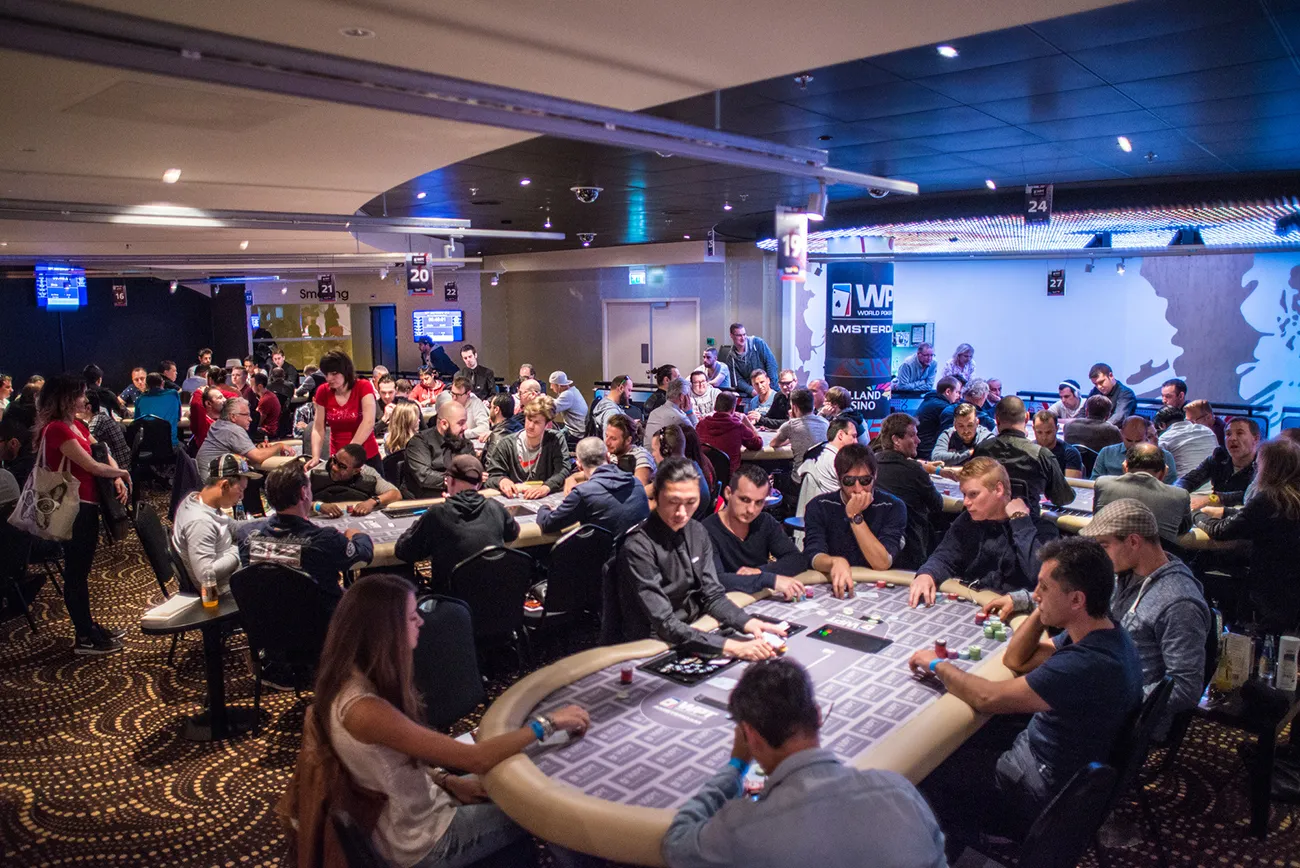
Personally, I think this is one of the most visible changes of the past decade. For a long time, a $100,000 tournament was considered an exceptional event. Today, Super High Rollers have almost become a category of their own. Triton perfectly symbolizes this transformation.
During its Jeju stop in March 2025, the tour recorded 3,349 entries across 18 different tournaments, generating more than $144 million in combined prize pools. Its $100,000 Main Event attracted 285 players and generated $28.5 million, making it the largest six-figure buy-in tournament ever held.
Numbers like these would have seemed almost unrealistic during the first poker boom. However, there is one important point to mention. This appetite for high rollers probably could not have developed in the same way without the growth of cryptocurrencies! Many players invested in this well-known technology, and many were able to build fortunes that made it much easier for them to play this type of high-stakes festival.
Triton has not simply increased the amounts of money involved. The circuit has also understood that high stakes can become a spectacle. Highly polished production, exposed hole cards, commentary and storytelling around the players… It has all the ingredients of a major sporting event! This showcase also plays a very important role in the vitality of live poker, because it creates stars, but also stories that people sometimes continue talking about long after the festival has ended.

Social Media and Poker
If there is one thing that is undeniable, it is that poker has moved! YouTube, Twitch, Instagram and specialized platforms have completely changed the way people follow events. A spectacular hand can travel around the world just minutes after it is played. A bluff, a hero call, but also a huge mistake, can become a piece of content consumed by people who would never watch six hours of a tournament on television!
The organizers have understood this perfectly. A tournament is no longer designed only for the players in the room; it must also produce images, stories and moments that can exist beyond the event itself.
But that does not mean traditional television has completely disappeared! In 2026, ESPN and the WSOP signed a new agreement bringing the Main Event back to the group’s platforms. More than 100 hours of coverage were scheduled, and ESPN announced worldwide distribution reaching more than 400 million households.
Poker Now Travels Around the World
Poker in the 2000s was largely told through Las Vegas, the United States in general, and a few major European stops. Today, the international calendar spans several continents.
Asia in particular has taken on a much bigger role in high-stakes poker, with destinations such as Jeju becoming essential stops. Europe, meanwhile, retains major events in Barcelona, Prague and Monte Carlo. Latin America also has its own ecosystem, while Las Vegas remains the center of the poker world during the WSOP.
This internationalization is also changing the composition of tournament fields. Major poker tournaments now bring together more nationalities, but also different profiles and poker cultures. A professional player can now build an entire year of live poker by moving from one circuit to another, with festivals constantly taking place somewhere in the world.
Live poker is therefore no longer just a succession of isolated major tournaments. It has become a truly global calendar!
So, Can We Really Call It a Golden Age?
Ultimately, it all depends on what we mean by that expression! If a golden age means poker being a mainstream cultural phenomenon comparable to what it was after Chris Moneymaker’s victory in 2003, then the answer is probably no.
Professional players are less recognizable to the general public, and the media landscape is much more fragmented. Indeed, the poker industry now has to fight for attention amid an almost infinite amount of content!
Clearly, live poker is not reliving the boom of the 2000s, but it is experiencing something else. The first golden age was largely built on the general public discovering poker. Today’s is based more on the maturity of its ecosystem. The circuits know how to produce gigantic events, and players have an extremely diverse range of options. It is therefore entirely possible that poker is less visible today to someone who has no interest in the game at all, while being far richer for those who are already part of the poker world. And that is the whole paradox.
Poker may no longer be the social phenomenon it briefly was at the beginning of the century, but in terms of tournament choice, attendance, prize pools and production quality, live poker is undeniably going through an exceptional period.
What matters today is the vitality of the ecosystem itself!
PokerListings 






Log in to join the discussion
Share your thoughts and see what others have to say.