
 EN
EN  DE
DE How Has Triton Transformed High-Stakes Poker?

 PokerListings
-
 CoinPoker 150% up to $2000
18+ | Play Responsibly | T&C Apply
-
 Americas Cardroom 100% up to $2000
18+ | Play Responsibly | T&C Apply
-
 Ignition Poker 150% up to $1,500
18+ | Play Responsibly | T&C Apply
-
 Black Chip Poker 100% Welcome Bonus
18+ | Play Responsibly | T&C Apply
-
 Stake.US Poker $55 Stake Cash + 260,000 GC
18+ | Play Responsibly | T&C Apply

Fifteen years ago, playing a $100,000 poker tournament was still something exceptional. A few events of this kind already existed around the world, and the Big One for One Drop with a $1 million buy-in had notably pushed the limits at the 2012 WSOP. But six-figure tournaments remained relatively rare. Ten years after the launch of the Triton Super High Roller Series, the high-stakes landscape looks completely different. In 2026, and for several years now, a Triton festival can feature several $50,000, $100,000 or even $150,000 tournaments within the same two-week period!
Around the tables are some of the best players in the world alongside international businessmen, and several million dollars can change hands in just a few days. Triton has therefore done more than simply add a few extra tournaments to the calendar: it has helped completely transform high-stakes poker.
High Roller Tournaments Already Existed Before Triton
Of course, it would be wrong to consider Triton the inventor of high-stakes poker. The WSOP, European Poker Tour, Aussie Millions and Super High Roller Bowl were already organizing tournaments with enormous buy-ins. The Big One for One Drop had even offered a $1 million buy-in as early as 2012. But these events were generally isolated dates on the annual calendar.
Triton, however, gradually began offering something different and established a genuine circuit built entirely around high-stakes poker. The series was launched in 2016 by Paul Phua and Richard Yong, two major figures in Asian high-stakes games.
The concept quickly began attracting some of the best players on the planet, but one of the circuit’s greatest strengths does not rely solely on professionals. Wealthy “amateur” players are also part of the mix, helping fuel the huge prize pools in these tournaments.
Triton Brought Businessmen and the World’s Best Players Together
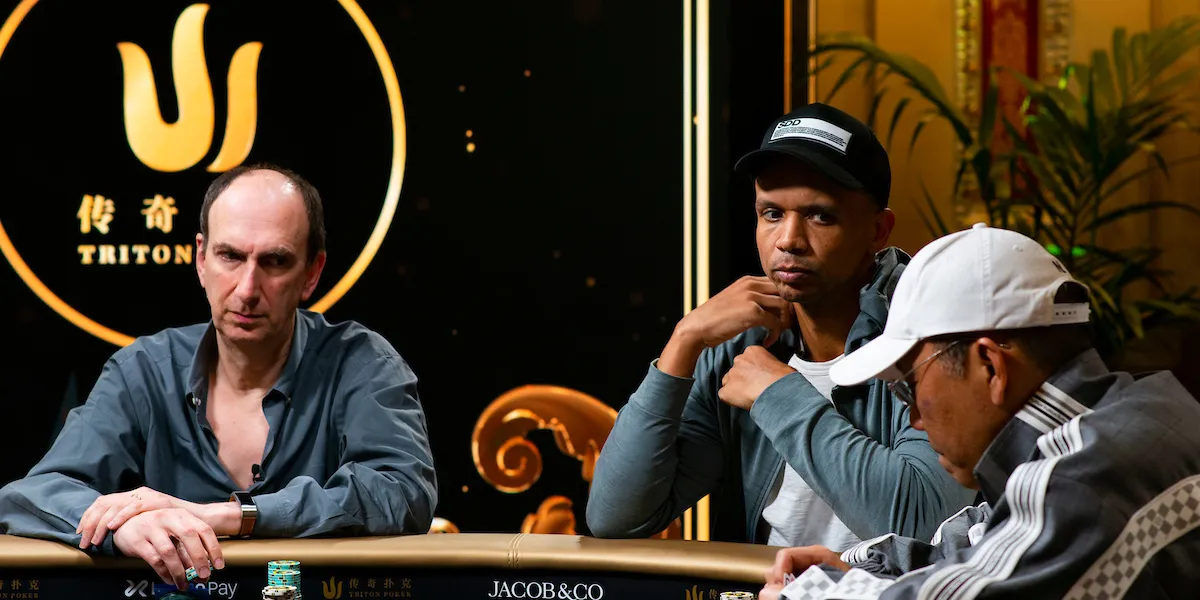
From the beginning, Triton has had one essential characteristic. The circuit is closely linked to the community of wealthy Asian players and businessmen passionate about poker. Paul Phua himself has explained that the games in Macau regularly brought together wealthy amateurs and stars such as Phil Ivey, Tom Dwan and Patrik Antonius.
On one side, the best professionals in the world obviously have every reason to take part because the prize pools are enormous. On the other, recreational players have a prestigious environment in which they can compete directly against these champions. And this mix is fundamental to the success of the series!
A tournament made up exclusively of the 50 best poker professionals in the world would probably be far less attractive economically for those same professionals. The presence of businessmen and recreational players therefore creates a very particular dynamic.
Triton has even taken things a step further with its “Invitational” tournaments! In these events, an invited player who generally belongs to the amateur or businessman category can invite a professional. Most of the time, amateurs and professionals even play the first day separately before being brought together later in the tournament! This format has clearly become one of the circuit’s trademarks.
Huge Buy-Ins Have Almost Become Normal
This is probably one of the most visible transformations of the high-stakes circuit. In the Triton world, a $25,000 tournament can sometimes be one of the smallest events on the schedule!
For example, in Monte Carlo in 2024, the schedule featured tournaments at $25,000, $30,000, $40,000, $50,000, $100,000 and $150,000, alongside a $125,000 Main Event and a $200,000 Invitational. After seeing these kinds of amounts again and again, the public can almost lose sight of just how much money is actually being put at risk.
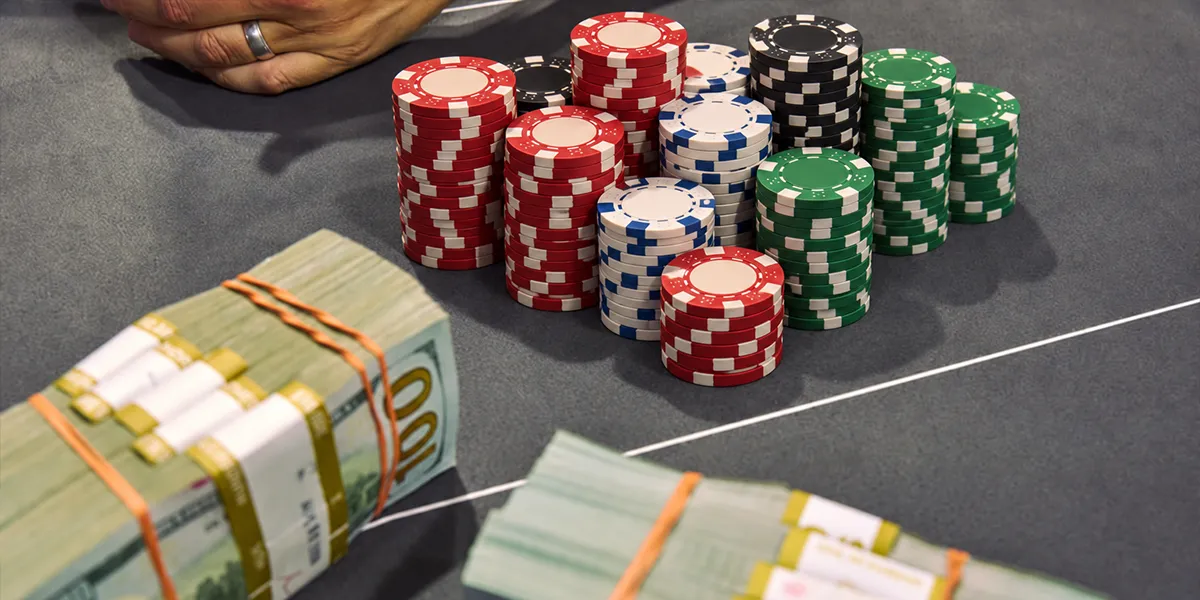
Yet buying directly into a $100,000 tournament means risking the equivalent of the price of an apartment in a single competition!
What is even more incredible is that the numbers continue to rise. In March 2025, the $100,000 Triton Jeju Main Event attracted 285 entries, creating a $28.5 million prize pool. At the time, it was the largest field in history for a six-figure buy-in tournament. Huang Wenjie won $5.555 million in the event.
In short, Triton has not only managed to increase the buy-ins. It has also increased the size of the fields at the same time, and that is probably the most impressive part!
Triton Also Helped Drive the Rise of Short Deck
What is remarkable is that the transformation is not only about money. The circuit also played an important role in popularizing Short Deck with an international audience. This variant, which emerged from Asian high-stakes games, uses a 36-card deck and generally produces more confrontations and action than traditional No-Limit Hold’em.
In 2018, Triton organized a major Short Deck tournament in Montenegro with a buy-in of 1 million Hong Kong dollars. Jason Koon won the event for around $3.58 million after facing players including Phil Ivey and Tom Dwan.
Short Deck would then appear regularly on Triton schedules. At a time when most major circuits relied almost exclusively on No-Limit Hold’em, Triton gave a global stage to a variant that had previously been best known in private Asian games. Pot-Limit Omaha has also taken on an increasingly important role, to the point that $100,000 PLO Main Events now appear on the schedule at some festivals.
As you can see, Triton has become something of a laboratory for high-stakes poker.
High-Stakes Poker Has Become a Media Product
There is another major transformation: the way these games are watched. For a long time, much of the real high-stakes poker action took place away from the cameras, particularly in private cash games in Macau, Las Vegas and other destinations. Triton, by contrast, has done exactly the opposite.
The circuit has invested heavily in its broadcasts, content and audiovisual production. The brand itself presents its goal as delivering cinematic-level broadcasts capable of reaching a global audience!
In 2026, it is now possible to watch some of the best players in the world make decisions worth hundreds of thousands of dollars for free, with hole cards visible and commentators helping viewers understand the action. The huge sums of money become a form of entertainment in themselves. Triton is therefore no longer simply selling a tournament to the players in the room: it is offering a genuine spectacle to a global audience.
Triton Has Created Its Own Hierarchy
Finally, the circuit has become important enough to create its own records and specialists. Jason Koon is probably the best example. In 2026, the American holds 12 Triton titles, five more than any other player, and has accumulated more than $36 million in winnings on the circuit alone. He also sits third on the All-Time Money List with more than $77 million in live tournament winnings.
A few years ago, a tournament player’s career was mainly measured by their WSOP bracelets, EPT or WPT titles and results in a handful of major High Rollers. Today, the number of Triton titles is also part of the CV of the best players on the planet.
The circuit has its regulars, its Player of the Year ranking, its records and its specialists. In only ten years, a new form of prestige has established itself.
Triton Did Not Invent High Stakes, but It Changed the Scale
That is probably the best way to summarize the circuit’s impact on the poker ecosystem. Expensive tournaments clearly existed before Triton. Businessmen were already playing against professionals, and players were already selling action! But Triton managed to bring all of these elements together in one single product.
An international calendar, prestigious destinations, the best professionals in the world, wealthy amateurs, different variants, high-end audiovisual production and, above all, buy-ins that sometimes begin where those of other circuits end!
On top of that, it is worth noting that the organization at Triton festivals is absolutely excellent! Many players have already spoken positively about the quality of the Triton experience.
The brand is now looking to expand its ecosystem even further with Triton ONE, a series offering much more accessible buy-ins, generally ranging from a few thousand to a few tens of thousands of dollars.
Perhaps a way to create an entry point into the Triton universe.
PokerListings 




Log in to join the discussion
Share your thoughts and see what others have to say.