
 EN
EN  DE
DE How Emotional Suppression Can Mess With Poker Players’ Heads

 PokerListings
-
 CoinPoker 150% up to $2000
18+ | Play Responsibly | T&C Apply
-
 Ignition Poker 150% up to $1,500
18+ | Play Responsibly | T&C Apply
-
 Stake.US Poker $55 Stake Cash + 260,000 GC
18+ | Play Responsibly | T&C Apply
-
 Americas Cardroom 100% up to $2000
18+ | Play Responsibly | T&C Apply
-
 Betonline Poker 100% Up to $1,000
18+ | Play Responsibly | T&C Apply

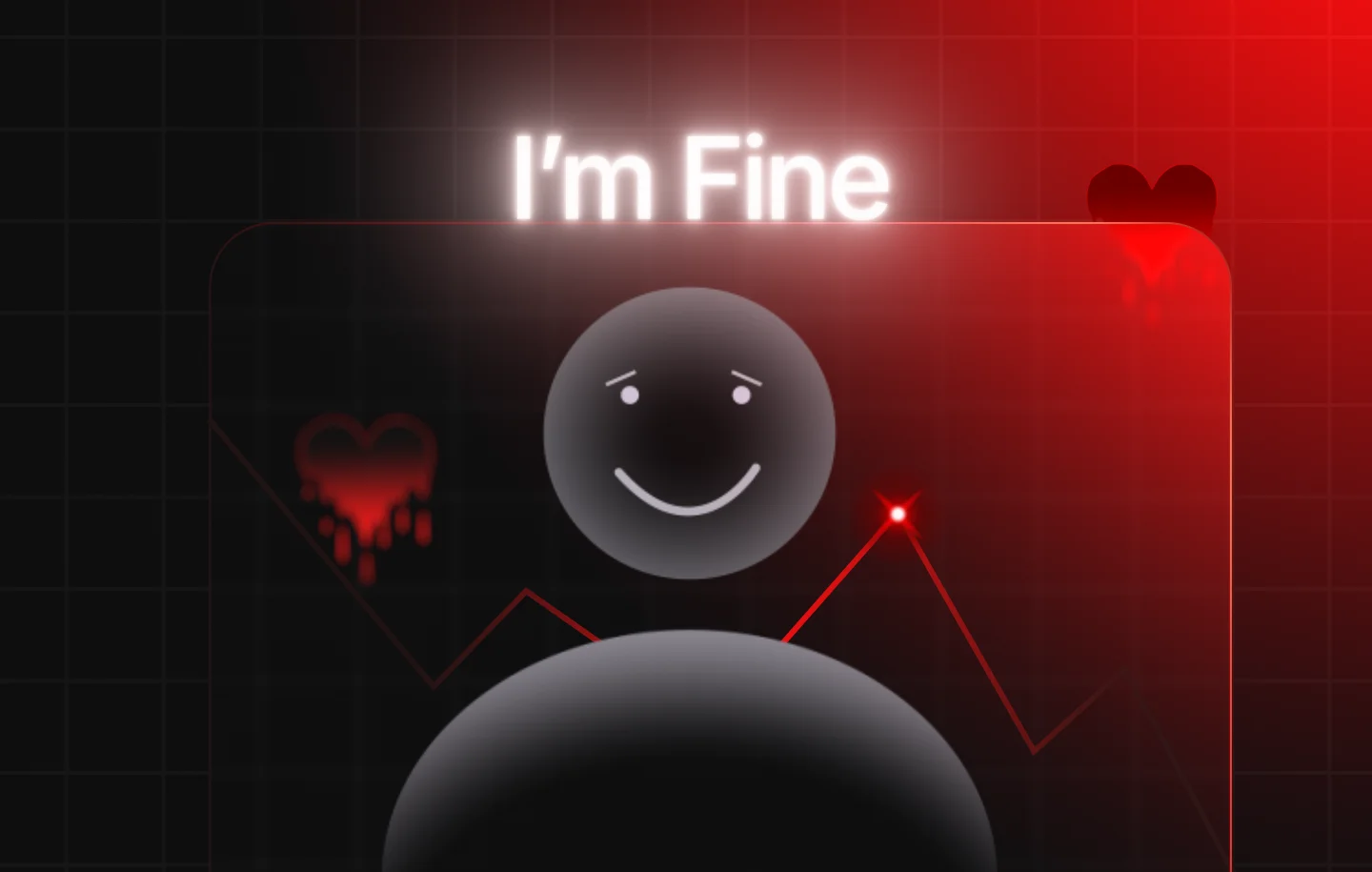
The poker community shares a common misconception that emotional management is a set of mechanisms to suppress emotional responses. A lot of elite poker players solidify this by popularizing views such as “you can’t let your emotions get the best of you”, “you need to abstract yourself from your emotions”, and “emotions and feelings can be left for analysis until later — after the game”.
While these ideas seem good on paper, in reality they come with a lot of ifs and buts.
Following the latest discussion on X (Twitter), we’ve created this article to share knowledge about one of the most important aspects of having a good and happy life: the significance of a healthy relationship with your own emotions.
Resilience vs. Suppression: Players’ Experiences
This topic was raised in March 2026 by Jeremy Ausmus who shared his recent insight on how unhealthy muting your emotions is:
Sure it can give you resilience throughout the day but avoiding these emotions eventually leads to you feeling numb to a lot of things in life. Recently, I’m trying to focus on them more and really feel them and then move on. Maybe at the table isn’t the ideal times for this but eventually you need to process these emotions. I’m already finding that being in tune with your mind and body and not shoving feelings to the side definitely has benefits.
Daniel Negreanu joined the discussion by sharing how he came to the same conclusion years ago:
While a lot of players came to the comments to share their stories and support Jeremy, they all also showed that poker players don’t really understand what they’re talking about, mixing up emotional suppression — the bad way of dealing with emotions — and emotional resilience — the proper way of handling emotions.
Danielle White had one of the best explanations of differences between them:
“I was raised by two poker players. In my teens, I was essentially taught that my emotions were inconvenient and unimportant. Obviously, suppressing my emotions became a useful skill when I started playing poker in my 20s, but by my 30s I had developed anxiety.
As someone who’s been on both sides of this experience, I can tell you that emotional suppression and emotional resilience are not the same thing. Resilience requires experience. It demands that emotions be felt. Resilience requires far more strength, and the benefit is a life with far more depth, connection, and richness than anything I could have ever imagined before therapy. Suppression, on the other hand, forces emotions to be carried with us for years and can lead to mental and physical health problems later in life.
The American Psychological Association describes resilience as the process and outcome of successfully adapting to difficult or challenging life experiences, especially through mental, emotional, and behavioral flexibility and adjustment to external and internal demands.
Suppression, on the other hand, is described as a conscious effort to put disturbing thoughts and experiences out of your mind, or to control and inhibit the expression of unacceptable impulses and feelings.
Based on this, we can highlight the key difference between emotional resilience and emotional suppression. Resilience manifests as a healthy way to acknowledge your emotions, feel them and let them be without them overcoming you. Suppression is not about feeling your emotions at all but about putting them in the closet so that they don’t influence your behavior at a given moment.
How Emotional Suppression Affects Both Mind and Body
Besides making distinguishing between emotions more difficult over time, emotional suppression also significantly harms the human brain.
According to a 2020 study, when people suppress their emotions it leads to a decrease in memory and perception.
When you engage in suppression — explicitly or implicitly — your brain is forced to choose what functions to slow down to free up extra resources to deal with it. More often than not, it chooses memory — that’s why people often can’t clearly remember moments of their life when they have an emotionally-charged response.
As a result, your body stores suppressed emotions but doesn’t register what causes them. So, the next time you find yourself in a similar situation or encounter a suitable trigger, old emotions will come out of the closet, mixing with new ones — and you won’t even understand what exactly caused your reaction because there are no memories.
It doesn’t end there. Your brain can’t just suppress emotions until they vanish — because they don’t actually have any place to go. The more emotions you store — the more resources your brain needs to keep them in the closet while performing the next emotional suppression. It is exhausting but your body will try to adjust for as long as it can because that’s how it works.
At some point so many resources will be used up in this process, that it will make it harder for you to remember new events as well as recall past ones.
Your perception also suffers from suppressing emotions but to a smaller degree. By suppressing emotions, you train your brain to react to some things less strongly. As a result, the brain changes your perception of these and related things, distorting their emotional significance to the point when you can start responding completely inadequately.
Finally, there is also evidence that emotional suppression increases physiological stress reactivity. It means that person starts to respond to unpleasant situations much more intensely on the physiological level, manifesting in muscle and joint pain, migraines, digestive and other palpable issues. The worst part is that if the suppression is already interfering with memories, the person can have a hard time to process and understand their physiological responses because there is no connection between the event, emotions and physical reaction.
This is exactly why some people spend years in therapy trying to understand what they feel and why. It’s not that they don’t want to improve, that they’re stupid, or that they’re not trying hard enough. It takes time for the brain and body to rebuild connections that weren’t formed or were destroyed by prolonged emotional suppression.
Ways to Get in Touch With Your Emotions
Looking back on her experience, Danielle White recommends players not to act on their own but seek a therapist:
I would imagine that a solid majority of poker players struggle with this. I highly recommend seeking a therapist who can help you learn to access and reprocess suppressed emotions, as well as help you develop the tools to process your emotions in real time.
The American Psychological Association is in alignment with this stance when it comes to people who are already struggling with their emotions and responses due to prolonged suppression.
If you’re at the start of this harmful path or just want to develop a better understanding of your emotions, we have a few tools for you from the guide for therapists “Emotional Repression: How to Stop Suppressing Emotions”.
Fill the Emotional Regulation Worksheet
Every time you react to something, write down answers to the following questions:
- What happened?
- Why did this situation happen?
- How did you feel, both physically and emotionally?
- How did you want to react to this situation?
- How did you react?
- How did your emotions and actions affect you later?
By doing this, you help yourself to identify and understand your emotions better but also elevate your personal mechanisms of emotional regulation.
Map Emotions
Focus on a specific emotion you want to understand better and write down answers to the questions below.
Let’s say, you recently became irritated during the poker session. Focus on this situation and answer:
- What exactly was the situation, and who were you irritated with?
- Where did you feel the emotion in your body — in which part or areas?
- What color and shape best describe this feeling?
When you imagine your response in your head, imagine it slowly blurring, becoming paler and eventually disappearing. This technique can help increase your level of emotional control but also help you better understand how your body responds to different situations, distinguishing which part of it is “responsible” for different emotions.
Distinguish Emotional Response from Rational Response
Not every reaction in our life is related to emotions but a lot of them seem more rational than they really are. If you want to better understand when your response is more emotion-driven and when it is reason-driven, you should follow this algorithm:
- Remember and describe in detail a situation where you suspect yourself of being ruled by emotions.
- Write down what your emotions are telling you in this situation.
- Write down what your reason is telling you to in this situation.
- Describe how your emotions shape your judgement.
- Describe how your reason shapes your judgement.
This will help you better distinguish your emotional and rational reactions, and you will also learn to make better decisions as a result.
PokerListings Popular Articles

How to Transition From Play Money to Real Money Poker Smoothly

Five Slot Games Worth Checking Out at TonyBet Casino
Classic, Rush, or AOF: Where to Start Your Poker Career






Log in to join the discussion
Share your thoughts and see what others have to say.