
 EN
EN  DE
DE Can Poker Become a Mainstream Phenomenon Again?

 PokerListings
-
 CoinPoker 150% up to $2000
18+ | Play Responsibly | T&C Apply
-
 Americas Cardroom 100% up to $2000
18+ | Play Responsibly | T&C Apply
-
 Ignition Poker 150% up to $1,500
18+ | Play Responsibly | T&C Apply
-
 Black Chip Poker 100% Welcome Bonus
18+ | Play Responsibly | T&C Apply
-
 Stake.US Poker $55 Stake Cash + 260,000 GC
18+ | Play Responsibly | T&C Apply

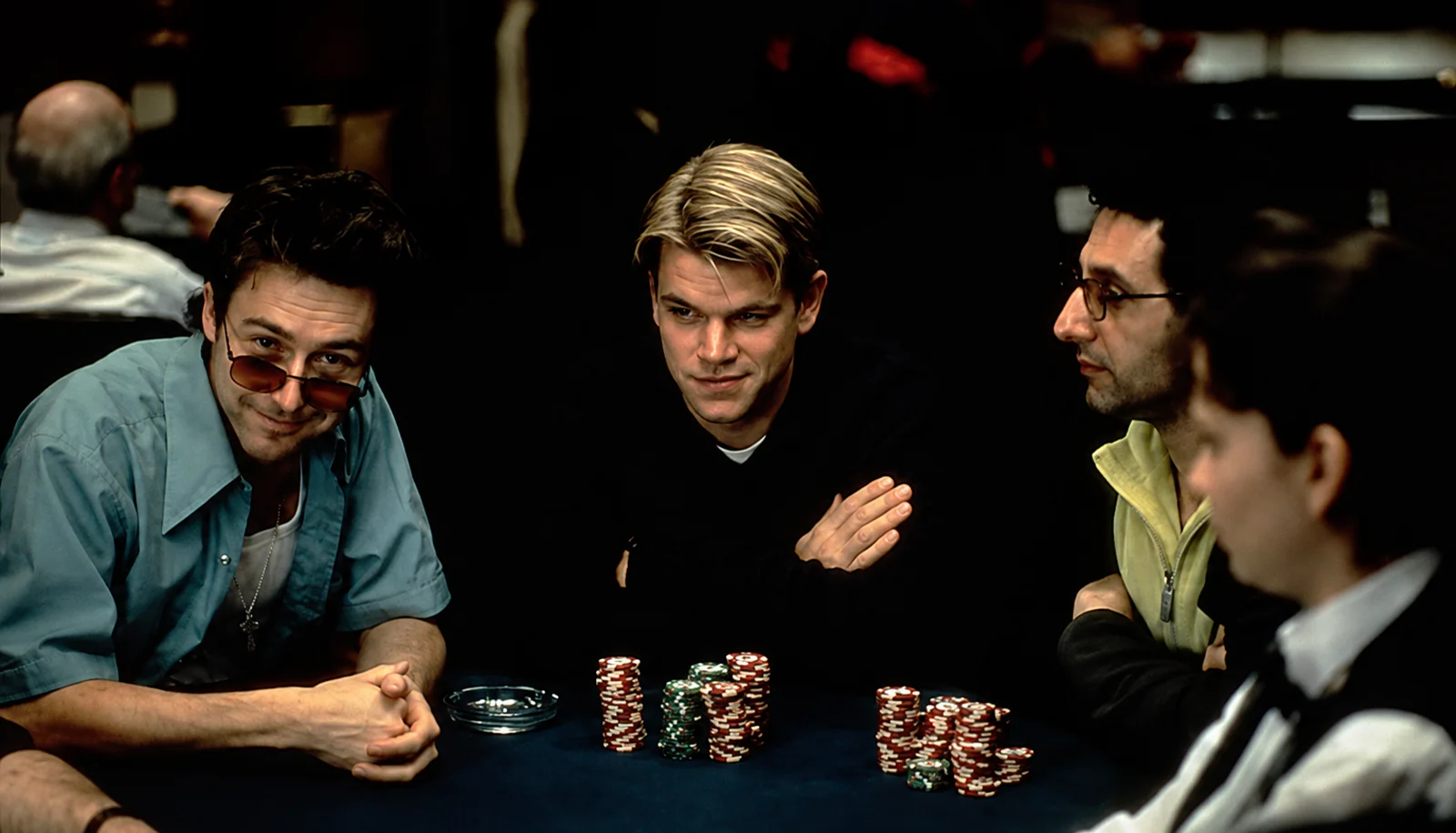
In the early 2000s, poker was everywhere. On television, online, in casinos and even at nights with friends. Previously unknown players suddenly became celebrities, online poker rooms attracted millions of new customers, and the World Series of Poker Main Event almost looked like a traditional sporting event. More than twenty years later, poker has obviously not disappeared. Quite the opposite! The biggest tournaments continue to attract thousands of players, prize pools have never been so large, and the live poker ecosystem is particularly vibrant. Even so, poker remains extremely popular within its own community, but it seems far less present in popular culture than during its first golden age. So one question remains: can poker become a genuine mainstream phenomenon again?
The Moneymaker boom is almost impossible to recreate
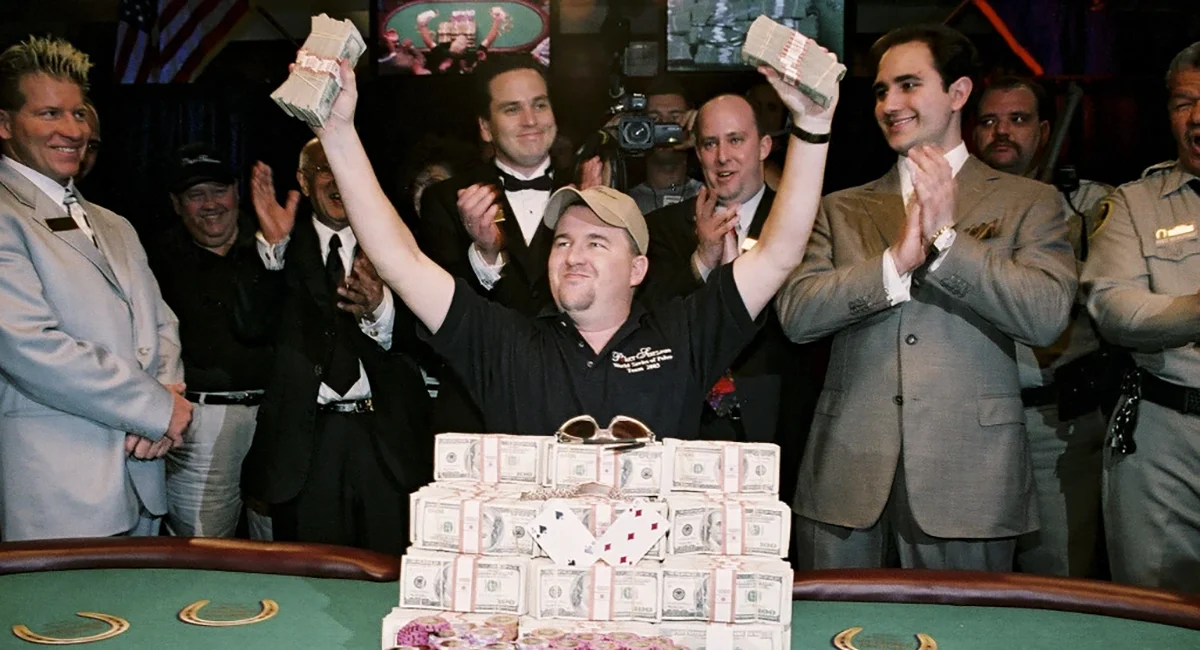
To understand the current situation, we need to go back to the early 2000s. In 2003, Chris Moneymaker, an amateur accountant from Tennessee, qualified for the WSOP Main Event through an online satellite before going on to win the tournament and $2.5 million. ESPN told the story of his incredible run, while viewers could now see players’ hole cards thanks to cameras around the tables. All the ingredients were in place!
A completely unknown player beat the professionals. Poker finally became easy to understand on television, while online poker allowed almost anyone to start playing immediately from home. Above all, Moneymaker made millions of people feel that they could be next. Even today, ESPN considers his victory one of the key factors behind poker’s explosion in popularity in the early 2000s.
After that, Main Event participation exploded and poker television shows multiplied. Players such as Phil Ivey, Daniel Negreanu and Phil Hellmuth became recognizable far beyond the grinder community. But recreating exactly the same phenomenon today seems particularly difficult, because the Moneymaker boom was not just about poker: it came from the perfect combination of television, the rise of online poker and an extraordinary story capable of capturing the public imagination!
And yet live poker has probably never been stronger
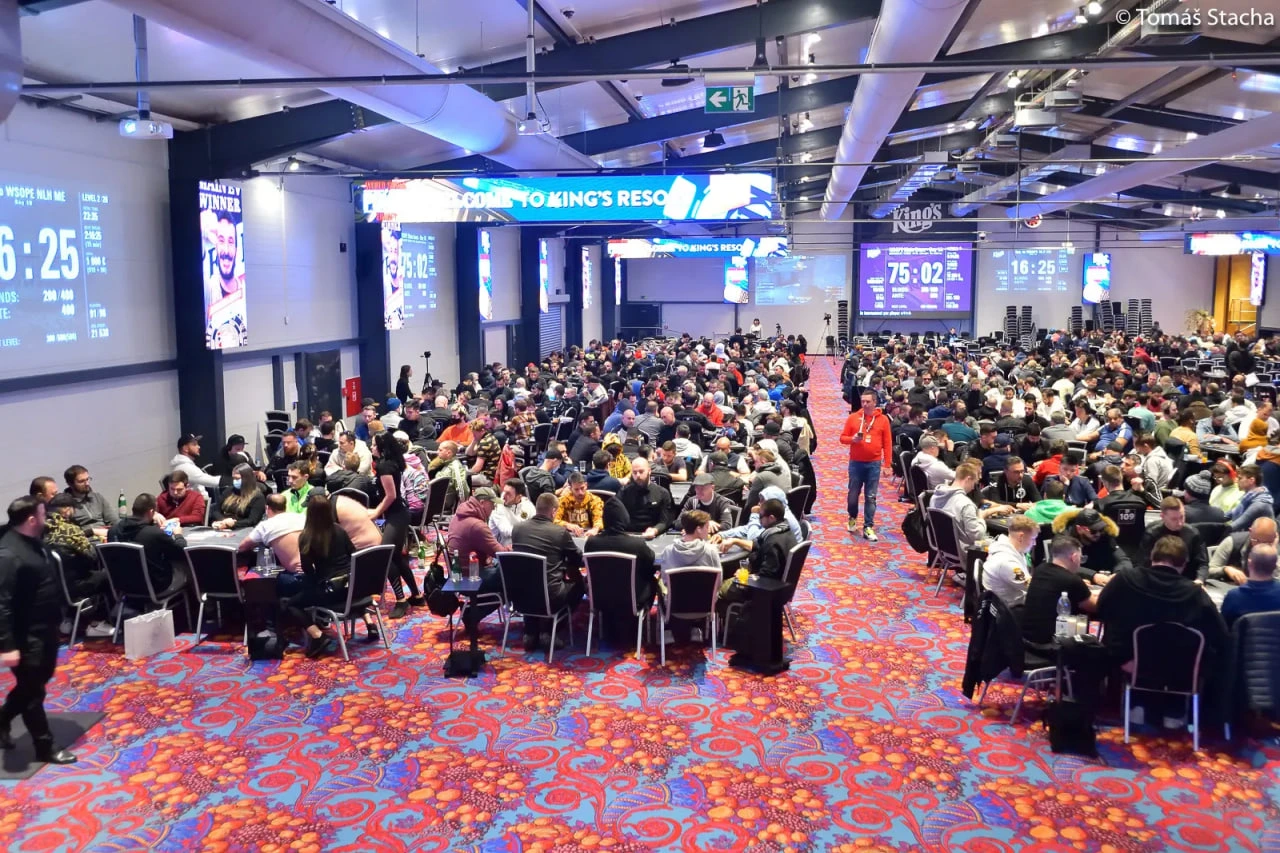
That is the paradox. If we only look at live tournament activity, it would be difficult to argue that poker is in decline. In 2026, the WSOP Main Event once again attracted 9,208 players at a $10,000 buy-in. By comparison, the tournament rarely exceeded 8,000 participants between 2006 and 2022! The all-time record remains the 10,112 entries recorded in 2024. And the Main Event is far from an isolated case: at the 2026 WSOP, the $1,000 Mini Main Event attracted 12,560 players, while even a relatively standard tournament such as the $600 Ultra Stack recorded more than 8,000 entries.
Ultimately, the players are there and poker is far from dead! International poker festivals are numerous, fields are huge, and circuits now exist all over the world. It is also important to note that modern poker is far more international than it was during the first poker boom. The United States remains central, of course, but Europe and Asia now occupy a major place in the ecosystem.
In other words, the problem is not necessarily getting players to attend events. It is getting poker to break out of its own community again!
A major return to ESPN in 2026
One of the most interesting signals in 2026 is precisely the return of the WSOP to ESPN. The two parties signed a multi-year agreement, and ESPN offered more than 100 hours of coverage of the 2026 Main Event, with distribution announced through its platforms and partners to more than 400 million households worldwide! This return clearly matters for poker.
Television played a huge role in poker’s first boom. It allowed the game to reach people who were not specifically looking for poker content. At the time, a viewer could stumble across a WSOP broadcast simply by changing channels, start following a hand, gradually understand the game and then want to try it themselves.
Today, that kind of accidental discovery is much harder! A poker fan can easily find hundreds of hours of poker to watch online, but someone who is not already interested in the game has no reason to search for a six-hour final table on YouTube.
The challenge is no longer simply to produce content, but to put that content in front of people who are not yet poker players!
Social media and poker: a natural fit
On this point, social media probably represents the biggest opportunity. A spectacular hand no longer needs to be watched as part of a two-hour television show. An incredible bluff, a hero call or even a huge mistake can be turned into a one-minute video and spread across Instagram, TikTok, YouTube Shorts and X. And this may be the biggest difference compared with the 2000s. Back then, poker had to convince people to watch poker. Today, poker can go directly to people where they already consume content.
Tournament organizers have understood this perfectly. Modern feature tables are designed to produce compelling images, players are followed more closely away from the tables, and the major circuits are constantly looking to create stories that can be told on social media. The advantage is that poker naturally creates suspense! An all-in, a river card or a bad beat can create a complete story in just a few seconds!
Has modern poker become harder to understand?
There is, however, one major issue with modern poker. Poker in the 2000s was probably easier to sell to a mainstream audience. Strategies were less developed, the personalities were more exaggerated and differences in skill level were much more visible. Today, professional poker has become extremely technical! Ranges, solvers, GTO, sizings… The vocabulary alone can quickly discourage a new viewer.
Two excellent players and commentators can spend several minutes thinking through a decision whose subtlety will be completely invisible to someone discovering the game. That obviously does not mean modern poker is less interesting, but it is clearly less accessible from a technical standpoint. The challenge is to explain that complexity without asking the viewer to become an expert themselves.
The broadcasts most likely to work with a mainstream audience will therefore probably not be those offering the deepest strategic analysis. Instead, they need to explain the stakes: who is this player, how much can they win, and why does this decision matter at this point in the tournament? In my view, there is no secret: to attract large numbers of new viewers, poker must remain entertainment before it becomes a strategy lesson!
Poker needs personalities above all

Poker’s first boom was never just about the cards. Phil Hellmuth was the spectacular bad loser, Daniel Negreanu constantly talked to his opponents, while Phil Ivey represented the almost unreadable player. Doyle Brunson, meanwhile, embodied poker history almost by himself! These personalities were easy to identify.
Modern poker obviously still has great players, but the best technical players do not automatically become mainstream personalities. For poker to become culturally important again, it will probably need new faces capable of transcending the game itself! Charismatic professionals, content creators, celebrities or simply amateurs with an exceptional story could all fill that role.
For example, during the 2026 WSOP Main Event, 9,208 people still theoretically had the chance to become world champion and win $10 million. Lucas Jumalon, just 22 years old, ultimately won the tournament! This kind of story remains extremely powerful. Poker simply needs to find a way to tell these stories beyond its own media.
A second boom is possible, but it will be different
So, in the end, can poker become a mainstream phenomenon again? Probably. But it would be surprising if it looked exactly like the boom of the 2000s. Back then, a few television networks, a handful of major online poker platforms and a small group of star players captured almost all of the attention.
Today, the audience is spread across YouTube, Instagram, TikTok, streaming platforms and traditional media. The next poker boom could therefore be much less concentrated in one place while still being extremely significant on a global scale.
In any case, the game has several of the ingredients needed to show that anything is possible! With huge tournaments, impressive prize pools, a truly international scene, accessible formats and an almost endless ability to create spectacular moments, all that remains is to find the formula that can capture a mainstream audience.
One thing, however, seems certain: poker does not need to become exactly what it was twenty years ago to experience another golden age! Above all, it needs to find a new way to inspire people who do not yet play poker.
PokerListings 






Log in to join the discussion
Share your thoughts and see what others have to say.