
 EN
EN  DE
DE Is Poker Gambling?

 PokerListings
-
 CoinPoker 150% up to $2000
+18 | T & C apply | Play responsible
-
 Stake.US Poker $55 Stake Cash + 260,000 GC
18+ | Play Responsibly | T&C Apply
-
 Americas Cardroom 100% up to $2000
18+ | Play Responsibly | T&C Apply
-
 Betonline Poker 100% Up to $1,000
18+ | Play Responsibly | T&C Apply
-
 SportsBetting Poker 100% up to $1000
Many have debated endlessly about whether poker online or live should qualify as gambling. Pros who play poker online for a living and travel to play live events say sage things like, “Well, if it were gambling I couldn’t be doing it professionally now, could I?”
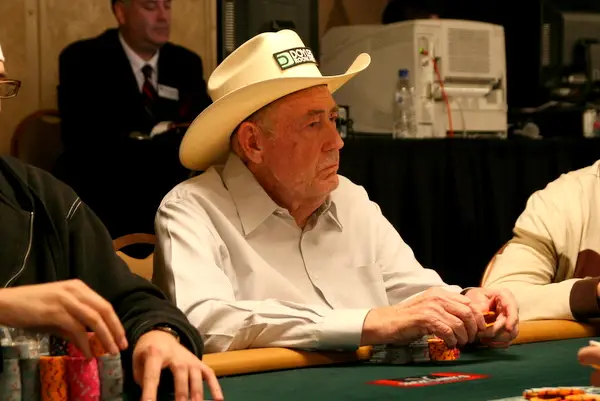
But others, notably Doyle Brunson (TexasDolly) is on record saying (paraphrase), “Of course it’s gambling. Are you some kind of bozo? Although that doesn’t mean that some folks aren’t better at it than others.”
Gus Hansen was once asked by a reporter what role luck played in poker. He responded that in any given session it probably accounted for about 90% of his outcomes. Over a month, he guessed it was about 10 or 15%; over a year it was down to around 2-5%.
So, what are we supposed to make of all of this? Is the game of poker gambling or not? Let’s start with semantics: exactly what does the term gambling mean?

What Does Gambling Mean to You?
It makes sense to treat gambling as a setting where something of value is put at risk for the possibility of ultimate gain. This seemed fairly straightforward but, alas, this definition turns out to cover just about every interesting thing that people do. Buying stocks is gambling, as is commodities trading, investing in real estate, getting married, planting a tree, going to college, opening a small business. Every freaking thing is gambling! Which, of course, is true; but unbounded truth isn’t very useful. To be practical we need to dig deeper.
Is Poker Skill or Luck? Let’s Get it Right
If you’re a skillful player, you will triumph over bad players in the long run without any doubts.
– Says Jonathan Little from mypokercoaching
From a legal perspective the issue turns on the determination of “predominance.” That is, a game or enterprise is classified legally as gambling if luck and chance predominate over skill. No one has ever argued that opening a small business is a “gamble” (although it manifestly is) because the standard interpretation is that the business acumen of the proprietor is the key factor and “dominates” any contribution that chance elements might play.
Lotteries and roulette wheels, slot machines and craps tables are all unambiguously classified as “gambles” because the overwhelming determinant of the ultimate outcomes is chance. For the better part of our history, real money poker had been viewed by the courts as “gambling” on the grounds that luck was the predominant element.
More than one judge or legislator was heard to utter statements like, “Whoever ultimately wins is the player who shows the best hand, and that is the luck of the draw” — thereby, of course, showing that he/she didn’t know dick about poker. This legal stance is important because it allows states and nations that have anti-gambling statues to criminalize the game. Recently a number of important rulings in the US have turned this interpretation around.
In Colorado, Pennsylvania and North Carolina judges and juries have determined that, in fact, the skill elements override the chance factors and that, in legal terms, poker is not gambling.
Two Studies Proving Poker is a Game of Skill

Two reports appeared a while back that attracted a good deal of attention: one by Cigital Group and one by University of Hamburg. The first was the large-scale examination of over 100 million hands carried out by the Cigital, a consulting firm in Washington, DC. The two main findings, both of which fit nicely with the intuitions of most experienced poker players, were:
- Three-quarters of all hands never go to showdown.
- Only about twelve percent of hands are actually won by the best hand.
These results showed that poker is a game of skill since the chance element (the cards actually dealt) played a smaller role in the typical hand. It’s very much about what ranges you’re representing and finding good spots to balance bluffs. But other than an analysis of hands, there also needs to be an analysis of players.
Critical Repetition Frequency (CRF) – Player Analysis
The first, solid start in this direction was an analysis in Gaming Law Review and Economics by Ingo Fiedler and Jan-Philipp Rock at the University of Hamburg’s Institute of Law and Economics. They examined the records of over 50,000 individual online players. They began with the assumption that poker is a game of skill but pointed out that no matter what the poker community may believe, this is still a hypothesis subject to test.
Importantly, they note that no specific statistical feature of the game has been identified that could be used in this kind of analysis. Their candidate for this measure is the Critical Repetition Frequency (CRF) or the number of hands needed before a player (and a data analyst conducting the experiment) can be confident (95% sure) their results reflect skill level and are reliable.
They crunched the numbers from the play of 55,000 online players over millions of hands of Texas Hold’em from mid-level games The results were surprising. An exceedingly skilled player, one averaging 100BB/100hands, has a CRF = 300. That is, if they can keep this up for a mere 300 hands they can feel confident in their results.
For skilled players with more modest (and realistic) win rates, the number changes dramatically. A (still unrealistic) win rate of 30BB/100h has a CRF = 3,300; one of 5BB/100h is 118,000 and 1BB/100h = 295,000. If you’re averaging +1BB per 100 hands don’t trust your results and even if you’re averaging 5BB/100h you probably shouldn’t either, unless you’re multi-tabling and doing it for many hours.
The Fiedler and Rock approach provides strong support that poker is a game of skill. Combined with the Cigital study, it presents converging lines of evidence for the skill-based argument, one from the “hands” perspective and one from the “players.” This may help further in the fight towards legalizing online poker across all US states and many other countries worldwide.

A Pragmatic Approach to Poker as “Gambling”
What’s needed is the recognition that there are two underlying dimensions that characterize the vast majority of human enterprises, in particular the “games” we play.
1. The normative expected value (EV) of the game.
That is, what is the typical outcome for the average player of any “game?” If the game is roulette or craps or slots we know the EV is negative and often we can calculate it.
In other “games” the EV isn’t simple but can be estimated. For example, going to medical school is a huge gamble (tuition, time, effort) but it has a positive normative EV because the average doctor makes back these expenses plus a lot more. But it’s still a gamble and there are more than a few who have lost big. They never graduate, fail to pass the licensing exams or are just lousy doctors.
Starting a small business is a highly regarded enterprise in our culture but it is a gamble and one with large negative EV; over half fail within five years. Marriage is another gamble with significantly negative EV. Like opening a small business, over half end in divorce.
Poker also happens to be a “game” with significant negative EV because of the rake. If all poker players were of equivalent skill then all would be losers. But, this pragmatic stance has another dimension to it.

2. The flexibility of the game.
Flexibility refers to the things that the player can do to shift his or her personal EV. Some games, like roulette, have virtually no flexibility. There is nothing you can do that will modify the EV. Craps has a bit more flexibility in that you can adjust the bets you make to reduce the house edge.
Opening a small business has huge flexibility and the business acumen of the proprietor is critical in determining the outcome. This is why the legal establishment regards such “games” as lying outside the standard prohibitions that many have against gambling.
In fact, most of the enterprises that people engage in that are marked by high flexibility are virtually never thought of as “gambling” — but from this pragmatic stance they are. And so it is with poker. The game is pretty far out there on the “flexibility” dimension.
Who Really Wins at Poker?
First, the stakes being played for are critical. You can find excellent players at the lowest stakes and truly horrible players at the highest. Second, private games are different from games in licensed cardrooms, live play is different from online poker play. And short-handed play is different from full-ring games.
80-85% of regulars are $1/$2 or $2/$4 No-limit poker players and are not long-term winners. The problem is the natural variation in the game (“luck”), plus a host of other factors. These include rake per hand and often a “bad beat” jackpot. Winning 1 or 2 BB/hour regularly under these conditions is unattainable, even if you’re sufficiently skilled in cash games.
Same when it comes to mid-stakes, like from $4/$8 up to $10/$20 or $15/$30. No-Limit games with blinds of $1/$2 and max buy-in of $200. Fewer than 5% of the people who routinely play at these levels in legitimate cardrooms are making money.
Things really change when it comes to semi-high and high stakes games, where the true pros emerge. These games run from $20/$40 to $80/$160 Limit and $ 2/$5 to $10/$20 No-Limit. 10% or 15% of regulars in these games are long-term winners.
The impact of the rake is lessened at these stakes, but the critical factor is that it is at this level that you first find regular “contributors”. Folks with lots of money and gamble who routinely shoot craps with black chips and like to play poker similarly. They are rarely sufficiently skilled to present much of a problem to the experts and, as a result, provide the profit margin.
The Truth About Running Good and Heaters in Poker
We’ve all been there – winning a few hands in a row and getting that rush or feeling of invulnerability. However, the truth is that each hand is independent of the previous hand(s) and the probabilities of particular holdings don’t change because of previous success or failure. So, there is no increased likelihood of winning the next hand because you’ve been “running good”. Just like there is no increased likelihood of losing the next hand if you’ve been “running bad.”
However, there is something to be said about playing better when we’re winning than losing. Because winning bolsters confidence and increases your aggressiveness. This has been studied by psychologists, even in sports players. So there is some reason to play a rush if your game is sharper than usual when you do.
You can also take advantage of your image at the table when other fishy players don’t understand the “run good lie”. If other players believe you’re on a rush/heater, they may adjust their play against you – Perhaps become more passive. So you can easily push them around with raises and aggression. However, this will not work against solid regulars who know what’s what.
The Maths of Luck in Poker: Some Do Run Worse
Players often complain about their bad luck and rotten cards, agonizing over missing flops and getting sucked out on. You have to get over this if you have any hope of becoming a legit, long-term winner in poker. You have cards; therefore you have to learn how to play the best poker with them. Put on a brave face when your opponent hits a two-outer, but also be gracious when you hit your hand.
The truth is there are certainly some people who have been luckier than most and some who have been unluckier than most. It’s true that as the number of hands dealt increases, the luck element shrinks – but it doesn’t go away. In fact, it continues to play a role.
Distribution of Luck in Poker Over Time
Assume there’s a distribution of the long-term expected value (EV) of every possible hand played. From every poker position under all possible circumstances. It will approximate a normal, bell-shaped curve.
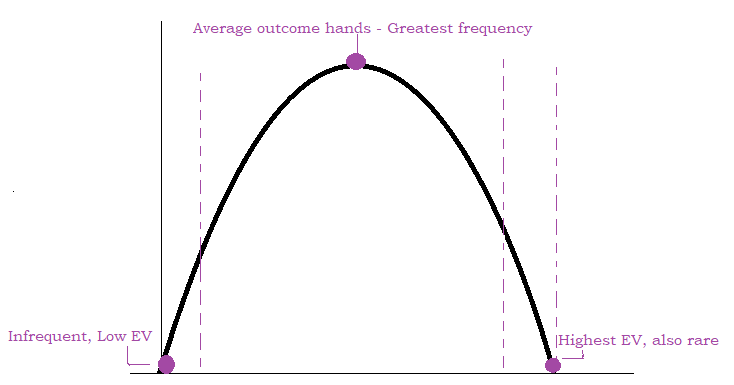
The hands with long-term expectations will be infrequent, mainly because they don’t get played often, and will show up in the left-hand tail. Those with the highest EV will also occur rarely because the situation has to be “just right” for them to get paid off. Those will appear on the far right of the curve. Those with average outcomes will occur with the greatest frequency and be at the peak in the center of the curve.
If you plot the distribution of the “luck” of each player (that is, the EVs of the hands they are actually dealt), you’ll get another normal curve. And when you plot it, you will discover that some players are below the mean, some above it – and a few are far below or above it. Some folks are going to be flat out “luckier” than the norm and others “unluckier.”
Think about unlucky scenarios in real life – like getting hit by lightning or winning the lottery. So, yes; you have to play the cards you’re dealt – in the most advantageous manner. Cards have no memory, so your expected “luck” for tonight’s session is the statistical norm, the average outcome. So go play your best game and don’t sweat it. You can’t do anything about the cards you’re dealt.
So, is poker “gambling?”
- Semantically, ‘yes’ because poker, like most other activities involves taking risks for possible ultimate reward.
- Legally, the answer used to be ‘yes’ but slowly it is becoming ‘no.’
- Pragmatically, ‘yes’ and ‘no’ depending on the player’s ability to exploit the inherent flexibility in the game.
While you can play other skill games for fun, with no stakes, like chess for example, you can’t do the same with poker – whether online or live. You can practice for free and enjoy a few rounds – but not for long. The element of winning and losing money is a big one, and is what really gives the game its appeal. Poker without anything to win or lose just isn’t the same, in our opinion – any many would agree.
You can play for free or for too low a stake – and then it may become a game of luck. Because people will not care and will actually gamble with any two cards. Meanwhile, when you stake something to win something – the very definition of gambling in poker – you play differently. That’s when the skill comes in. Sure there’s poker variance to consider, as we discussed. However long term, and this one is very important, the game is beatable and can yield positive returns.
There’s no profitable casino games – but there are profitable Texas Holdem poker games.
Is poker gambling – FAQs
Does poker count as gambling?
Yes, but it’s not the same as gambling on casino games or betting on sport. There is luck involved in poker which means nothing is certain. That, in turn, means it’s classed as a type of gambling. However, there is also skill involved, which means strong players can beat weaker players, in theory, over a large sample size.
Is poker more skill or luck-based?
There is more luck involved in the short-term but more skill in the long-term. Basically, anyone can win a single poker hand by getting lucky because we can’t control the cards. However, if you make enough correct moves against players making incorrect moves, the math says you’ll come out ahead in the long run.
Is online poker gambling legal?
Yes, online poker is legal in almost every country in the world. There are some places where you can’t play online because of issues to do with making deposits and withdrawals (e.g. certain US states). And there are some where it’s banned outright. However, in the UK, the majority of Europe, North America, South America, and parts of Asia, online poker is legal.
PokerListings 




User Comments
Do you consider owning a casino to be gambling? They are taking all the bets, when someone hits blackjack they casino loses. But it’s not gambling because over time the casino knows they will come out ahead 100% of the time.
The same can be said of poker. A good poker player might lose a hand or a game or have a losing day, week or even month. But a true pro will never lose for an entire year.
A pro doesn’t see it as gambling because they know they are going to win, much the same as the casino owner knows he is going to win.
What the article alludes to, but doesn’t say outright is this:
It’s only gambling if you are not very good at it.
The key test of whether a betting game is gambling or not should be ‘can you substantially influence the result of the game through your skill repeatedly over many games’.
If the answer is yes (as with poker and blackjack; but not sports betting, most casino games, lotteries and bingo) then irrespective of whether chance plays a part in the running of the game – even if for an unskilled player luck is the overriding factor determining success – it is incorrect to consider it gambling.
Betting on an odd-on favourite in a horse race is gambling, as you can still lose your stake.
Betting pre-flop with pocket aces is gambling, as you can still lose your stake.
Poker is obviously gambling. It’s different to other forms of gambling such as sports betting or roulette, however, because you have a chance to manipulate the odds of winning, by choosing when to call, raise, fold, bluff etc. Once the horses have left the starting boxes, or the two teams in the Superbowl have run on to the field, you cannot affect the outcome. You made your bet and then you are stuck with it. In hold ’em, a player can affect the outcome before the flop, and after the flop, turn and river. In a way, this means that each hand of poker can have more gambling on it than any single event. Add up all the hands played in a lifetime and a poker player has gambled much more than he possibly could if he bet on every horse race he ever saw.
Um… I’m guessing your statistics certifications are comprised of reading Poker for Complete and Total Morons several times to help you grind microstakes. Saying more than half of small businesses fail = negative EV is fallacious. If you pull in $50k/yr working for something else, and your odds of making a $5M dollar business with a $100k investment and 5 years of work is 30%, then your EV is ($5M * .3) – ($50k * 5 + $100k) = +$1,150,000, even when you invest $100k of your own money and take no salary for 5 years, and fail 70% of the time. To put it in poker moron terms you’d understand, EV is a measure of “equity”, not just probability. And so on for your other examples. You are correct in saying EV for cash games is (your edge vs other players) – rake. Short term variance is high, making it a “gamble”… over X number of hands, variance is typically washed out. Taking it back to the small business example, your best bet is building up the skills required to maximize your odds of success & potential payout, and then continuing on until variance is washed out and you claim you $1M equity / 5 years in the example above.
Poker is only gambling over short periods of time. In the long term if your a good player and understand the odds you will win. If it really was gambling then how come there are so many players won consistently win and have made millions of dollars playing poker.
Well the fact here is that the same faces appear on the last tables of the WSOP every year. Some players have 5, 10,15, 20 bracelets… Thats not only unlikely, its darn well near impossible to happen with one person unless they were cheating, let alone happen as the ‘norm’
If we were to hold with the ‘starting a business is gambling’ analogy then these players have started 20 successful businesses for next to nothing and eventually sold out for millions up to 20 times in a row! Even Donald Trump isn’t that good!
In many games of chance this would be almost impossible. It might happen…very rarely but it would not be the norm. In poker the norm is for professional players to ‘cash out’ in professional tournaments time and again earning their living from it. Many know full well what they are doing and several notable ones are MIT graduates who attained their degrees or doctorates in math! Such people would know full well if they are gambling.
The problem is that we do not put ‘seed’ positions on these guys. If we did then it would be pretty clear that the ‘skill’ level in poker makes the chance almost totally defunct.
I know this comment is WAY late, but I can’t help but respond to “jason jones” who sounds like a pretty black and white kinda guy with his “official definitions” and what not.
No “jason jones”, you do not become good at poker by being a “con, cheat, liar, or worse.”
You become good at poker by understanding how the numbers work, and then by being better at understanding human nature than the other players, and then by having the courage to make proper decisions based said understandings.
This is a far cry from your “game [that] is based on deceit.”
Perhaps “jason jones” should get out of the books and legal dictionaries and actually EXPERIENCE poker. There is a world of difference between reading a sonnet and actually being in love, ya know…
Besides, laws rarely, if ever, reflect reality…
Poker: Any of various card games in which players BET that they hold the highest-ranking hand.
BET: 1) The money risked on a gamble
2) The act of gambling
Gambling: 1) Take a risk in the hope of a favorable outcome
2) Play games for money
3) The act of playing for stakes in the hope of winning (including the payment of a price for a chance to win a prize)
So… No matter how ANYBODY tries to twist it, turn it or convince themselves that poker is NOT gambling…. IT ABSOLUTELY IS.
You people playing cards try so hard to bluff yourselves into thinking or wanting poker to not be gambling for legal purposes that you completely miss the facts… Poker is now and always will be gambling.
The biggest problem with trying to convince the law is that your entire game of poker is based on deceit. The only way to be good at poker is to be a con, cheat, liar or worse.. I’m just saying.
In poker, there are odds calculations that you can make, risk/rentability calculations that you can make, psychology and luck..
In stock market, you can make various calculations you can make to see if it is worth to put your money in a company… many many things can go wrong and you could loose… though there are people in this world that make good choices… in the stock market and in poker… the only difference is that poker is not that well understood by the people who say that poker is gambling… obviously.. many things can go wrong no matter how good you are. But many things can go wrong in all aspects of your life. Luck is everywere, the only thing is that you must seek it and when u find it, u must exploit it at the maximum.
If poker is gambling, then stock exchange is also gambling… it doesn’t matter how well you invested in a company, a meteorite could crash it’s main factory and this would make the stock value to go down.. so, u take this risk anyway…
Government Blind To collateral Economic Damage / Social Demoralization Cause By Gambling
It is a bad bet for local communities and states to rely on gaming to pay their bureaucrats’ salaries and budget deficits. I know, because I live in Nevada. Casinos can prove to be a net financial and motivational loss to communities; gambling losses do not contribute to local community businesses, do not create well paying jobs; gambling profits go to casino owners, which many live far away. Few people win, most that lose—can’t afford it and lose repeatedly. Gambling casinos/and slot-parlors once established in a community amplify people’s gambling and other weaknesses, reinforce failure thwarting Citizens’ motivation to do things productive. States and local communities that believe gambling will provide tax revenues may be blind to the obvious collateral economic damage and resulting social demoralization gambling can cause a community e.g., gambling addiction, more foreclosures, increased crime and divorce; gambling establishments take dollars away from strapped local businesses causing layoffs and business closures. Most often casinos are followed by, fast check operators charging huge interests and pawnshops.
Las Vegas residents are not only trapped on a sinking ship, each passing month they can see further signs of encroaching economic ruin. Perhaps contributing to the demise of Las Vegas is negative energy that inundates local and Valley residents. Many residents are victims of their state economy dependent on Citizens “losing” their money to pay its budget. That negative energy permeates Las Vegas and it is hard to getaway from. It may appear impossible to find a place to go in Las Vegas that isn’t proliferated with slot machines and alcohol. During good times Nevada made little effort to create non-gambling places for families. Children not involved in sports have limited options, perhaps contributing to Nevada’s serious youth drug problem. Despite 40 other states legalizing casino forms of gambling over the last two decades, Nevada did almost nothing to attract non-gaming businesses and industries to employ its residents year-round. It would appear there are already too many Las Vegas casinos and foreseeable because of casinos’ high operating costs, many at some point will fail. If Nevada were to impose a state income tax, no doubt people with money would leave the state quickly.
Leave it to Rep. Barney Frank to introduce a bill that will destroy the lives of countless Americans. Barney Frank’s recently submitted a bill that effectively legalizes and regulates online casino gambling nationally. There has been little discussion in the press or from affected labor unions in Nevada how much legalization of Internet gambling may increase Nevada’s unemployment now 14% or higher. After Barney Frank’s bill is passed, any private home in American with a computer has the potential of becoming a 24/7 Casino. Players at home need only a credit card to gamble their life away. They won’t have to drive anywhere to gamble. It would seem any further drop in Nevada gaming revenues caused by national legalized online gambling will further balloon Nevada’s budget shortfall. Nevada Legislators need to consider the long-term impact legalized online gambling will have on Nevada employment. Online casinos don’t need to employ culinary, casino, hotel food severs, bartenders, bellhops or card dealers; or need pay much employee insurance. While casinos in or near large populated cities on the East Coast may not have to layoff off workers, Nevada is way out in the desert.
here in Ukraine, the rake is different. For the 1/2 games (grivna), the rake is 5% of the pot for anything over 20 grivna. (That is $2.50) For any other higher stakes, the rake is 3% of the pot for anything over 20 grivna. I have learend that the rake is quite different in America. The laws in Flordia are different, and I understand why many poker rooms don’t survive. But, like another person said, “the game is here to stay.” So, good players will adapt and bad ones will not and remain losers over a year or longer period. Simple really. Perhaps that adaptability leans poker away from ‘gambling’.
one comment – that’s why casino’s to this day have just learnt to adapt poker tables…bc there was no money in it for them really until they put the rake system into effect
and casino’s don’t make nearly as much money off a poker table as they would any other game or machines they may have…
poker is here to stay and will soon be as a common practice for groups of people to not only enjoying an evening out but to also use it as a means for leisure/business activities…just as what golf is to this day.
enough said!
it’s ok…..^_^
One also may consider that in every other game in a casino, you’re betting against the house…in poker (not 3 card poker, etc), you aren’t playing against the house, but rather against other people. The house/casino doesn’t have an interest in which players win or lose money – they get the same % rake no matter what. For this reason alone, I think poker deserves status above casino games and other games of chance.
The distinction of ev is the core of the issue. Switch the perspective to the Casino’s that offer the “Gambling Games” mentioned in the article.
The Casino Gambles on every game with a positive ev (minus the card counters). The poker player gambles on every game as well. The difference is that when the poker players skill relative to the their opponent is less he has a negative ev. When their skill is higher than the average player in the game (plus the table the table rake) he has a higher ev.
This means their are two real things going on. Gambling and business. Business is respected in our culture gambling is so often abused as a passtime that it is not repected in our culture.
Great article, I think its imperative to make the distinction between the legal definition and commonplace vernacular. In principle and in my opinion poker is not gambling. Justifying prohibition simply based on risks, as the author said, doesn’t make much sense either. Life itself is a risk. Everyone is dealt different cards. For some people, the starting point doesn’t necessarily determine the outcome of their success. For others, it does. Indeed, in the long run, skill in any area will produce positive results.
Therefore, become a student of the game. Play more poker! As is seen by the multitude of poker sites, forums, books,television shows, etc. it is a “gamble” that a lot more people are willing to take.
Sure poker is gambling. Any kind of betting for money is gambling. When I was younger we used to play different sports games for cards, sports cards that is, and wagers.That was the ‘start’ of gambling.
I like how the article brings poker out in relation to other activities that people undertake which have risk/reward ratios. Many people will agree that poker parallels capitalism. You invest and hope to see a positive reward on your investment. You have to be willing to risk a little (or a lot) to win.
I call poker gambling. You can put the majority of your money on the line with the better odds, but it’s still gambling. Playing backgammon for money is the same, you might be the better player in the long run, but you can still lose (a lot) in the short run. If you’re good enough, these games are +ev, whereas I consider lottery, slots, bingo, roulette, etc. games for fools, because they are -ev per definition. BUT, all of these games are gambling games (and btw, it’s not like poker and backgammon are +ev for everybody). So basically I agree with texas dolly here. Great article btw. grtz, Steven