
 EN
EN  DE
DE Barry Greenstein
| Current Residence | Tuscaloosa Ala |
| Born | September 24, 1964 |
| Birth Place | Syracuse, NY, USA |
| Total Winnings | $8.523.498 |
From the legendary “Robin Hood of Poker,” who gave all of his tournament winnings to charity, to a Play-Money Poker Billionaire, it’s been a long, strange poker ride for Barry Greenstein.
In the height of the poker boom Barry Greenstein was one of the true faces of poker, seemingly everywhere on poker TV from the WSOP to High Stakes Poker and beyond.
When a big pot went the other way in a legendary episode of on High Stakes Poker and the online poker industry took a hard turn in the USA, things changed in poker for Greenstein and he’s had to forge a decidedly different career than what he might have first imagined.
Anyway you look at it, though, Greenstein stands the test of time as a legend of the game.
Barry Greenstein, from a Card-Playing Family
Small and unassuming, Barry Greenstein wasn’t a player who intimidated or who inspired fear at the poker table but with his thoughtful, analytical style he never shied away from playing against the best players in the biggest hands.
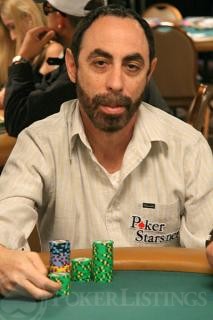
Born and raised in the Chicago suburb of Scottsdale, Ill., Barry Greenstein learned to play cards at a young age from his parents. Gin rummy, hearts and poker were the games of choice and Barry was particularly gifted in poker.
His parents encouraged him to develop a calm and analytical game and by the age of 12 he knew he could make a good living at the green felt. He started playing home games a year later, making the rounds and cashing up to $50 a night.
Despite his talents as a card shark Greenstein wasn’t sold on a career as a professional poker player just yet. He grew up in a happy home where a strong sense of integrity and making a difference were encouraged and poker wasn’t exactly known for its moral standards or positive influence on people’s lives.
Besides, Barry Greenstein craved more intellectual stimulation than poker could give. This, after all, was a boy who created his own computer software when he was 15 and who harbored hopes of becoming a doctor and curing diseases.
From Illinois to Silicon Valley
A strong student in mathematics and computers, Barry kept up with his studies at Bogan High School during the day and built his bankroll at night. His routine didn’t change much at the University of Illinois at Urbana-Champaign, where he earned a bachelor’s degree in computer science in just three years along with untold thousands in poker winnings.
Barry Greenstein went straight from his undergraduate studies to a Ph.D. program in mathematics and spent the next 10 years earning his doctorate degree, playing poker and building his bankroll all the while.
Shortly before completing his studies Barry met and married his (now ex-) wife, Donna, who had three kids from a previous relationship. In order to gain full custody of the children Greenstein was advised by their attorney to get a job that didn’t involve gambling.
So, Greenstein gave up school and full-time poker and moved with his family to the Silicon Valley where he joined four others in a start-up company now known as Symantec. Barry quickly located a good cardroom and settled in to design pioneering software programs. He and Donna subsequently gained custody of the kids and had two more in 1987 and 1988.
Despite negotiating a clause in his contract allowing him to complete his Ph.D., Barry chose a different path. The company was too dependent on his skills to give him the time he needed for his doctorate, so he agreed to stay and help finish the software program, Q&A, he was working on instead.
In 1986, Q&A was named product of the year in almost every industry magazine, and to this day it remains one of Barry Greenstein’s proudest accomplishments. The success of Q&A put Symantec on the road to becoming one of the top computer software firms in the world and taught him the maturity, discipline and patience he needed to see long-term projects through to the end – such as late nights at the poker table.
Poker Calls, Job Falls
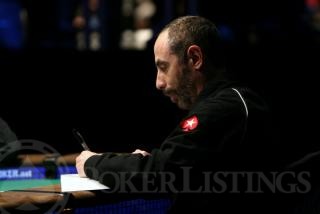
Throughout his years in California Barry Greenstein played No-Limit Hold’em at the Cameo Club in Palo Alto. The games boosted his paycheck and helped support his family and their lifestyle. But in the late ’80s they began to serve a more serious purpose when Donna was diagnosed with multiple sclerosis, and their daughter Melissa began suffering from liver problems so severe they eventually necessitated a liver transplant.
Greenstein began to spend more and more time at the tables, returning to the poker-playing/work schedule of his early years, except with crazier hours. It lasted until 1990, when Barry quit Symantec.
Unable to justify spending so much time away from the poker table when the money was so good, and in need of a job that allowed him the freedom to spend time with his family, the 36-year-old put away his software and took to the tables in earnest.
Bellying-up to the games at the Cameo Club 12 hours a day, most days of the week, Barry’s bankroll grew fast, and so did his skills. Though side games were his bread-and-butter, in 1992 he decided to enter his first tournament: the $10,000 WSOP Main Event in Las Vegas.
Undaunted by a 36-player starting field packed with bona fide pros like Johnny Chan, Todd Brunson, Bobby Baldwin and Berry Johnston, Barry ploughed his way through and placed 22nd in the event for an $8,080 payday.
A Famous Deal
It was around this time he and Donna decided to get a divorce, and after a three-year battle Barry Greenstein was awarded full custody of their children. During this difficult period Barry met Vietnamese player Mimi Tranand they cut their infamous deal: Barry offered to teach her poker in exchange for Vietnamese lessons, which he hoped would help him communicate with the many Vietnamese players he anted up against.
In the following years Greenstein kept up his No-Limit Hold’em game and began to play Limit Hold’em as well, ripping up the felt at ring games across California and Las Vegas and building a reputation as one of the top players in the world.
He continued to enter and cash in tournaments through the ’90s but his big break didn’t come until 2003, when he won Larry Flynt’s $1 million Seven-Card Stud event at the Hustler Casino.
Children, Incorporated
It was after this tournament that he made his first major donation to his charity of choice, Children, Incorporated. He had been involved in the charity for some time, sponsoring several children in the United States through the organization and taking his kids to meet them.
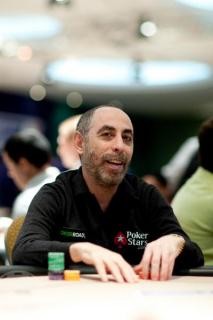
But with his Hustler win he decided it was time to make to take his philanthropy to the next level: He donated a large chunk of his $770,000 first-place win to the organization.
Since then he has cashed in hundreds of tournaments and donated millions of dollars to a myriad of charities, including Children, Incorporated and Guyana Watch, the favored charity of fellow pro Victor Ramdin.
But as the years passed and poker grew, Barry realized a change was needed if he was to keep himself afloat financially and continue to donate his winnings. So, he devised a more sustainable solution.
“I will be donating my net earnings from tournaments at the end of each year,” Barry told www.pokerlistings.com in 2006. “Until now, I was donating the pay-off each time I cashed but I can’t afford to continue doing that. I didn’t anticipate the growth and expense of tournament poker.”
A Laundry List of Poker Accomplishments
And grown it has. Since Barry Greenstein first entered the Cameo Club, the number of ring games and tournaments on the West Coast has grown exponentially – and Barry’s cashes along with them.
Over the years he has cashed in more than 100 WSOP events and dozens more outside the WSOP. He’s been a regular player in the highest-stakes cash games in Vegas and California, including the Big Game at the Bellagio, and has appeared in several major televised poker tournaments and TV shows, such as High Stakes Poker, the NBC Heads-Up Championship and Poker Superstars Invitational.

He has also made a name for himself as a poker author. After much haranguing, he was persuaded to write a chapter for Super/System 2, the highly anticipated sequel to Doyle Brunson’s poker how-to book, Super/System. Barry found the experience so enjoyable he ended up writing his own poker tome, Ace on the River, which is more about the lifestyle of a poker professional than poker strategy.
Greenstein, once famed for giving away his book to every player that busted him from a tournament, has forged a unique path in tournament poker over the past decade.
After losing a big hand to Tom ‘durrrr’ Dwan on an episode of High Stakes Poker cut into his high-stakes budget (Greenstein always played on his own money) and online poker was essentially banned in the US, Greenstein had to find a way to keep up his sponsorship with PokerStars. As he told PokerListings at the PCA in 2016, that led to him hitting the play-money tables.
He found it was a great way to keep up with his fans and still find some competition with players who were surprisingly better than he expected.
Barry Greenstein still makes the bulk of his poker money playing cash games and tournaments in the Los Angeles area but always drops in for the World Series of Poker where he cashed a rather astounding 13 times alone in 2018.
Related Reading:
Barry Greenstein was elected into the Poker Hall of Fame in 2011. Get to know more about Barry Greenstein’s life in poker in our short documentary:
Barry Greenstein on Barry Greenstein:
“When I played in the 2004 World Poker Open WPT event, I was not in the best frame of mind. I was saddened by the temporary breakup with my girlfriend whom I hadn’t seen for a while. Not surprisingly, I wasn’t doing well in the side games and I just wanted to go home. But I play tournaments for charity and so I stayed.
In the middle of the first day, I was all in for $2,500 with a straight draw against Erick Lindgren’s slow-played aces. When I made the straight on the river, I snapped at Erick that winning the pot caused me to miss my 6:45 flight home.
I survived the first day with under-average chips and played in the big side game until about 6:00 a.m. I had checked out of my room the previous afternoon and I retrieved my bags from the bell desk and checked back in. I checked out again at noon before the start of the second day. I wanted to make the late flight and I figured that I needed to leave by 4:30 to make it to the Memphis airport on time for the last flight.
I survived with under-average chips again and lost in a late session in the side game. I repeated my check-in-check-out-check-my-bags routine and eventually made it to the TV table. I got a couple of hours of sleep after a short losing side-game session and I was lucky enough to win the tournament the next day. And after the tournament, I went back to ‘work’ and finally booked a win.”






Log in to join the discussion
Share your thoughts and see what others have to say.
User Comments
Hmmm.
A lot of hype for a player whose house in Rancho
Palos Verde that went into foreclosure.