
 EN
EN  DE
DE Brazil Bans Betting Sites: Does Poker Escape?

 PokerListings
-
 CoinPoker 150% up to $2000
18+ | Play Responsibly | T&C Apply
-
 Ignition Poker 150% up to $1,500
18+ | Play Responsibly | T&C Apply
-
 Stake.US Poker $55 Stake Cash + 260,000 GC
18+ | Play Responsibly | T&C Apply
-
 Americas Cardroom 100% up to $2000
18+ | Play Responsibly | T&C Apply
-
 Betonline Poker 100% Up to $1,000
18+ | Play Responsibly | T&C Apply

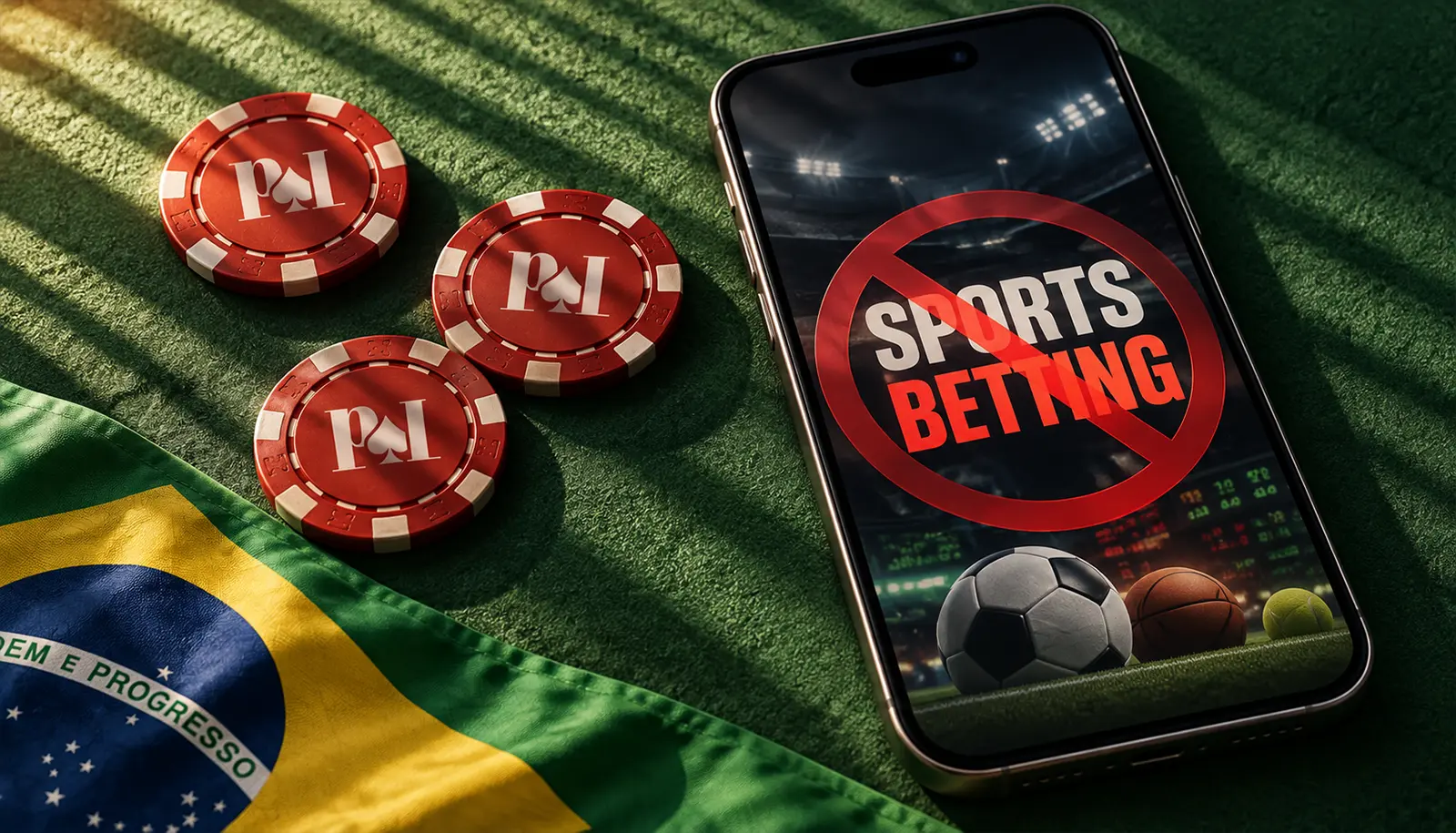
On Friday, Sept. 25, Brazil’s federal government published Provisional Measure 1394/2026 (MP 1394), a presidential order with the force of law that Congress must still ratify. It bans fixed-odds betting across the country. In other words, the so-called “bets,” the licensed betting operators that until now worked with the State’s own authorization, will see their websites and apps pulled offline within days.
But what about poker? Anyone who plays, runs tournaments or simply follows the mind sport has a natural question: is the card game in the crosshairs too? Well, the MP doesn’t mention poker anywhere. To understand why, and what is still up in the air, it’s worth starting with what exactly has been banned.
Brazil bans bets and gives sites ten days to go offline
The MP bans the operation, offering, brokering and advertising of fixed-odds bets: wagers in which the payout is set by a multiplier applied to the amount staked. In practice, that covers both sports betting and online games, and it applies even to companies based abroad that serve people in Brazil. The measure also ends bets authorized by individual states and the Federal District.
The government justifies the decision by pointing to household debt and the mental health damage linked to gambling. The text also bars banks and payment institutions from processing transactions for this type of bet and prohibits advertising and sponsorship of the activity.
Alongside the MP, the Executive sent Congress Bill 5477/2026, which creates crimes tied to fixed-odds betting, with four to six years in prison for anyone who runs or operates it. The bill still needs a vote in the Chamber of Deputies and the Senate.
The calendar from here on
- Sept. 25: end of new deposits on the platforms
- Until 11:59 p.m. on Oct. 5: voluntary withdrawal of balances
- Oct. 6: sites and apps offline
- By Oct. 14: banks return remaining balances
- Oct. 25: licenses expire, 30 days after publication
The Provisional Measure still needs Congress’s approval. The deadline for amendments is Oct. 1, and the initial deadline for deliberation runs until Nov. 23\. Meanwhile, the ANJL (National Association of Games and Lotteries) and the IBJR (Brazilian Institute of Responsible Gaming), two industry groups from the betting sector, took the matter to the Supreme Federal Court (STF) on Monday, Sept. 28, asking for the ban to be suspended.
With the calendar laid out, the question that matters to anyone who lives for poker is a different one: which side of that line is the game on?
The MP never mentions poker. Why does the game seem to fall outside the ban?
Let’s get straight to the point: neither MP 1394 nor Bill 5477 mentions poker. What decides who falls under the ban is a different concept, not the name of the game. In other words, the debate isn’t about whether poker is or isn’t a game of chance, but whether it fits a very specific definition.
“Fixed odds” is the keyword
The text defines a fixed-odds bet as putting a sum at risk in the hope of a prize whose amount is set by a multiplier. Bill 5477 reinforces the idea: it’s the multiplier that determines how much the bettor receives for every real wagered. That’s the bookmaker’s logic, where you bet against the house and the return is priced in advance.
Poker works differently. You play against other players and, as a rule, the prize comes from the pot built from the players’ own buy-ins, with the house keeping the rake or the tournament fee. There is no multiplier set before the hand, and no house on the other side of your bet. By that criterion, poker doesn’t appear to fit what the MP bans. It’s worth stressing that this is a reading of the text, not an official statement: the MP simply doesn’t address the subject.
One technical detail deserves attention. The MP defines an “online game” as one whose result is decided by a random number generator, and online poker also uses one to shuffle the cards. But the ban targets fixed-odds bets on those games, and the multiplier is precisely what poker lacks. How this will be applied in practice, the text doesn’t explain.
There’s also a common shortcut to avoid. The MP says the ban doesn’t apply to other lottery modalities authorized by law, such as the federal lotteries run by Caixa. Poker isn’t on that list. In other words, it isn’t spared by an exception: it appears never to have been within the ban’s reach in the first place.
But being outside a ban is different from being inside a set of rules. After all, if poker isn’t a bet, what is it in the eyes of the law?
Poker enters this debate with two decades of tours and an argument

So if poker isn’t a bet, what is it? The answer starts with what the game has built on its own. The BSOP was born in 2006 and became Latin America’s biggest tour. On the results side, 2025 was a year to remember: Brazil piled up more than ten bracelets, finished first in the WSOP Online bracelet standings with eight titles, and watched Belarmino de Souza take home \$4 million in the WSOP Paradise Super Main Event. In June of this year, Yuri Martins Dzivielevski captured the sixth bracelet of his career in the \$100,000 High Roller, for more than \$2.8 million.
That’s the central argument of those who defend the game: when the same names keep returning to the top year after year, the weight of skill becomes hard to ignore. And skill is the yardstick Brazilian law uses.
Skill is what separates poker from a game of chance
Article 50 of the Criminal Misdemeanors Law, from 1941, punishes anyone who runs a game of chance in a public place or one open to the public. But the text itself defines a game of chance as one in which winning and losing depend exclusively or mainly on luck. Some court rulings have not placed Texas Hold’em in that category, and that’s the path through which tournaments keep running across the country. The recognition of poker as a mind sport by international bodies bolsters the game’s image, though it is not a Brazilian legal norm.
To be clear about the other side: poker remains “tolerated” and without regulation of its own, and Bill 5477 doesn’t change that. It merely exempts from the misdemeanor law the fixed-odds conduct it criminalizes, without touching the definition of a game of chance.
The missing chapter is at the Supreme Court
The point that could shake this ground is Theme 924, in which the Supreme Court is weighing whether Article 50 is still compatible with the 1988 Constitution. The trial began on Aug. 5, with rapporteur Justice Luiz Fux voting to uphold the rule, and was suspended after a request for further review. The case arose from a conviction over slot machines in a bar in Rio Grande do Sul, and the thesis that comes out of it applies to roughly 2,700 cases on hold across the country.
In other words, poker doesn’t depend on the MP to exist, and what the Court decides can either keep the landscape as it is or open room for a conversation about rules of its own. Neither path is a given. And with the calendar in the hands of the Court and Congress, what should we expect from here?
And now? Does poker come out firmer or more exposed?
With the MP in force and the Supreme Court still weighing the Criminal Misdemeanors Law, poker enters the coming months in a scenario with more questions than answers. Some demand attention. Others could, if the calendar helps, open up room.
Points of attention
- The text may change. The MP still goes through Congress, which can alter the wording, including the scope of the ban, until the final vote.
- Payments depend on regulation. The MP bars banks and payment institutions from processing fixed-odds transactions, under a regulation to be issued by the Central Bank. How that will work in practice, especially for operators that offer poker alongside other products, only the regulation will tell.
- The line in communication. The MP prohibits advertising and sponsorship of fixed-odds bets, including content that facilitates access to them. For those who communicate poker, the line between the card game and betting starts to carry weight.
What could open room
On the other hand, there are reasons to look at the scenario with curiosity. By defining precisely what a fixed-odds bet is, the MP draws, in an official text, a line that poker has always had to explain. The debate over what separates a game of skill from a bet could gain ground, and the game has plenty to say in that conversation, with two decades of tours and results to show. And what the Supreme Court decides on Article 50 could, depending on the path, reopen the discussion about rules of its own.
From what poker isn’t to what it is
For years, Brazilian poker has been defined, most of the time, by what it is not: it’s not a bet, it’s not a game of chance, it’s not the casino. MP 1394 reinforces that line, at least on paper.
But is saying what poker isn’t enough for a game that produces champions, sustains tours and sees its own future debated at the Supreme Court? The answer may come from Congress, from the Supreme Court or from both. What is missing, and could be the big conversation of the coming months, is a rule that says, in so many words, what poker is.

Popular News

Best Online Poker Room Promotions in September 2026

Titi Poker Takes Over as Triton’s Online Poker Sponsor for Season 5
Chess.com Launches Poker Training Site and Poker Room Gambit.com
Third Time’s a Charm: ACR Poker Handles Yet Another RTA Controversy
Latest News
Scandal! Paul Gregg Sees Opponents’ Cards for Months, Wins Hundreds of Thousands of Dollars

Same Games, Different Lobbies? We Compared the Providers at Five Social Casinos
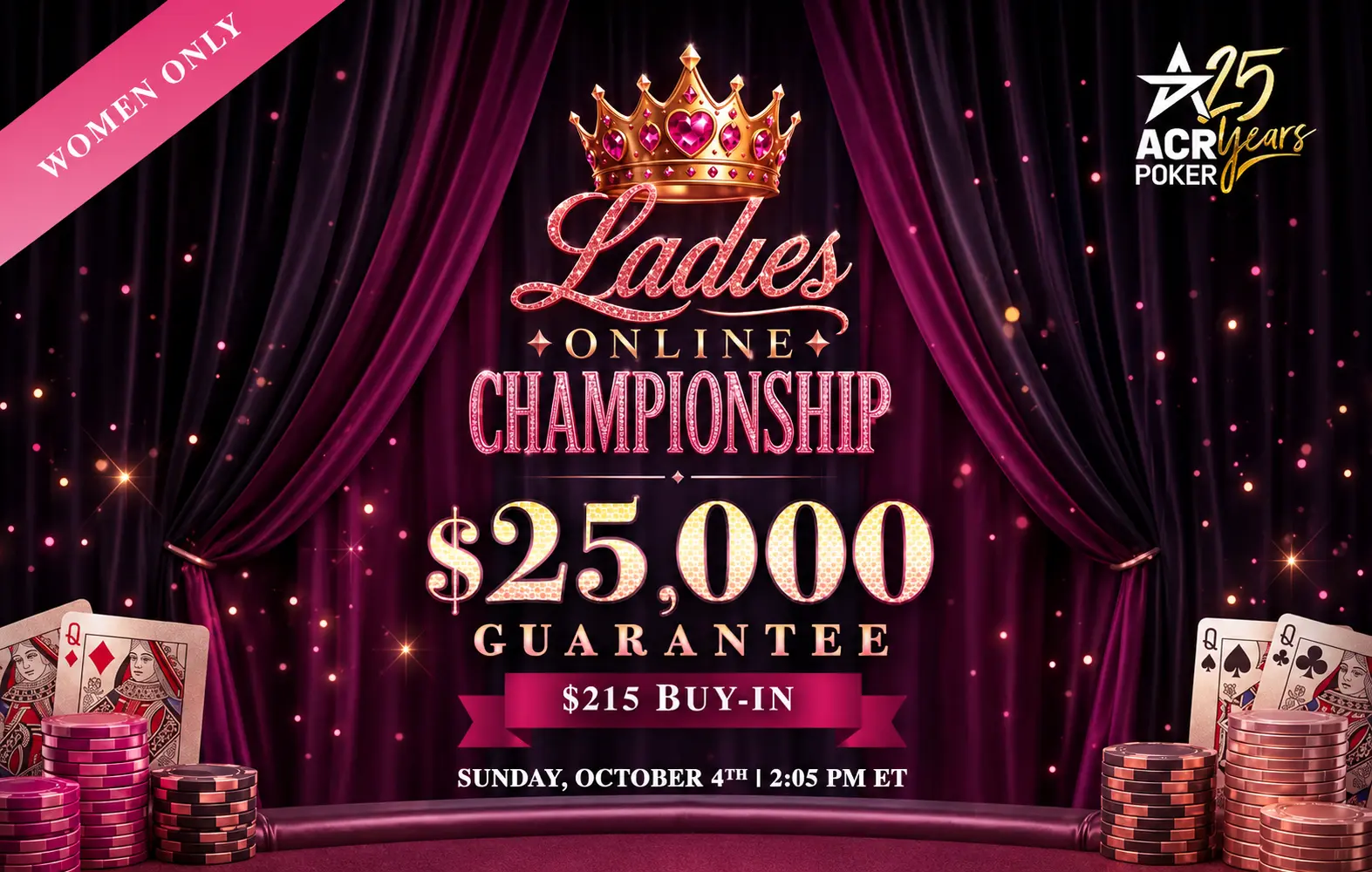
Stop, Ladies Time: Katie Lindsay Will Host Online Ladies Championship on ACR Poker




Log in to join the discussion
Share your thoughts and see what others have to say.