
 EN
EN  DE
DE How to Play Jackpot Hold ‘Em: Rules, Strategy & Payouts Explained

 PokerListings
-
18+ | Play Responsibly | T&C Apply
-
 ZumbaCards Casino 5 Free Cards
21+ | Play Responsibly | T&C Apply
-
 A1 Social Casino 1,000,000 GC
18+ | Play Responsibly | T&C Apply
-
 CrashDuel Casino 100% up to 200,000 GC + 50 SC
18+ | Play Responsibly | T&C Apply
-
 UpUp Casino 1,000,000 GC + 2SC
21+ | Play Responsibly | T&C Apply


Jackpot Hold ‘Em is a house-banked poker variant that borrows its core mechanics from Texas Hold’em while stripping away complex table dynamics. Instead of reading opponents or bluffing your way to a pot, you play head-to-head against the dealer. The dealer’s hand is the only one that determines your outcome. As a member of the community card poker family, Jackpot Hold ‘Em deals shared cards to the felt and moves through familiar betting rounds, though the competitive structure functions differently from traditional player-versus-player games.
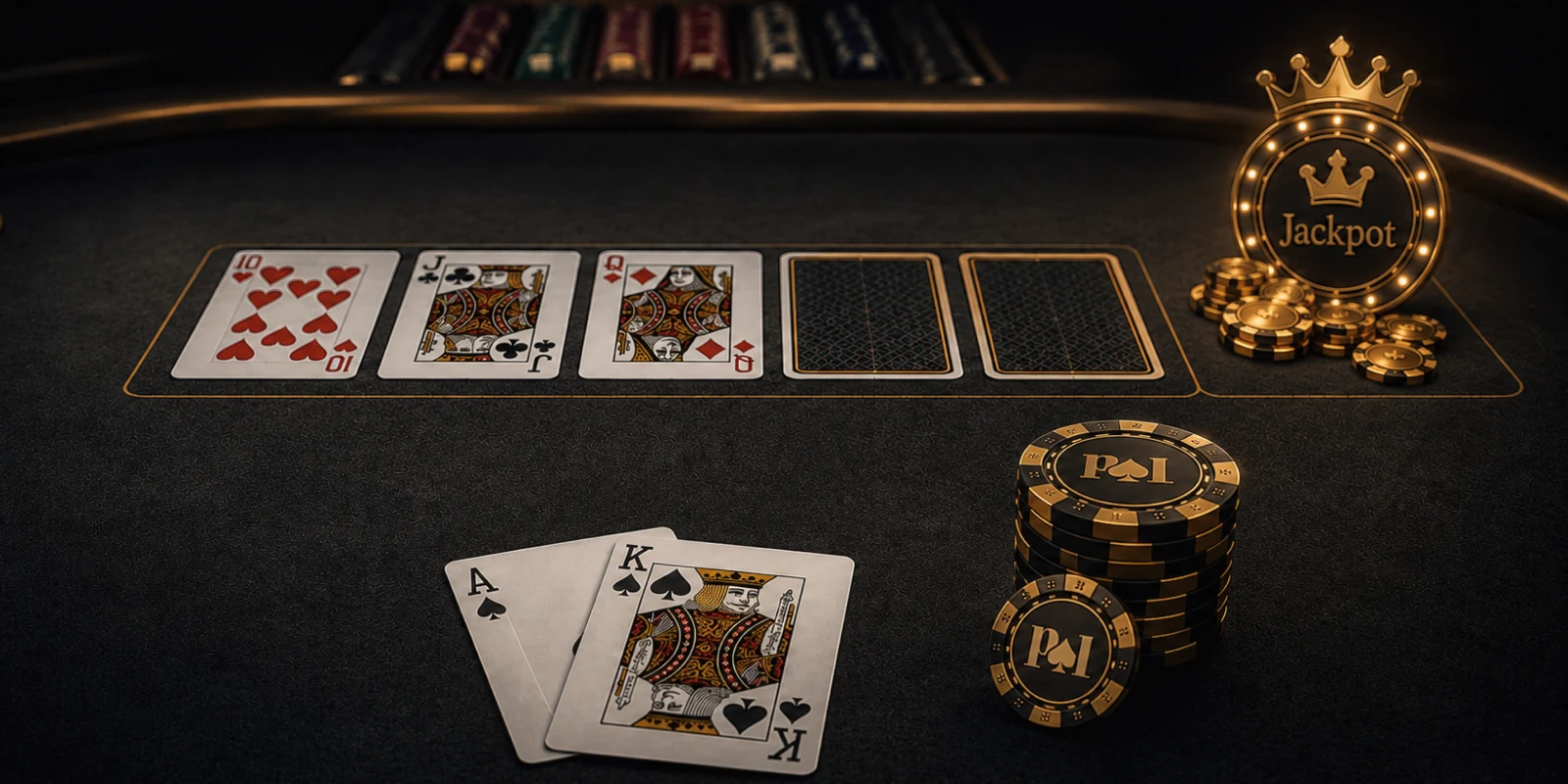
Understanding the Table Layout and Betting Options
Every Jackpot Hold ‘Em table features a clear, functional layout:
- The Ante Spot: Positioned directly in front of your seat, placing a wager here is mandatory to receive cards.
- The Jackpot/Bonus Circle: Located adjacent to the Ante spot, this optional betting area feeds into the progressive prize pool independently of your main hand.
- The Community Card Area: Positioned in the center of the table, this shared space holds the community cards used by all players against the dealer.
Online interfaces replicate this physical arrangement exactly, substituting digital chips for physical tokens while maintaining identical betting sequences. Game rounds follow a simple pattern: place your ante, decide whether to add the optional jackpot bet, and respond to the community cards by raising or folding.
Step-by-Step: How to Play Jackpot Hold ‘Em
A game round begins the moment you place your ante wager and optional jackpot bet. The dealer distributes two hole cards face down to each player and two to themselves from a standard 52-card deck. Five community cards are then dealt to the board.
Once the board is fully exposed, you reach the primary decision point: place a raise wager to match the required multiple of your ante, or fold and forfeit your initial stake. Your choice depends on how your two hole cards combine with the five community cards to form a five-card poker hand.
After all active players make their decisions, the dealer reveals their hole cards for showdown.
Round progression sequence:
- Place the mandatory ante wager and optional jackpot side bet.
- Receive two private hole cards from the dealer.
- Observe the five community cards dealt to the center layout.
- Choose to raise or fold based on your total five-card hand strength.
- Watch the dealer reveal their hand to compare final combinations at showdown.
Hand Rankings and Payout Structure
Hand rankings follow traditional poker rules, utilizing a standard 52-card deck with 13 ranks and 4 suits. The hand hierarchy runs from high card up to a royal flush. Payouts trigger once the dealer’s hand qualifies (typically requiring at least a pair to activate the main payout grid).
Higher-ranking hands carry larger payout multipliers reflecting their lower statistical probability.
| Hand | Typical Payout |
|---|---|
| Royal Flush | 100:1 |
| Straight Flush | 50:1 |
| Four of a Kind | 20:1 |
| Full House | 3:1 |
| Straight | 2:1 |
Main hand wagers resolve according to this fixed payout grid, while qualifying progressive jackpot side bets pay out from a separate accumulated prize pool.
The Jackpot Side Bet Explained
The progressive jackpot accumulates from side wagers placed across participating tables, growing continuously until a player lands a qualifying high-tier hand. Qualifying triggers typically start at four-of-a-kind, with straight flushes and royal flushes unlocking the top payout tiers.
The progressive pool operates similarly to a slot jackpot network, aggregating small contributions from multiple wagers into a single large payout. However, probability dictates the hit frequency. A royal flush occurs roughly once in every 649,740 hands, making the side bet a high-variance addition rather than a dependable income stream.
Qualifying jackpot tiers:
- Four of a Kind: Smallest qualifying payout tier.
- Straight Flush: Mid-tier fixed or percentage payout.
- Royal Flush: Top-tier outcome unlocking 100% of the accumulated progressive jackpot.
Strategy Tips to Maximize Your Odds
Effective Jackpot Hold ‘Em strategy relies on evaluating your two hole cards against the board texture before committing additional chips to a raise. Managing house edge requires avoiding weak, disconnected hands that feed the casino’s statistical advantage over time.
Key strategic guidelines:
Forfeit your ante if you hold no pair and no viable straight or flush draws after the board appears.
Place a raise confidently whenever holding any made pair or stronger once community cards are fully revealed.
Treat the progressive jackpot bet as optional entertainment rather than a core bankroll strategy.
Establish a fixed session limit before taking a seat to maintain clear financial discipline.
Common Mistakes to Avoid
New players frequently over-commit to the jackpot side bet, draining their main bankroll while chasing low-probability payouts. Another frequent error involves attempting to bluff the dealer. Because the dealer follows strict procedural rules and cannot fold, bluffing holds zero tactical value in house-banked poker variants. Poor bankroll management amplifies both mistakes, making strict session limits essential.
Where to Play Jackpot Hold ‘Em
Land-based casinos appeal to players seeking a physical table atmosphere and live dealer interaction. Table minimums and progressive jackpot totals vary by location, making a quick comparison between nearby venues worthwhile.
Online platforms such as Spinbet NZ provide an accessible alternative, featuring lower minimum bets and high-definition live streaming tables.
Our content may include affiliate links, and we may earn a commission from registrations and deposits made through them. However, it's important to note that PokerListings only endorses licensed casinos that follow the necessary regulations. We do not promote any site that has not passed our thorough evaluation and testing process.

18+ | Play Responsibly | T&C Apply

18+ | Play Responsibly | T&C Apply

18+ | Play Responsibly | T&C Apply

18+ | Play Responsibly | T&C Apply

18+ | Play Responsibly | T&C Apply
Always verify an operator’s active regulatory licensing before depositing funds or taking a seat.
Frequently Asked Questions
How do you play Jackpot Hold ‘Em?
Place an ante and optional jackpot bet, receive two hole cards, review the community cards, and decide whether to raise or fold before showdown against the dealer.
What is the difference between Jackpot Hold ‘Em and Texas Hold ‘Em?
Jackpot Hold ‘Em pits players exclusively against the dealer, removing bluffing and opponent reads. Texas Hold’em involves multiple players competing against each other for a shared pot.
How does the progressive jackpot work in Jackpot Hold ‘Em?
A portion of every optional side bet feeds a growing prize pool. Landing four-of-a-kind or better triggers a payout from that accumulated total according to the casino’s payout schedule.
What are the rules of Jackpot Hold ‘Em?
Standard poker hand rankings apply. Players place an ante, receive two hole cards, view five community cards, and choose to raise or fold before comparing hands against the dealer at showdown.
What is the best strategy for Jackpot Hold ‘Em?
Raise with any pair or stronger once community cards appear, and fold weaker disconnected hands. Keep the progressive side bet optional to protect your main bankroll.
PokerListings
Log in to join the discussion
Share your thoughts and see what others have to say.