
 EN
EN  DE
DE Essential Blackjack Terms Every Player Should Know

 PokerListings
-
18+ | Play Responsibly | T&C Apply
-
 ZumbaCards Casino 5 Free Cards
21+ | Play Responsibly | T&C Apply
-
 A1 Social Casino 1,000,000 GC
18+ | Play Responsibly | T&C Apply
-
 CrashDuel Casino 100% up to 200,000 GC + 50 SC
18+ | Play Responsibly | T&C Apply
-
 UpUp Casino 1,000,000 GC + 2SC
21+ | Play Responsibly | T&C Apply


Sitting down at a blackjack table without knowing the vocabulary leads to avoidable financial mistakes. Dealers move quickly, decisions happen in seconds, and hesitation caused by unfamiliar terms costs hands. The objective of live or online blackjack is simple: beat the dealer by building a hand total closer to 21 without exceeding it.
Casino legend attributes the name “blackjack” to an early payout bonus offered for holding the Jack of Clubs or Jack of Spades alongside the Ace of Spades. While that specific promotional payout disappeared long ago, the terminology surrounding the game expanded into a detailed language of actions, hardware, and strategic metrics.
Core Player Action Terms
- Hit: Requesting an additional card from the dealer to increase your hand total.
- Stand: Deciding to take no more cards, locking in your current point total.
- Double Down: Doubling your initial wager in exchange for receiving exactly one additional card.
- Split: Dividing an initial pair of identical cards into two separate hands, placing an additional matching wager on the second card.
- Surrender (Late vs. Early): Forfeiting half your initial wager to fold a weak hand before play completes. Late Surrender occurs after the dealer checks for blackjack; Early Surrender allows folding before the dealer checks for a natural.
Card, Value, and Hand Classifications
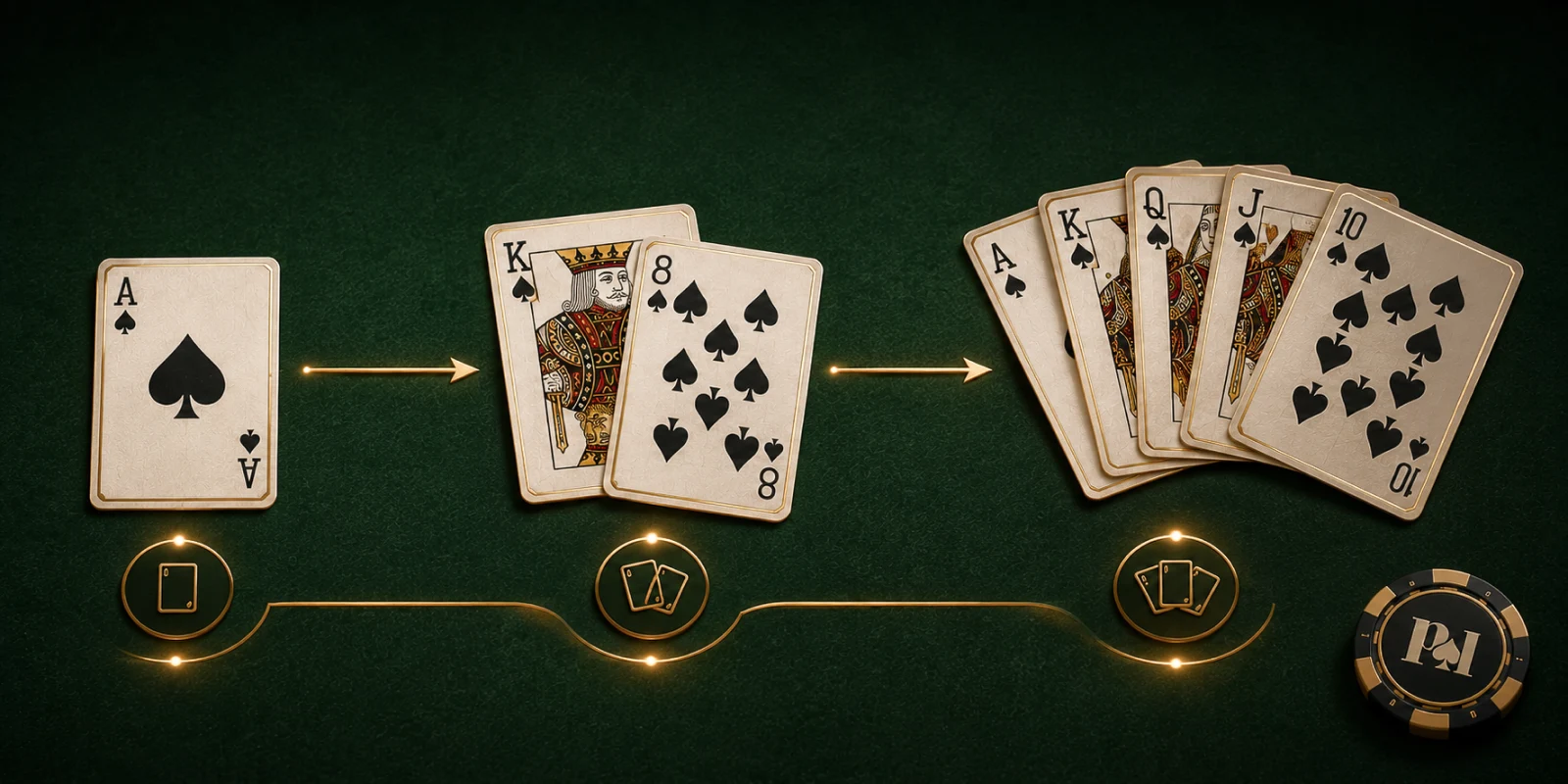
- Natural Blackjack: An Ace paired with a 10-value card (10, Jack, Queen, or King) dealt as the initial two-card hand. Pays 3:2 at standard tables.
- Soft Hand: A hand containing an Ace counted as 11 (e.g., Ace-6 totals soft 17), giving the player flexibility to hit without immediately busting.
- Hard Hand: A hand with no Ace, or an Ace counted as 1, leaving strict boundaries for drawing additional cards.
- Stiff Hand: A hard hand totaling 12 through 16, carrying a high statistical probability of busting if hit.
- Pat Hand: A strong initial hand totaling 17 through 21 that requires no additional cards.
- Bust: Exceeding a total of 21 points, resulting in an immediate loss regardless of the dealer’s final hand.
- Push: A tie between the player and the dealer resulting in a returned wager with no profit or loss.
- Five Card Charlie: An uncommon house rule awarding an automatic win to a player who draws five cards without busting.
Table Layout and Hardware Terms
- Shoe: A plastic container holding multiple shuffled decks of cards used for dealing.
- Discard Tray: A clear acrylic structure located on the dealer’s right where played cards sit until the next reshuffle.
- Blackjack Dealer: The casino employee responsible for dealing cards, managing chips, and settling wagers.
- Upcard: The dealer’s single face-up card visible to all players before they make decisions.
- Hole Card: The dealer’s face-down card, revealed only after all players finish their hands.
- Burn Card: The top card drawn from a freshly shuffled shoe and discarded face-down before dealing begins.
- Cut Card: A colored plastic card inserted into the shuffled deck to mark where dealing stops before a reshuffle.
- First Base: The seat located directly to the dealer’s far left, acting first in every round.
- Third Base (Anchorman): The seat located on the dealer’s far right, acting last before the dealer plays their hand.
- Box: The designated betting area marked on the felt where players place their chips.
How to Read the Table Using Blackjack Lingo
Once you understand basic terminology, you can follow table action without guessing. When a dealer shows a 6 upcard, players react differently than when a 10 is visible. Hearing a player announce a stiff hand immediately signals a vulnerable position.
Table position influences pacing. First base acts instantly, while third base evaluates every player’s hand before finalizing a decision. Understanding the terminology clarifies table flow, helping you stay in sync with every round.
How to Practice Using Blackjack Terms
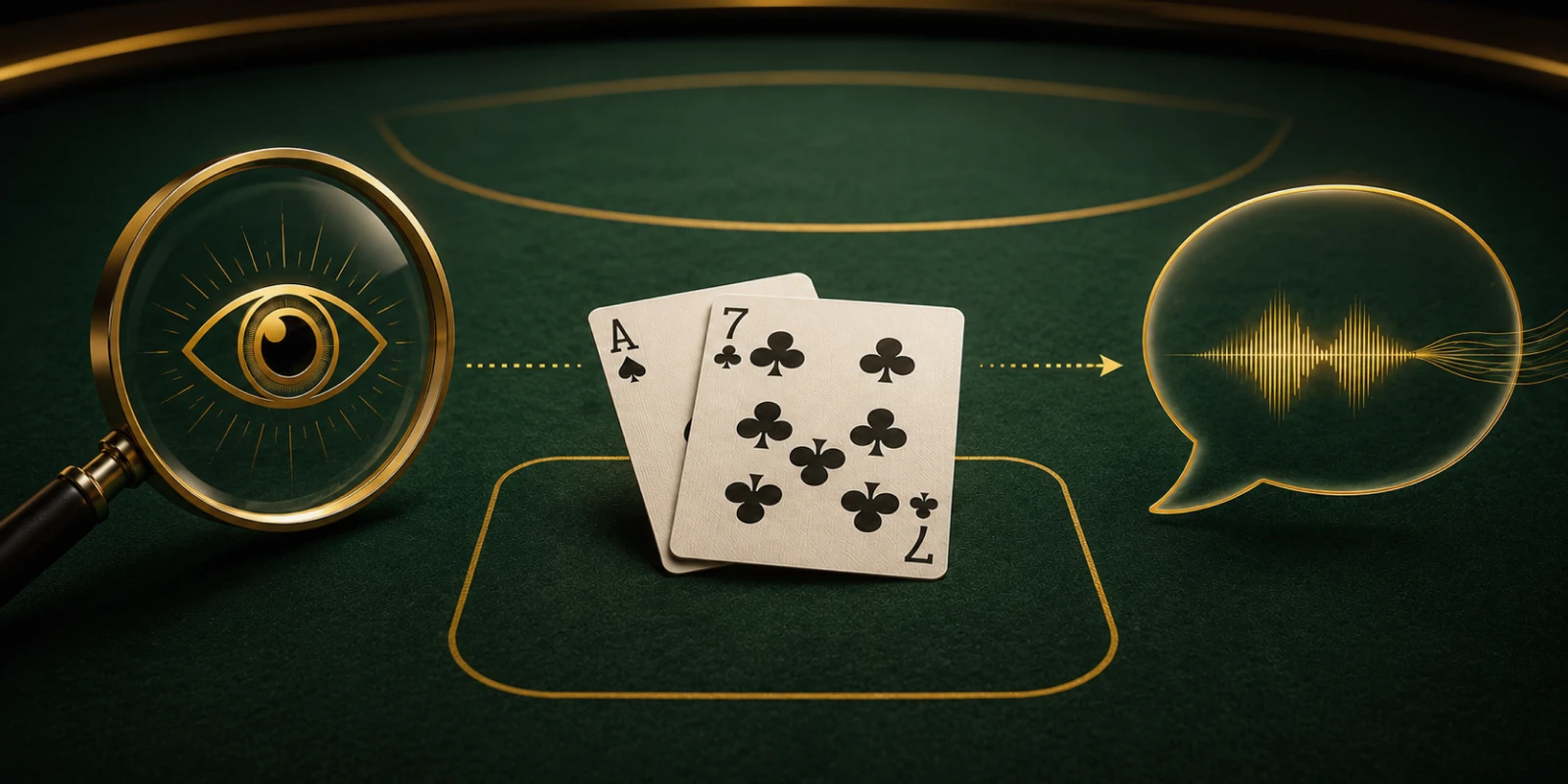
Fluency comes through repetition and active observation during live rounds.
- Say the Terms Out Loud: Verbalize actions like hit, stand, split, and double down while watching or playing. This builds muscle memory for real table situations.
- Listen to the Dealer: Pay attention to how dealers announce totals and hand resolutions. Repeating these phrases mentally reinforces correct usage.
- Learn Incrementally: Focus on high-frequency terms first rather than memorizing the entire glossary at once.
- Label Active Situations: Identify a soft hand, push, or bust immediately as it occurs on the felt.
- Practice in Free Settings: Use demo games or spectate live streams to test your knowledge without financial pressure.
- Observe Other Players: Listen to conversational terminology used by experienced players during active rounds.
Betting and Bankroll Terminology
- Bankroll: Total funds set aside specifically for a gambling session or long-term play.
- Buy-in: Converting cash into playable casino chips at the table.
- Insurance: A side bet offered when the dealer’s upcard is an Ace, paying 2:1 if the dealer holds a natural blackjack. Strategy guides advise avoiding this wager due to its high house edge.
- Even Money: An option offered to a player holding a natural blackjack when the dealer displays an Ace, locking in a 1:1 payout immediately.
- Flat Betting: Wagering the exact same chip amount on every hand regardless of previous wins or losses.
- Chip Up / Chip Down: Increasing or decreasing wager size between consecutive hands.
- Ploppy: A casual casino player who wagers based on gut feelings rather than basic strategy.
Strategic and Advanced Play Terms
- House Edge: The built-in mathematical advantage the casino holds over the player, typically around 0.5% when applying perfect basic strategy.
- Basic Strategy: A complete set of optimal playing decisions calculated for every possible player hand against every dealer upcard.
- Card Counting: Tracking the ratio of high-to-low cards remaining in the shoe to identify favorable betting opportunities.
- Running Count: The ongoing mental tally maintained in card counting systems like Hi-Lo, adding 1 for low cards (2-6) and subtracting 1 for high cards (10-Ace).
- True Count: The running count divided by the estimated number of decks remaining in the shoe, reflecting actual player advantage.
- Deck Penetration: The percentage of cards dealt from the shoe before a reshuffle occurs. Deeper penetration favors card counters.
- Balanced Count: Any card counting system where the point values assigned across a full 52-card deck sum to exactly zero.
- Back Off / Barred: The administrative action taken by casino management to restrict or ban suspected card counters from playing blackjack.
How This Blackjack Glossary Helps You Play Better
Mastering blackjack slang speeds up your reaction time during active play. Instead of pausing to decode table events, you process hands immediately, keeping your decision-making consistent and confident.
Familiarity with table language removes anxiety when joining live games, communicating with dealers, or asking questions.
Quick Reference Summary Table
| Term | Category | Definition |
|---|---|---|
| Hit | Player Action | Request an additional card from the dealer |
| Stand | Player Action | Keep your current point total and end your turn |
| Double Down | Player Action | Double your bet for exactly one additional card |
| Split | Player Action | Divide a matching pair into two individual hands |
| Surrender | Player Action | Forfeit half your wager to fold early |
| Push | Hand Outcome | A tied total between player and dealer returning your stake |
| Bust | Hand Outcome | Exceeding 21 points, resulting in an immediate loss |
| Natural | Hand Outcome | An Ace plus a 10-value card dealt on the opening turn |
| Upcard | Table Hardware | The dealer’s face-up card visible to the table |
| Hole Card | Table Hardware | The dealer’s face-down card checked for blackjack |
| First Base | Position | The first seat to act on the dealer’s far left |
| Anchorman | Position | The final seat to act on the dealer’s far right (Third Base) |
| Basic Strategy | Strategy | Mathematically calculated rules optimizing every hand decision |
| True Count | Strategy | The running count divided by remaining decks in the shoe |
Flex Your Blackjack Knowledge at Online Casinos
Mastering blackjack slang speeds up your decisions during active play. Instead of pausing to decode table events, you process hands immediately, keeping your decision-making consistent and confident. The logical next step involves putting this vocabulary into practice. Visit an online crypto casino to test your knowledge, track dealer calls without hesitation, and experience live blackjack firsthand.
Frequently Asked Questions
What does “push” mean in blackjack?
A push occurs when the player’s total matches the dealer’s total. Neither side wins, and the original wager returns to the player balance.
What is the difference between a soft hand and a hard hand?
A soft hand contains an Ace valued at 11, preventing an immediate bust on the next card. A hard hand contains no Ace, or an Ace valued strictly at 1, limiting drawing safety.
What is a stiff hand in blackjack?
A stiff hand is a hard total of 12 through 16. These totals carry a high statistical risk of busting if hit, yet struggle to win if stood on against a strong dealer upcard.
Is taking insurance a good bet in blackjack?
Standard basic strategy charts advise against taking insurance. The side bet carries a high house edge exceeding 7% for non-counters.
What does sitting at “third base” mean?
Third base (or anchorman) refers to the seat on the dealer’s far right. This position acts last before the dealer reveals their hole card and completes their turn.
PokerListings 
Log in to join the discussion
Share your thoughts and see what others have to say.