
 EN
EN  DE
DE Denys Chufarin: GGPoker’s Most Famous Short Deck Expert

 PokerListings
-
 CoinPoker 150% up to $2000
18+ | Play Responsibly | T&C Apply
-
 Ignition Poker 150% up to $1,500
18+ | Play Responsibly | T&C Apply
-
 Stake.US Poker $55 Stake Cash + 260,000 GC
18+ | Play Responsibly | T&C Apply
-
 Americas Cardroom 100% up to $2000
18+ | Play Responsibly | T&C Apply
-
 Betonline Poker 100% Up to $1,000
18+ | Play Responsibly | T&C Apply

On July 22nd, 2026, the third episode of Online Poker Millionaires from GGPoker appeared on YouTube, the main character of which was GGTeam member Denys “SantaZzz” Chufarin.
The video explains who Chufarin is and how he became a poker millionaire amidst war, forced relocation from Ukraine to Canada, and the need to remain an active advocate for poker as a streamer and ambassador.
After watching this episode, PokerListings decided to tell you a little more about Chufarin as a poker player: how he discovered Short Deck, found his niche in it, and became the face of this game on the GG Network.
As a bonus, we’ve compiled his most interesting answers from Ask Me Anything on Reddit — and you can ask him even more on his Twitch channel santazzzua or Instagram.
How Denys Chufarin Came to Short Deck
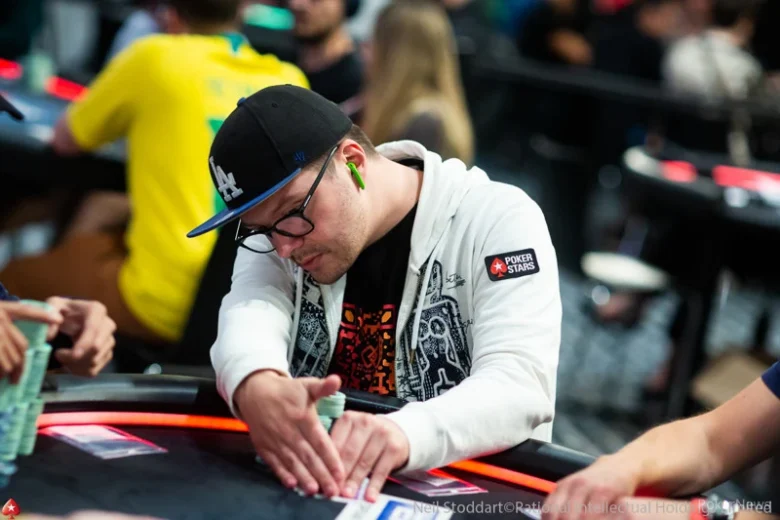
For nine years of his professional career, Denys Chufarin focused on No Limit Hold’em tournaments, until one instance turned everything on its head. According to an interview he did with Pokeroff, in 2018 Chufarin went to the WSOP, where he played with backing for the first time in his life — and it didn’t end well.
Chufarin eventually suffered a mental breakdown and became depressed, cutting his poker playing to a minimum and focusing on simpler things for half of the year, essentially losing interest in this game.
Around the same time, he began streaming for personal entertainment, not for income or development, and playing video games a lot — until his daughter one day told him he was playing Apex more than poker.
It was then that he finally woke up and decided to find interesting poker games in which he could develop from scratch.
He first discovered NLH with no blinds but antes on GGPoker — the first Rush variant, which had been tested for about a quarter. Denys figured it out quickly, started making $100 an hour in games with $1 ante, and rediscovered poker as an exciting game and a profession. He soon tried Short Deck, which he liked even more, so this game ultimately became his first choice for personal development.
Short Deck on GG soon became Denys’ regular game on streams as well, and in 2021, network representatives contacted him to discuss partnership. During negotiations, it became clear that the streamer and the network team had many similar views, so on July 1st, 2021, Denys became part of the GG ShortDeck Squad and the true face of his beloved game.
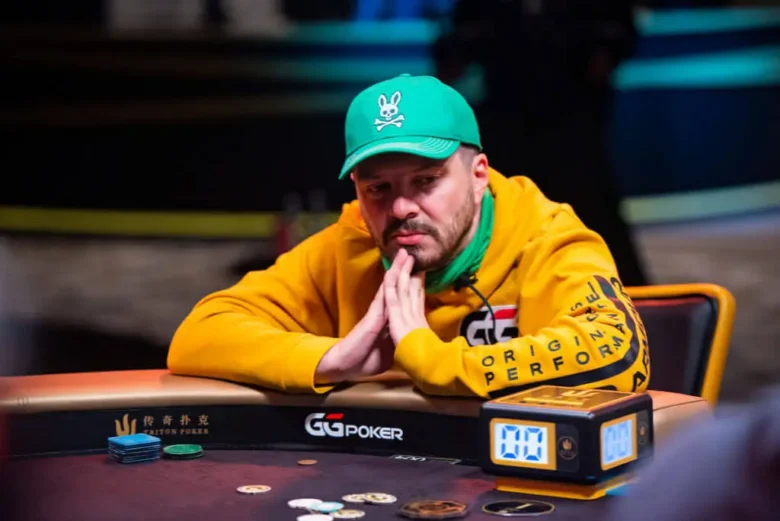
Even after the team was reformed, Chufarin remained a GGPoker ambassador and even began streaming in English to expand his audience and practice the language.
The popularity of his streams rests on three pillars that have remained constant over the years: Denys’s calm demeanor, the still-relatively low popularity of Short Deck among streamers, and his willingness to explain every decision in every hand withoutt shying away from even the most bizarre questions from viewers.
Denys Chufarin AMA on Reddit
Q: How did you learn poker?
Denys Chufarin: At first, it was almost entirely through practice. When I started, there wasn’t as much educational content, solvers, and coaches as there are now. I played a lot, analyzed my mistakes, talked to other players on forums, and constantly tried to understand why a certain solution worked or didn’t work. Now I use solvers and analyze hands regularly. But I think the most important thing is not just to look at the correct answer, but to understand the logic behind it.
Q: What were the first games you played?
Denys Chufarin: I started playing online seriously in January 2009 with a $65 deposit. In my first month, I won around $200. The first games in which I found real consistency were small Double or Nothing Sit&Gos, initially at the $2 and $5 levels.
Q: How long until you found some early success?
Denys Chufarin: In February 2009, I moved to PokerStars as SantaZzz with a bankroll of around $240 and started playing the $5 games. From there, I moved up step by step to the $10s, $20s, $50s and eventually the $100s.
By early 2010, I had switched to 6-max Sit&Gos and reached the highest stakes available. By the end of that year, I had achieved Supernova Elite for the first time. I eventually did it five times.
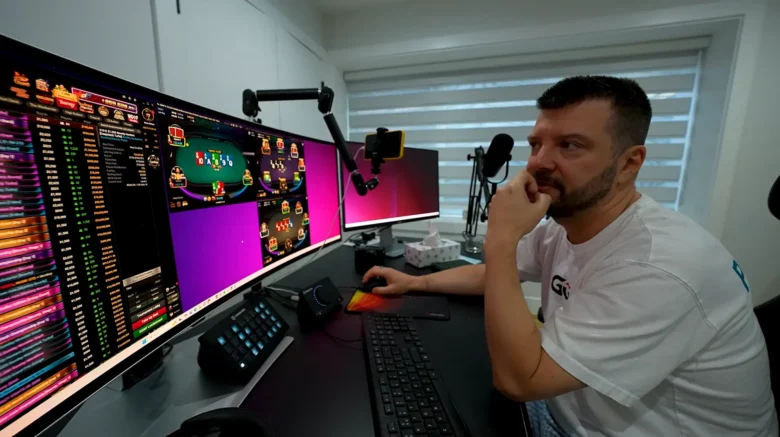
After Black Friday, there were not enough Sit&Go games running, so I switched to cash games. Over the years, I played more than 10 million cash game hands.
Streaming came much later, only around five years ago. Back in 2009, nobody was really thinking about streaming poker.
Q: How has streaming helped balance your mentality surrounding playing poker? You seem very at peace when you play.
Denys Chufarin: Today, streaming is one of the main things that helps me stay disciplined and focused. It can sometimes be distracting, of course, but the responsibility I feel toward the people watching me seems to be stronger than the responsibility I feel toward myself. And I am definitely not always as peaceful inside as I may look on the stream!
Q: Your spoken English has improved markedly over the years. Any tips or hacks for learning a new language?
Denys Chufarin: Thank you! My main “hack” was putting myself in situations where I had no choice but to speak English.
When I switched my streams to English, it was extremely uncomfortable at first. I made mistakes, forgot simple words and sometimes could not properly explain my thoughts. But doing it for hours several times a week helped much more than studying grammar alone.
My advice is to stop waiting until your English is “good enough.” Speak, make mistakes and keep going. Most people care much more about what you are saying than whether every sentence is perfect.
Q: Is Short Deck your favorite game and do you foresee short deck becoming more popular worldwide?
Denys Chufarin: Short Deck is probably the game I have enjoyed the most. It is fast, aggressive and creates a lot of unusual situations because the equities run so close. I would love to see it become more popular worldwide, but I am not sure it will ever become as mainstream as NLHE. It can be confusing for new players because the hand rankings, equities and strategy are so different. Still, it is an amazing game and definitely deserves more attention.
Q: I see limited online training content for short deck. How have you studied and how does the study compare to eg. NLHE and PLO?
Denys Chufarin: We basically studied Short Deck from scratch as a group of like-minded players. Many of us came from cap NLHE games, where you bought in for around 20 big blinds, so the dynamics felt somewhat familiar.
At that time, there was almost nothing available. There were not even proper basic preflop ranges. By pure luck, I managed to convince someone I did not know at all to sell me some early calculations, and that became our starting point.
From there, we worked together, constantly discussed spots and tried to build the logic of the game. Later, we bought a custom Short Deck solver based on Pio, rented a server and started calculating everything, including multiway pots. Short Deck is very much a multiway game.
That experience actually helps me now, because in NLHE I still feel that many three-way and four-way situations have not been studied deeply enough by most players.
Where can someone study Short Deck today? Honestly, I am still not sure. I do not know if there is much high-quality material publicly available. You can probably buy access to calculations and study them yourself or with a group of friends, but it is a very specific game and there is not that much action anymore.
Denys Chufarin: To me, Short Deck is poker in a concentrated form. I think it is one of the most exciting, difficult and high-variance formats.
Q: Do you think your experience with Short Deck gives you any unique insight into equities/strategy for NLHE cash or MTTs or are they just completely different animals?
Denys Chufarin: I think Short Deck teaches you to play every street separately instead of falling in love with your hand.
A starting hand is just a starting hand. It does not mean you should automatically be ready to play for everything no matter what happens next. Once the flop comes, you reassess the situation: the ranges, the equity, the EV, whether you should value bet, protect, bluff or slow down. Then you do the same again on the turn and river.
That mindset transfers very well to NLHE. Poker is not really a game of playing starting hands. It is a game of equity, ranges and making the best decision on every street.
Denys Chufarin: And after playing Short Deck, variance in almost any other game feels much easier to handle 😂
Q: How did you transition over from cash, was it just natural or were there necessary adjustments you needed to make?
Denys Chufarin: I think I was quite lucky because I already had a lot of experience studying simulations independently in Short Deck. That gave me a strong understanding of how poker itself works: where sizings come from, where the value threshold is, which combinations make the best bluffs, how ranges interact and how one decision affects the next street.
Of course, my understanding was far from complete, but the foundation was already there. I just did not know at the time how well it would transfer to MTTs.
When I moved from cash to tournaments, I combined that experience with tools like GTO Wizard. At first, I often studied my opponents’ hands rather than only my own. Whenever someone made a play that looked strange or illogical to me, I would recreate the spot and try to understand the reasoning behind it.
Poker is a game of logic and assumptions. You see an action, make an assumption about the logic behind it, and then test whether that assumption makes sense. The more I did this, the better I became at understanding both theory and how real players deviate from it.
For the first six months, I reviewed hands almost every day. Sometimes I watched videos from other players, listened to how they explained their decisions, and then used Wizard to test the strategy behind their logic. I was not simply copying what they did. I was trying to understand why they thought that way and how I could build a strategy against that type of thinking.
The biggest adjustments were tournament-specific things: different stack depths, antes, ICM, final-table pressure and constantly changing dynamics.
MTTs are also a much more creative form of poker than I expected. If you spend years in cash games trying to perfect something as technical as your exact check-raise frequency, you may be shocked when you move to tournaments and see how often people play very far from theory and make huge exploitative adjustments.
At first, some decisions can look completely random, but often there is a logic behind them based on the specific opponent, stack depth or tournament situation. Learning to recognize when someone is simply making a mistake and when they are making a strong exploit was a very important part of the transition for me.
So the transition felt natural in terms of poker logic, but it still required a huge amount of study. My previous experience gave me the skeleton, and then I had to build the tournament game around it.
PokerListings Popular Articles
Classic, Rush, or AOF: Where to Start Your Poker Career
Table Selection: The Ultimate Skill for Becoming a Winning Cash Game Player

How Has Triton Transformed High-Stakes Poker?





Log in to join the discussion
Share your thoughts and see what others have to say.