
 EN
EN  DE
DE Lose $1-3 Million a Year But Keep Your Dignity: Garrett Adelstein’s AMA on Reddit
 PokerListings
-
 CoinPoker 150% up to $2000
18+ | Play Responsibly | T&C Apply
-
 Ignition Poker 150% up to $1,500
18+ | Play Responsibly | T&C Apply
-
 Stake.US Poker $55 Stake Cash + 260,000 GC
18+ | Play Responsibly | T&C Apply
-
 Americas Cardroom 100% up to $2000
18+ | Play Responsibly | T&C Apply
-
 Betonline Poker 100% Up to $1,000
18+ | Play Responsibly | T&C Apply

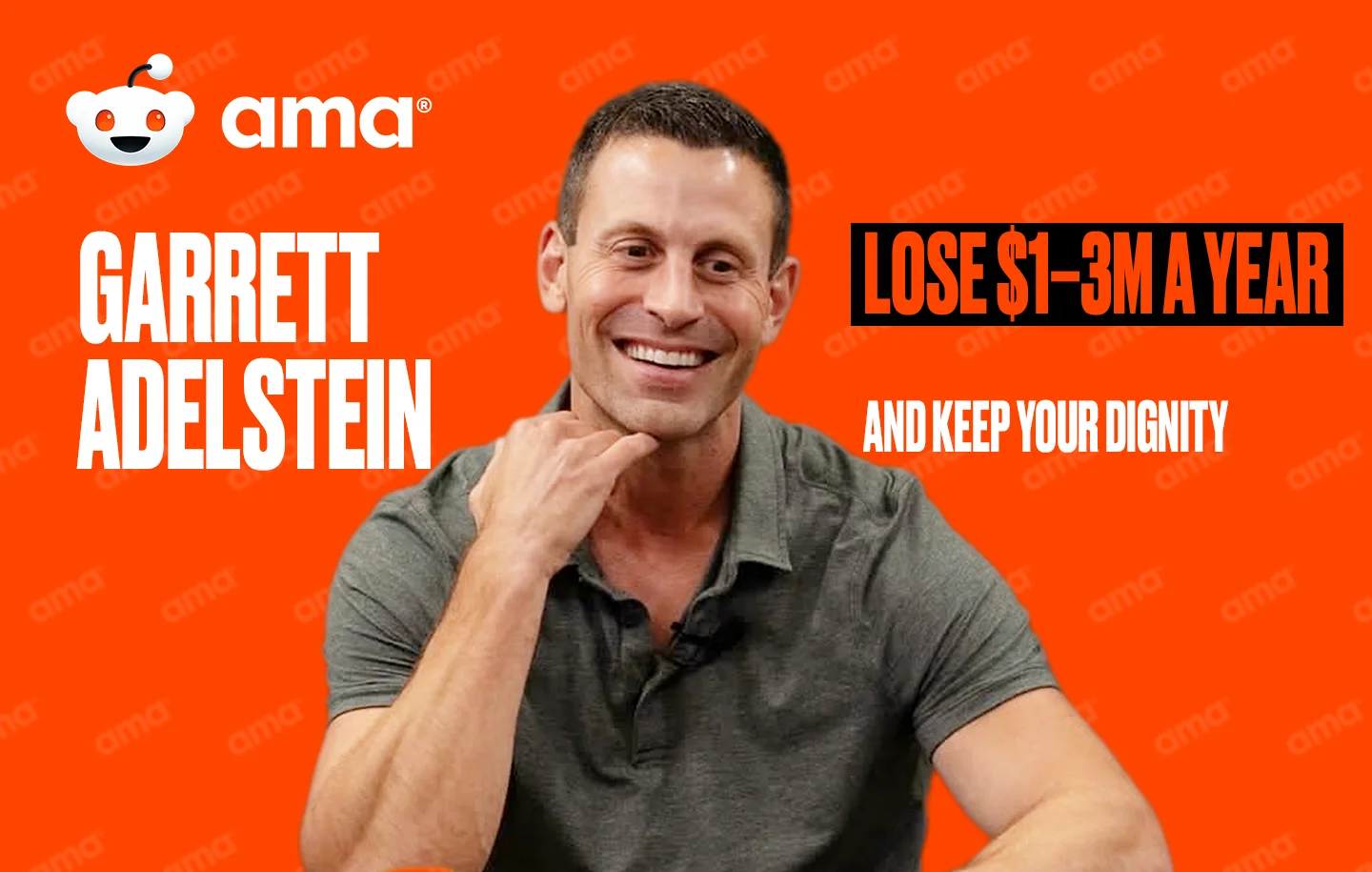
On August 19th, 2026, live cash games crusher Garret Adelstein participated in an AMA on Reddit. This Ask Me Anything session was massive, spanning 225 messages. Garrett tried to answer most of the questions — and we’ve selected the most interesting parts of his conversation with the poker community.
Disclaimer. While everyone wanted to know his side of the story in the famous spot with J4 and Robbie Jade Lew, he decided not to give it in the AMA. However, Garrett answered on related questions and also promised to reveal more in a YouTube video closer to the end of 2026, and also advised everyone to pre-order his book, where he explains everything in detail.
Thoughts About Jack-Four Spot & Its Aftermath
Q: With all of the evidence leaning towards cheating in the J4 hand, why do you think there was so much pushback from the online community and criticism in your direction?
Garret:
Many reasons, but I’ll give you 3:
- A lack of information. Seeing the comments, I’m always blown away by how many people have next to no information, but speak as though a five-minute google search tells them everything they need to know about Jack-Four. In reality, even the most devoted Jack-Four followers only have about 20% of the details. It’s a ton of info. I’m pumped to finally be sharing the rest of it with you all!
- My many missteps along the way. Touched on in other questions. Obviously examined in detail in Beneath the Cards.
- I think Robbi and company did a pretty solid job with their misinformation campaign and playing to certain ideas, even if those attacks didn’t have a shred of validity: “Rich, white, sexist, crybaby poker bro steals from philanthropic amateur woman just trying to gamble with jack-high!” Game recognize game.
Q: What do you think would’ve happened if you won the J4 hand?
Garret: This one is going to get so much hate, but oh well. But the answer is the exact same thing if we’re talking about my response to Jack-Four. Period. Maybe the world wouldn’t have cared though, which of course would have created quite the Butterfly Effect: no international scandal, no book, etc.
Q: If J4 didn’t happen, what do you think you would be doing today? Also, any plans to return full time to streamed games?
Garret: I’d like to think I would’ve pivoted to the personal development space (or something else that I found intrinsically rewarding) in some capacity. But I’m probably lying to myself. The competition, the money, the constant stream of praise from strangers on the internet — those things wouldn’t have been easy to give up, especially without the insight I acquired in the Jack-Four aftermath.
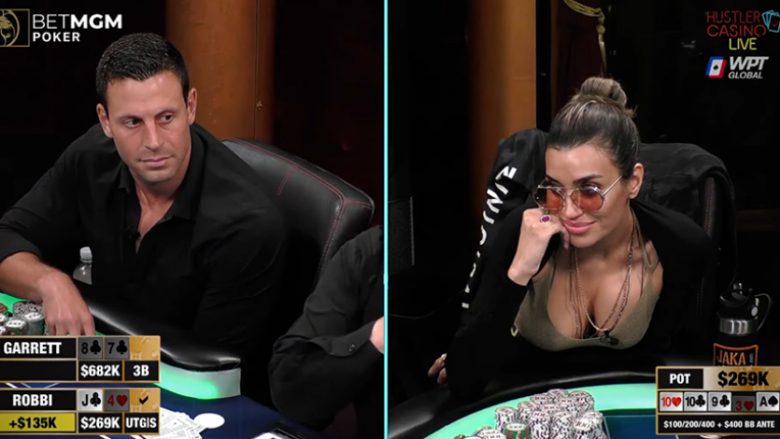
Probably won’t return to poker full time. But I suspect I’ll continue playing high-stakes games on streams several times a year for the foreseeable future. Especially in small doses, I still can’t get enough of this shit.
Q: After the J4 hand, besides the occasional annual live stream appearance, how much have you been playing and where?
Garret: None. Writing a book, creating a 35+ hour poker course, and too many other new jobs, all while raising a 3 and 1 year old, has kept me a bit preoccupied.
Q: Thoughts on Ryan Feldman?
Garret: Although I’m not a fan anymore, Ryan’s elite gamebuilding played a critical role in the livestream era of my career. I can’t imagine I would have been able to build the fan following I did if Ryan wasn’t simultaneously doing everything he could to build up LATB and later HCL from 2017-2022. We did a lot for each other. And for a time, I considered him a close friend.
Q: How much money do you think you left on the table boycotting HCL?
Garret: Probably $1-3M a year.
Perspective on Poker
Q: How long did it took you to grind out low and mid stakes before taking shots and eventually becoming a high stakes crusher?
Garret: I sucked at online poker before I was any good. Took me 2-3 years to rise all the way up the stakes online from 18-21. I was incredibly fortunate to have found poker when I did. And after going broke, I was able to climb my way back to the top in a bit over a year.
Q: Which three poker players have an unique and difficult style to play against and what have you learned from studying their game?
Garret: I’ll just mention Robl here. Doug Polk and I have a fun video coming out on Sept 1 breaking down my five toughest live opponents. In short, Robl blends theory, exploits, and deep-stacked pressure better than anyone else I’ve played against.
Q: Does becoming a father change your perspective about poker?
Garret: It’s hard for me to say because Jack-Four went down just a few months before my daughter was born. (We have two little kids now.) So after her birth, everything in my life had already flipped upside down, personally and professionally. Instead of playing high-stakes poker multiple times a week, I spent all my working hours locked in my office, writing my memoir.
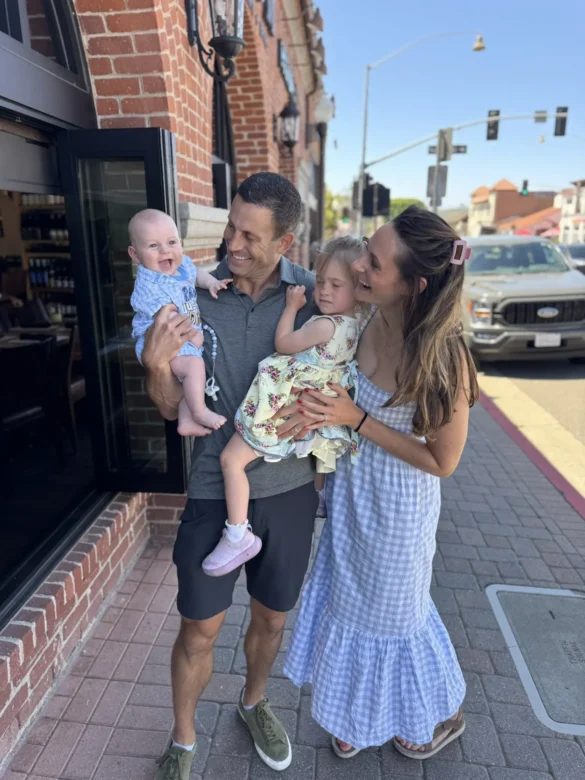
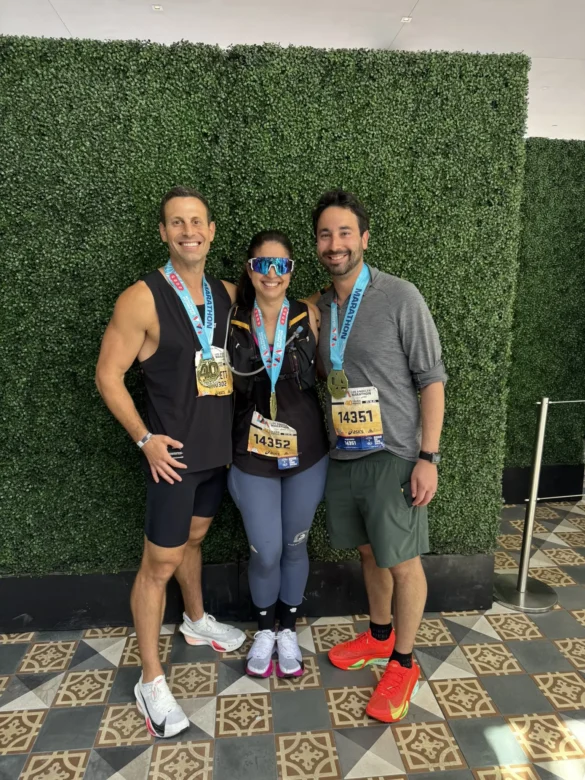
And still, it wasn’t “enough.” Let me elaborate. Having children doesn’t change your internal wiring. I remain super ambitious and incredibly competitive. Instead of consistently channeling that into cards, I’ve done so with my other projects (book, Upswing poker course, documentary, distance running). And every time I’ve played poker, I want it just as badly as ever.
Becoming a dad shifted my priorities. Regularly balancing fatherhood and the incredibly stressful world of high-stakes poker probably isn’t for me. But I’m still the same guy. And as a parent, you’ll probably still be you — with a lot more challenges and a deep love like you’ll never understand.
Q: What is the most memorable hand you have been a part of?
Garret: It was an epic hand against Rick Salomon that I break down in the book. If Rick had run it once as per usual, that might have been the proverbial end of my career. Instead, I ended up winning 2/3 the pot — and millions more in the Neverwin games (a huge VIP I played with for a couple years). Luck is such a fascinating and integral component in all of our lives. This is especially true in poker.
Q: How do you think about playing poker in high stakes games today given you’re retired?
Garret: When I sit down, I’m confident I’m massively +EV. So just gotta ride the variance waves, even if it means I go home from a work trip $1M lighter.
Like I’ve said, playing high-stakes poker isn’t without some serious costs/problems. But yes, this mindset is all the more difficult to adopt when I don’t play very often.
Advice & Tips for Less Experienced Players
Q: Garret, you’re 21 years old and have to start your poker career over in 2026. How would you study and how aggressive would you move up stakes?
Garret: For clarity, without the knowledge-base I have currently, I’d never even consider it. Poker in 2026 is remarkably difficult. It now mirrors many other brutally competitive fields where you’ll have to invest years and years, with no guarantee of even turning a profit, let alone make the big bucks. There are so many problems with a career in poker.
But in the hypothetical that I’m 21, broke, but miraculously have all the technical poker knowledge, soft skills, experience, and on and on that 40-year-old Garrett does — well, I suppose that would be one of the rare instances where “continuing” my career would make sense.
I’d figure out how to scrounge up 50 buy-ins for the blind level I would play. Hopefully I’d find a way to save up or borrow $5 (big blind) X (100-big-blind buy-in) X 50 (buy-ins) = $25,000 (or $10K and play $1/$2 if I had to). If saving up by working another job first wasn’t an option, I’d probably do this by connecting with an investor to give him everything he needed to understand I was really, really good at this game.
From there, I’d start grinding the very best public and private games I could wiggle my way into, probably in LA or Las Vegas. I’d use everything I’ve learned over the years to find the best spots (shorthanded, overnight games), work 80 hours a week, and avoid various pitfalls (tilt, rigged home games, overspending) through all my experience. At $2/$5, there are plenty of opportunities for sick games.
I would not like the work. At all. But I’d be desperate to get back on my feet. Interestingly, this hypothetical has plenty in common with what I did after going broke at 22, minus the insights. You learn a lot about yourself when your back is pushed up against a wall.
Q: What’s the biggest mindset shift that low stakes cash players ($500-$1,000 buy in) should make? What’s the biggest misconception that they have?
Garret: That poker is about one thing. Making the big bucks (especially in live poker) isn’t about knowing the GTO solution. Or incorporating the perfect exploit against every opponent. Or game selection. Or networking/poker politics. Or the stamina to play for > 24 hours in the juiciest games. Or picking up physical tells and betsizing patterns. It’s about all these things — and so many more.
To become great, you have to figure out the highest leverage skills in your playing environment. And then put in the (often monotonous) work of becoming elite at every one of those skillsets. For most of you in 2026, it’s probably not a great use of your time.
Q: Do you ever feel fear of pulling a big bluff? If yes, how do you make yourself do it anyways?
Garret: Not anymore. For me, self-confidence comes from believing I’ve outworked everyone at that table. That I’m an elite decision-maker who is unafraid to do the things most others shy away from — whether it’s a big bluff, call, or fold.
Q: How do you go about reading the other players?
Garret: Through focus, awareness, and perceptiveness. Emotional attunement isn’t technically something you can see, but it’s another big part of my success with live reads. When people are agitated, nervous, or jubilant, I can sometimes feel those emotions radiating off their bodies. What might appear as a sixth sense from the outside looking in is really just intuition formed by playing millions of hands live and online.
In short, try much harder at paying attention to everything than you probably are currently. And play many, many hands.
Q: What are some of the ways you get fish to play with you and keep them wanting to stay at the table?
Garret: Be a human. Take a genuine interest in others, in and out of your work. Stop thinking about people as human pawns who are only here to help you capture more EV. Doing so will enhance your life in many ways.
Q: I play live part-time and am hitting the private game ceiling in my local games. If you were in my shoes, how would you approach trying to start playing in these games?
Garret: Figure out a way to be genuine, while at the same time adding value to the game somehow. It won’t be easy, and you may quickly find yourself on the outside looking in anyway. But shooters shoot.
Trying to consistently win playing very loose-aggressive without a ton of data points proving you can pull it off seems ill-advised.
Q: What’s your opinion on the state of poker? Going pro vs keeping poker as a hobby in 2026? Advice for younger poker players in their 20s?
Garret: This one is important enough to answer again: Please do not go pro in 2026. For almost everyone not already making good money as a pro — and plenty who already are — playing poker as a hobby is the way.
Personal Questions
Q: What does your production team look like for the recent slew of videos and shorts you’ve been releasing? I’m sure we all appreciate the content, but if I could pose one critique — the clips feel very unnatural.
Garret: Can’t say I disagree with you. I worked so damn hard prepping these short stories, so I’ve been super hard on myself that the execution is lacking at times. These were all filmed months ago, so with the 13 that have been released plus the final 5 on the way, there’s no turning back now.
I’m not trying to make excuses, but this is a new job for me. Honestly, I’ve had like 20 new jobs over the past few years. And some of them, I’m just naturally not all that skilled at. In a “shorts” format, every second counts. And whenever I’d try a strategy like what you mapped out above, I found myself rambling, forgetting key elements, etc. In retrospect, it still would have probably been better to take this approach. But, live and learn.
It’s rough because I think these stories are great. I just hope I don’t lose a bunch of readers because of these videos. I’m a writer now. I think the book is excellent. The very best book I’m capable of writing. Content creation, at least thus far, is not my strong suit.
Q: How often do you play private cash games? Did you play them much while you were on LATB/Hustler, and do you play them now?
Garret: In order to get a seat at those tables, you have to offer “the game” something(s). I did that by bringing an audience on livestreams. Privatized off-stream games are a different animal. I go deep on all this in the book.
In short, if I could continue playing in big, soft off-camera games twice a week and avoid doing anything I didn’t feel great about morally, I probably would. But that’s a pipedream.
The guys who build, curate, and protect their seats in most massive, juicy games work tirelessly to do so. And probably don’t want to announce to the world everything they need to do to maintain that status quo.
Q: Do you play tournaments and if yes — do you feel like your edge in cash games transfer over?
Garret: No, tournaments are a totally different thing. I’ve always firmly believed in specialization. I dedicated 25 years to no-limit cash games, and I’m sure I could keep learning for 25 more if I was so inclined. Poker is really hard and complex.
Q: Why are you never on Triton or KCP or any of the sort?
Garret: I was fortunate enough that I never needed to travel more than an hour or so by plane to get all the action I wanted. Then I took a 2-hour flight to play on the Lodge in Texas last month, breaking my streak!
Q: What has been the three biggest things that helped you with self-sabotage?
Garret: Cognitive behavior therapy, self-compassion, and knowing I will have to sit with these potentially poor decisions for weeks (or longer) afterward. At a certain point, I just grew exhausted with making the same mistakes over and over again.
Q: You come across as a structured person, have you always been that way? If not, what helped you brining more structure onto your life?
Garret: Structure is my biggest defense against what would otherwise be some pretty debilitating anxiety. By staying consistent with fitness (distance running these days), nutrition, tidiness, preset working hours, etc, I’m better able to avoid this nagging feeling that my life is spiraling out of control. Ultimately, these “solutions” are Band-aids, but they beat depression and lying in bed for weeks at a time. It’s not free being me.
Q: Could you share your secrets of staying so fit physically?
Garret: Morning ritual. I wake up at the same time every day and drink my almond milk latte. Then I eat the exact same oats, berries, and almond butter breakfast. Then I go running. I have a healthy dose of fear that if I skip even one day ever, my entire life will fall apart. Given the number of times I’ve laid in bed for months on end in earlier years, the thought isn’t as crazy as it sounds.

Popular News

Best Online Poker Room Promotions in September 2026
Third Time’s a Charm: ACR Poker Handles Yet Another RTA Controversy
Top Cash Game Players August 2026







Log in to join the discussion
Share your thoughts and see what others have to say.