
Online Poker vs Live Poker: Moving from One to Another


 PokerListings
Both online vs live poker have their differences and strategies. The live arena is where it all started but, since the late nineties, the internet is where poker has flourished. Today, everyone has a choice. You can play online poker vs live, and vice versa – or even move between the two. The third option is what most do, with most of their time spent online.
In this guide, we’ve outlined why online poker is on the rise, especially in these unprecedented times. And more importantly, how you can make the switch and remain profitable. You need to know the differences in play between online vs live poker and how to adjust accordingly. Here are the similarities, differences, and concepts you need to grasp when moving between live poker to online, and vice versa.
ONLINE POKER
Fast-paced
Tougher Competition
More aggressive styles
More pre-flop play
Multi-tabling possible
Satellite into bigger events
Possibly more variants
Higher variance / swings
LIVE POKER
Slower action
Softer games on average
Loose-passive players
More limps & post-flop play
Physical tells & table image
More multiway pots
Short-term variance
Narrower hand ranges
Why Move from Live Poker to Online Poker in 2021?
There’s never been a better time to play real money online poker. The COVID-19 outbreak brought live poker to a screeching halt in 2020 and even now in 2021. And that caused a surge of activity online. With COVID restrictions likely to impact live events for this year, online poker will continue to be the go-to option for many. Based on that fact alone, it’s worth making the switch.
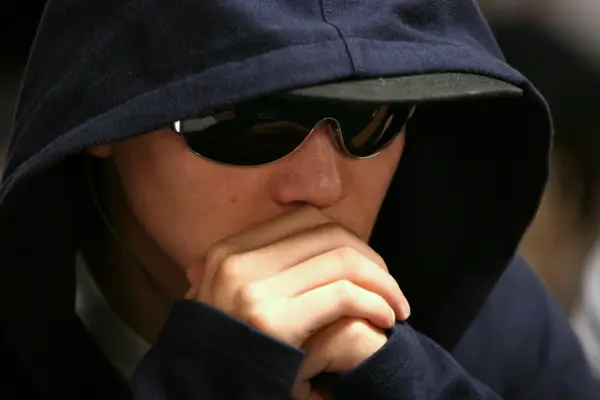
In some cases, you won’t be able to play live poker because of restrictions. In others, you may be able to play but there probably won’t be many poker games to choose from. Additionally, you may face plexiglass at the table and other inconveniences. How can you get live reads with masks added onto the usual scarves, glasses and hoodies? Live poker has changed and we don’t know when it will get back to normal. So online play wins here.
Then, of course, you’ve got an influx of new players. During the early stages of the pandemic, traffic spiked across all major poker sites. There was also a massive increase in Google searches for terms like “how to play poker.” It may not have been the gold rush we saw in the early 2000s. However, there were similarities to the poker boom in that more fresh blood went online in search of entertainment.
Finally, because traffic is up, operators have rolled out more innovations. In 2020 we saw WPT, WSOP, and EPT poker events move online. These events brought with them prizepools above $100 million. That’s a lot to play for and another reason to switch online. Clearly when it comes to live poker vs online poker in 2021, the latter is the clear winner.

What’s the Difference Between Online and Live Poker?
First of all, let’s highlight what stays the same. The live poker rules for Texas Hold’em are the same online. Moreover, the action proceeds in the same fashion and the button always moves clockwise around the live or virtual table. And you will still be betting chips, whether play money ones or those with real cash value. You’ll also have the option to play cash games and poker tournaments in either setting and, in most cases, there will be full-ring and six-max tables.
When it comes to skills you’d need to play live will be required online. There are some subtle differences. However, in general, concepts such as bluffing, value betting, pot odds, and hand ranges are just as valid in the online arena as they are in a live one. Therefore, while you will have to make certain adjustments when you switch from live to online poker, the main strategies will remain the same.
However, there are nuances in online and live games that, if you don’t adjust to, can cause avoidable mistakes and losses. Below are the major differences between online poker and live poker and how to adjust your game.
- Speed – Online play too fast for some
- Live player levels are generally softer
- Tells, reads and table images change
- Multi-tabling becomes possible online
- Aggression is more rampant online
- Variance increases online
- Multiway pots are regular live vs heads up online
Speed and Difficulty
Land-based casinos have human dealers controlling the action. But even the slickest shuffler ever can’t match the speed of a computer. Also live players take longer to check their cards, count out chips, and generally size up opponents.
Meanwhile, online poker is instantaneous – cards are dealt automatically and chips placed in a click without counting. You’ll have a time limit on your decisions, so the hand plays in a snap. Then the pot is shipped immediately with no mistakes. You have to be more adept at making decisions. Because you literally can play more hands in a single day online than you could in an entire month of live play. You may average around 100 poker hands per hour compared to 30 hands per hour at live tables.
Aside from being much faster, online games are, on average, more difficult than their live counterparts at the same stakes. Live casino poker is a social game, whereas online players tend to be more structured. Online grinders are used to fast-play, quick thinking, and playing more hands. The more hands you play in poker, the more you improve. So you can argue that these online grinders have racked up a whole lot more “experience”.
ONLINE ADJUSTMENT
When you make the switch, you have to be prepared to make quicker decisions. You can also make use of tracking software like PokerTracker to study opponents and assess hand ranges, bet sizing and previous action. Some poker rooms like PokerStars will also allow certain software and HUDs to aid your gameplay.
LIVE ADJUSTMENT
Have the discipline to fold more hands as you get used to the slower pace of play. Don’t get too loose out of position. Instead use the time to study your opponents for patterns you can use to your advantage down the line.
Multi-tabling
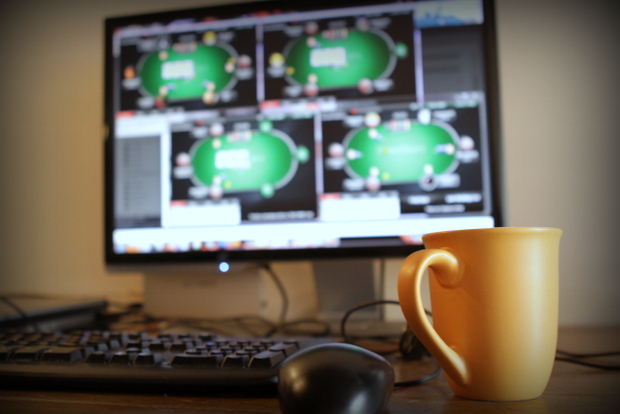
There have been times in the past when pros have played two tables at a live event, like DNegs and The Magician. Sacrificing time at one table to play at the other, so, while they were multi-tabling, it wasn’t efficient or effective. When playing online, you can compete at two or more tables at once. The software is designed so that you can tile or stack tables.
Multi-tabling increases the hands per hour played. Also, the stronger players who are multitabling throw off the strong/weak player balance. You’ll have difficulty finding mid-high stakes tables with more than one or two weak players on them.

ONLINE ADJUSTMENT
It takes time to be good at multi-tabling because you have to split your attention between multiple games. But ultimately, this will make you a stronger player. We suggest you gradually increase the number of active games you play to avoid mistakes.
Physical Tells vs Timing Tells
Poker in the old days was all about spotting physical tells and “looking into a player’s soul.” When you play live games, there’s still some of that. However, moving to online poker, most modern players think about hand ranges, maths, and game theory before they start looking for tells. Because when you play online, there are no physical tells.
Although 888poker does have webcam tables that allow you to see your opponents, that’s a novelty. And GGPoker did experiment with SnapCam during this summer’s WSOP online. But 99% of the time you can’t catch physical reads off the people you’re playing against.
However, what you can do is pay more attention to the action. How much did someone bet and from what positions? Can you notice any patterns? We won’t use this live vs online poker guide to talk about the skill debate between both mediums. But let’s say online poker forces you to become a more technically efficient player.
LIVE FIX
Study players for patterns and see if you can pick up some physical reads, like breathing, eye movements, pulsing necks, hand movements. You can build your own profile on that player the longer you play with them.
ONLINE FIX
Everything has to be taken in context, but the biggest online tell is probably timing. A quick check-raise is often a sign of strength. Tanking before a call is likely weak. Then there’s the “long wait and raise huge” move which almost always indicates the nuts.
The Aggression Factor
In online No-Limit Hold’em, loose-aggressive (LAG) is no longer a dirty word – these players can actually make you money. They’re usually playing lots of hands. But here’s how else you spot a loose-aggressive player online (based on stats from a standard six-max game):
- VPIP: 25+.
- PFR: 25+.
- 3-bet %: +7%.
- Aggression frequency: 60+
- Aggression factor: 3+.
- Raise/check-raise flop: High
Adjusting to that aggression is usually the most difficult factor for a live player making the switch. The good news is that not everyone adjusts well. So there’s a lot of dead money from players that either don’t adjust or incorrectly adjust. A basic tight-aggressive style is easily read, and when you’re playing more hands online, that can be a recipe for disaster.
ONLINE ADJUSTMENT
Adopt a tight-aggressive style to exploit weaker players – play strong hands and raise when you do. However, with aggressive players, you should be balancing limping and trapping them as well. Don’t slow-play on draw-heavy boards. And look for spots where their range is likely to be weak and you have a strong hand. Don’t bluff a calling station (they hardly fold).
LIVE ADJUSTMENT
Live players like flatting with marginal hands and seeing flops. You’re not going to get much value from shoving AK when you’re deep. Make more loose-passive plays part of your strategy at the live tables. See more flops, especially when you end up in multiway pots.
Multiway pots vs heads up
Since live games encourage looser play and more calling, you’ll likely experience more multiway pots, three-handed or more. Players are willing to limp with wider range and hit some disguised hand that can bust a premium holding. Meanwhile, many online pots are heads-up to the flop. With more players comes more probability that someone has a real hand.
Online players are better at making big postflop calls with weak or medium hands than live players. So more big river bluffs tend to get through live than online. Maybe the embarrassment of wrong calls is easier to endure online than face-to-face.
ONLINE ADJUSTMENT
Don’t try to limp in and narrow your opening range. Limping can happen at micro stakes games, but you don’t see it at $50NL and above. Pots tend to be two and three-handed affairs most of the time.
LIVE ADJUSTMENT
As the preflop raiser you should c-bet less. You’ll also need, on average, a better hand to win at showdown.
More Variance Online
Poker variance is a thing – and is how we describe “swings”, higher variance equals higher gains and vice versa. If a decent $1/$2 limit player played a lot of hands online for a month, it’s hard for them to have a losing month because of the sheer volume of hands across multiple tables. Alternatively, a decent $5/$10 play can easily have a losing month
On the flip side, if a great player played $5/$10 live for a month it would be completely plausible for them to have a losing month. Because it’s harder to log the same amount of hands so variance has a bigger effect on your results in the long run. Instead live players experience short-term variance more often which makes them more results oriented.
For example, they make the GTO (game theory optimal) play with a hand once in a while, get unlucky and stop playing the hand that way altogether. Online players have more chances to see the same hands and can see what the right decisions are long-term.
ONLINE SOLUTION
In the short term, you may experience higher variance and bigger swings than live. With a possibility of earning a higher $/hour. So maintain a bigger bankroll when playing online (cash game and tournament buy-ins).
LIVE SOLUTION
It’s harder to log in as many hands when playing live so variance will seem more impactful long-term. Don’t allow this to make you results oriented and stick to the correct play. You can actually have a bigger win rate in love games vs the higher dollar per hour online.
Formats and Variants
In a live setting, you’ll have an option of tournaments or cash games – most dominantly Hold’em and Omaha, six and nine-handed. But there are usually more ways to play online, where there are hundreds of games running at a time. Including Stud and Mixed Games, three-max, and heads-up games, and innovative variants like fast-fold, KO MTTs, and sit & go tournaments.
How to Switch from Live Poker to Online Poker
So if you’re getting into online poker after mostly playing live, you’ll find some differences and adjustments you need to make.
1) Prep for Tougher, Faster Games
It’s an ultra-aggressive, action-packed environment and if you’re coming from a live poker background. So, you may find these games difficult to adjust to. Online players tend to take advantage of HUDs and tracking software to help them review hands and analyze opponents.
This gives you a huge leg up at the table so we suggest doing the same. Plus, being more familiar with poker theory helps you play a solid, structured game that’s +EV long-term. You can also play multiple tables simultaneously online, but you should gradually build up to this as you adapt to online play.
- 5-Min: How to Beat Zoom Poker on PokerStars
- How to Beat Microstakes Poker Online
- Poker Multitabling tips
2) Start Tracking and Fishing
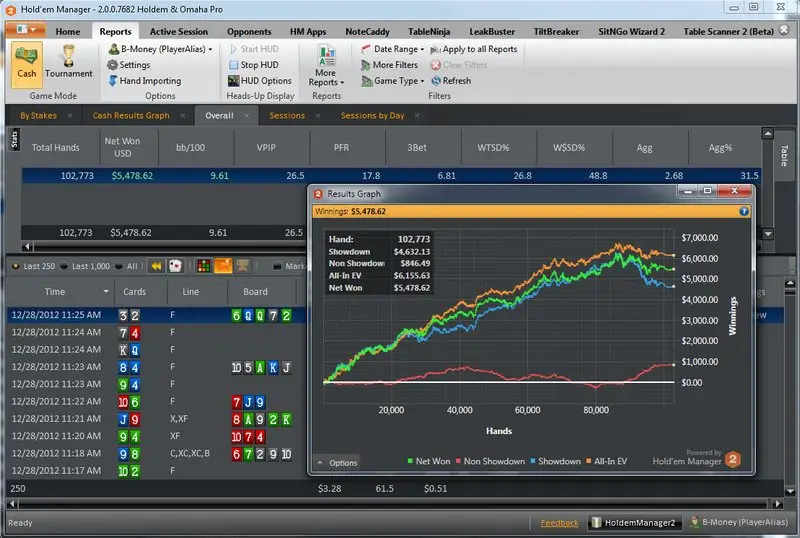
The final thing you can do to make transitioning from live to online poker easier is tracking your own results and stats, using programs like PokerTracker. You can review your wins, losses, and betting tendencies, for example. Study these and look for leaks to adjust, and you’ll become a much better player.
Besides tracking your own results, there are ways to track opponents’ tendencies and many poker sites offer their own software. Otherwise, you may use external tools or take your own notes and player tells separately.
When you’ve built up enough profiles, you can “fish” – seek out opponents you class as weak. Is it ethical? That’s up for debate. Poker is a game of exploitation, so from a financial POV, it makes sense to target the weak. However, remember that other players may be doing the same to you.
3) Get More Aggressive
Picking up on the idea that online games aren’t limp fests, the best strategy you can employ here is aggression. As they say, “if it’s good enough to call, it’s good enough to raise with.” Accomplished online poker players will be doing this. You should adopt this strategy against weaker players, some of which may have moved from live poker to online poker.
However, against aggressive players, that’s when you have to adapt. Maybe you trap them with a strong hand when they have a weaker range. Maybe you fight fire with fire. But don’t bluff too often. When you’re formulating an online strategy instead of live, make tight- aggressive play your foundation.
4) Have Wider Hand Ranges
You may find yourself playing short-handed more often online. The hands you would play if everyone folds to you include suited connectors from 6-7 and up, pocket pairs, broadways, and premiums. So you can get loose-aggressive here, just don’t limp as this is rarely ever correct.
Raise to give yourself more ways to win and seize control of the hand. You can win the pot immediately, win on the flop with a c-bet, or win at showdown with the best hand. On the other hand, when you limp, you can only win the hand with the best hand at showdown. You’ll be left guessing, with no initiative, and the aggressive players will have their way with you. Limping is not a winning strategy in online 6-max.
- How to Put Your Opponent on a Range in Poker
- Why (and How) Thinking in Ranges Improves Your Poker Game
How to Move From Online Poker to Live Poker
So you’ve mastered online poker, you crush your 5bb/100 game. Maybe it’s time to try your hand at those juicy live games? But if you can’t adjust to the subtle intricacies of live poker you won’t be as big a winner as you can be.
1) Don’t Get Loose During Slower Live Games
It will hit you right away that live games are much slower. Not only are you forced to play just one table but the game itself takes longer to deal, bet, count chips and play. You’ll be lucky to play 30 live poker hands per hour versus the 100+ you get in online.
Fewer hands mean a lot more folding, and more need for discipline when playing hands. Don’t allow boredom to turn you loosey goosey or shut your brain off. Instead, use your free time to observe your opponents and break down their styles. Then, when you end up in a hand with them a few hours later, you’re going to have a huge advantage.
2) Get Exploitative at Softer Live Tables
Making up somewhat for how slow live poker is is how much softer your average table is. When you play online you may consider it a good table if there’s one full-stacked fish. When you play live $5/$10 and below, your average table may consist of two real fish, two gamblers, then 5-6 tight “regulars” and good players.
The whole table is softer – The fish are fishier and the regs are more predictable. There are even players that are so tight you know they’re only raising with KK, AA or the nuts. These players get eaten alive online, but in live games, they’re profitable.
It’s easy to wait for the nuts and relentlessly value-bet against the fish. However, it’s just as easy to raise the tight regs and push them around. When they push back, fold.
3) Adapt to Limping and More Loose-Passive Play
Online, it may be profitable to four-bet shove/call shoves with AK from any position pre-flop. If you do it live, you’ll find AA-KK more often and you’ll get crushed. In live games, light three-betting is almost non-existent. So when most players re-raise, it’s almost always for value.
Watch your opponents – they may go a whole session without a single three-bet. Some players even just flat-call QQ and AK, opting to play poker on the flop. Avoid shoving hands like AK preflop when you’re 100bb deep in a live game. Because you’re going to have a tough time getting value.
Moving past just preflop play, the whole game is much more passive. Rather than raising with draws, players will just call and hope to hit. They’ll also slow play monsters rather than build a big pot and they’ll miss obvious river value-bets.

Online you can tell who the fish and live players are by who limps, but not live – there everybody limps a lot. If you tried to isolate every single time someone limped, you’d just find yourself taking 4- and 5-way flops regularly. Live players like to see the flop. So, rather than iso-raising with
10
 10
8
10
8
 8
off the button, you may just be better off seeing a flop 6-way. So, in short, limp more in multiway pots. As the preflop raiser you should c-bet less. You’ll also need, on average, a better hand to win at showdown.
8
off the button, you may just be better off seeing a flop 6-way. So, in short, limp more in multiway pots. As the preflop raiser you should c-bet less. You’ll also need, on average, a better hand to win at showdown.
Live or Online Poker?
Ok, there is no magic formula for online poker. You just have to realize that the players are a little bit tougher and are more aggressive. They will value-bet thinner and they will bluff more but the game remains the same. If you play solid postflop poker, you should beat lower stakes games.
Whether it’s live or online, your goal remains the same: either make your opponent fold before showdown or have the best hand at showdown. Watch your opponents, study their playing habits and play your poker game. The rest is just experience.
So, there you have it, that’s the online poker vs live poker debate and how to make the switch. You won’t know if you’ll like playing online vs live until you try – and now’s the best time for online play. Just be sure to make use of the tools and strategy tips at your disposal.
Related strategy articles:
- How to Switch from Cash Games to Poker Tournaments
- How to Crush Live $1/$2 NLH
- Why You Want to Play with Bad Players
- How to Balance Your Bluffs
- Adjusting to deep-stack play
Live Poker vs Online FAQs
Is live poker easier than online?
In some ways, yes. Online poker has its fair share of weak spots to exploit. However, low and mid-stakes live games are, on average, softer than their online equivalents.
Live or online poker?
Both forms of poker have their nuances, pros and cons, as we highlight in this article. Know the differences and how to adjust between the two. In the end, the goal remains the same: win pots by making better decisions than your opponents. The rest is just experience, so take the time to have a go at both and grow your skill level from there.
How many hands per hour in live poker?
In live poker you may average around 30 hands per hour, while on online poker tables you can average 100 hands per hour, especially if you’re multi-tabling. Learn more online live poker differences on this page.
How is online poker different from live?
For starters, online play is way faster, since the dealing and chip counting is automated. So you play more hands per hour online (100 vs the 30 per hour live). And this is excluding multi-tabling, which you can do online but is -EV to do live.
Since online players are getting in more hands and sessions, they experience huge variance. But also, online players are used to making ultra-fast decisions, and are technically more efficient. Skill levels and player styles tend to differ, but you may face more aggressive styles online.
And you won’t see as many multi-way pots in large rings games as you would live. The physical tells and reads disappear when you’re online though. Instead you need to rely on timing tells and bet size patterns.
Is online poker harder than live poker?
You can argue than online poker is tougher to beat than live poker. This is because online players are a lot more technical, many are used to multi-tabling and fast decisions. They play way more hands per hour and have a lot more “experience” of scenarios and hands.
Plus, online players have a lot of tools and resources they can use for online play. So the competition is certainly tougher. But playing online will certainly improve your poker live game – if you make it there, you make it anywhere.
Recommended
-
- $55 Stake Cash + 260K Gold Coins
18+ | Play Responsibly | T&C Apply
-
- 100% up to $2000
18+ | Play Responsibly | T&C Apply
-
- 150% up to 2000$
+18 | T & C apply | Play responsible
-
- 100% up to $1000
18+ | Play Responsibly | T&C Apply
-
- 100% up to $1,000



User Comments
I live in Florida.
I play (Texas Hold’em) regularly online and have realized long-ago that each site is very different in many ways including a winning hand where in real live poker, that winning hand is actually not a winning hand.
I live close to the Hardrock Casino, but even in the non-smoking section, the cigarette and cigar is a little too much for me to do live play. I have become too sensitive to the smell.
However, I am ready to play for “real money” and I know that there are nuances with that in fees, length of time in receiving your winnings, taxes, etcetera based on the sites and their technical online set-up.
Where can I start, and which site is the best out of the lot to start with online?
Looking forward to your reply.
Thanks
Wrong. Dont be weak. Your cards mean less when playing live. Avoid limping. Raise them out.
in real life, you can expect way way less miracle cards…………..people that play weak hands will be eaten up………you will begin to realize the cards are not real online
in real life you can believe you hand will hold up………………unlike online………..where good hands are suck out hands…………..
online poker is not the same game as real poker
Intresting –this explains why I hear alot about 3-betting but I have very rarely seen it live
Great Article, I mix my game play between live and on-line, one thing I have been unable to find is the delineation between 6max and full table, I would love to see an article on this, pot sizes, hand strength, whether 6max on-line is more profitable, do you see more flops. I know that things like pocket pairs and suited connectors have more value then FT
Mike
Bennie, this article was actually written by my friend and co-worker here Daniel Skolovy, but it is a good article!
As for heads up, if you’re playing correctly, especially at six-max, 90% of all the pots you play will be heads up, since you will almost never play without first coming in for a raise.
Good artcile again Sean but I don’t think 90 per cent of pots online are heads up to the flop at all! I don’t play any higher than 1/2 dollar when I play cash games, but certainly I don’t find that at all. I presume, however, that when you move up the stakes, this is the case.