Poker Bankroll Management Strategy


 PokerListings
-
 CoinPoker 150% up to $2000
+18 | T & C apply | Play responsible
-
 Stake.US Poker $55 Stake Cash + 260,000 GC
18+ | Play Responsibly | T&C Apply
-
 Americas Cardroom 100% up to $2000
18+ | Play Responsibly | T&C Apply
-
 Betonline Poker 100% up to $1000
18+ | Play Responsibly | T&C Apply
-
 SportsBetting Poker 100% up to $1000

One of the most important things you can do when you start to play poker is set aside a poker-specific bankroll. That means a lump sum of money used exclusively for playing poker – this is your “poker money”.
If you’re playing poker for fun or just dabbling, this shouldn’t be a big issue for you. But if you’re starting to take poker more seriously, you need to think about bankroll management – and a good strategy for it. This may depend on whether you’re playing online poker or live poker, what level of player you are, whether you’re playing cash games or tournaments. Read on to find out more poker bankroll tips and help on starting a bankroll for poker from scratch.
Check out the video below for more:
Poker Money Mindset: Don’t Play on Scared Money
Most people are attached to money, which, unfortunately, makes it tough to succeed at No-Limit Hold’em. The poker bankroll must be separate from your regular money, physically and mentally. You need to expect to lose at poker from time to time and those losses should never affect the financial situation of your regular life.
So when you go on a bad run in poker and lose hundreds (or thousands) of dollars, you can’t be having thoughts of what could have been. Money won or lost in poker is simply poker money. Separate yourself from the poker money and think of it only as a way to play the game. Not money that could have been spent elsewhere.
If you’re scared to lose your bankroll in poker, or can’t afford to, it’s impossible to play a strong no-limit game. You have to be willing to put every chip you have in front of you across the line at any time. Because, if an opponent knows you’re not willing to risk your chips, they’ll walk all over you. That aside, even you will not be able to pull the trigger on bluffs or difficult calls when you have the fear.
How Big a Bankroll Do You Need for Poker?
- For cash games, consider 50-100 buy-ins. So if you’re playing $50 NL, you need a $2,500-$5,000 poker bankroll. Remember to raise your bankroll for online where players are better, and rake can be higher.
- In tournaments / MTTs, income is less stable, so you need to be ready to play through dry spells. You should have 100-200 buy-ins.
Poker Bankroll Calculation
You need to be realistic about the money you can make, your actual results, and what you need to survive on a monthly basis. You need to assess:
- Your monthly nut.
- Your potential earnings.
- The amount of money you have in reserve.
Your Monthly Nut
Your monthly expenditure is known as your “nut”. It includes living expenses, personal expenses, and poker expenses. This sum total is the amount you need to make from poker each month just to break even. In other words, it’s the bare minimum. So calculate your nut and then add 15 to 20% to see how much you need to make per month. This is your bankroll in poker – Don’t touch it for anything but poker. On top of that, you need at least three months saved up for emergencies.
Your BB/100
To determine your profit per hour, calculate your big blinds per 100 hands (bb/100) using the following equations:
(winnings/big blind amount) / (number of hands/10)
In a live setting, you’ll probably see around 25-30 hands per hour. Online, a full-ring game will deal approximately 70 hands per hour, while six-max games race through around 100. In fast-fold cash games, you can play even 250 hands per hour. If you play multiple tables you can go up to 1,000 hands per hour.
| Win rate per 100 hands | When to move up stakes | When to lower stakes |
|---|---|---|
| Big winner: 6BB/100+ | 30 buy-ins | 20 buy-ins |
| Standard: 3BB/100 | 40 buy-ins | 30 buy-ins |
| Small winner: 1BB/100 | 80 buy-ins | 60 buy-ins |
Minimum Bankroll for Live Poker vs Online
If you’re only playing live you can survive with an effective bankroll of 100 buy-ins. Once you start playing online you’re going to want a slightly larger bankroll for playing the same limit. Because while playing online, you’ll see more hands, and hence experience bigger swings and more variance.
Your single-table online roll should be in the neighborhood of 120 buy-ins at least. If you’re multi-tabling online you’re putting more money in play, which helps to decrease variance, but you’re also increasing risk. The risk of increased variance requires an increased roll, so think of 150 buy-ins maybe if playing more than one table online.
Figures for Live and Online Poker Bankroll Management
Poker Tournament Bankroll (Non Turbo): 150-300 buy-ins
This is tournament bankroll management for online events – for live you can do with less.
| Buy-in | Bankroll for MTT |
|---|---|
| $5 | $800-1,600 |
| $10 | $1,600-3,200 |
| $20 | $3,000-$6,000 |
| $50 | $8,000-16,000 |
Live Tournaments: 100-120 buy-ins
| Buy-in | Bankroll for Live Tournaments |
|---|---|
| $25 | $2500+ |
| $50 | $5000+ |
| $100 | $10,000+ |
Online Heads-Up Sit&Go (Non Turbo): 20-40 buy-ins
| Buy-in | Bankroll for Sit&Go |
|---|---|
| $1 | $25-50 |
| $2 | $45-100 |
| $5 | $120-240 |
| $10 | $200-400 |
| $15 | $300-600 |
No-Limit Online Cash Games: 100+ buy-ins
| Blinds | Bankroll for Cash games |
|---|---|
| $0.01/$0.02 | $200+ |
| $0.02/$0.04 | $400+ |
| $0.05/$0.10 | $1,000+ |
| $0.25/$0.50 | $5,000+ |
Note that live cash games have less variance and thus do not require as many buy-ins as online cash games. But be prepared to move down in stakes if a downswing occurs.
No-Limit Live Cash Games: 20-40 buy-ins
| Blinds | Bankroll for Live Cash |
|---|---|
| $1/$2 | $40-80+ |
| $2/$4 | $80-160+ |
| $5/$10 | $100-$200+ |
Limit Cash Games
| Limits | Bankroll for Limit Games |
|---|---|
| $0.01/$0.02 | $12-16+ |
| $0.02/$0.04 | $30-40+ |
| $0.05/$0.10 | $60-80+ |
| $0.25/$0.50 | $150-200+ |
| $0.50/$1.00 | $300-400+ |
Short Deck (6+ Hold’em)
Short Deck, also known as 6+ Hold’em, is a variant where cards 2 through 5 are removed from the deck, resulting in a shorter deck of 36 cards. This changes hand rankings and increases the game’s aggressiveness.
| Limits | Bankroll for 6+ Poker |
|---|---|
$0.05/$0.10 | $1,200 |
$0.10/$0.25 | $3,000 |
$0.25/$0.50 | $6,000 |
$0.50/$1.00 | $12,000 |
$1.00/$2.00 | $24,000 |
Pot-Limit Omaha 5 (PLO5)
PLO5 is a variation of Omaha with five hole cards instead of the traditional four.
| Limit | Bankroll for PLO5 |
|---|---|
| $0.5/$0.10 | $2,000 |
| $0.10/$0.25 | $5,000 |
| $0.25/$0.50 | $10,000 |
| $0.50/$1.00 | $20,000 |
| $1.00/$2.00 | $40,000 |
Fast Poker (Fast-Fold Games)
Fast-Fold games allow players to quickly switch between tables, significantly increasing the number of hands played per hour.
| Limit | Bankroll for Fast-Fold |
|---|---|
| $0.5/$0.10 | $1,000 |
| $0.10/$0.25 | $2,500 |
| $0.25/$0.50 | $5,000 |
| $0.50/$1.00 | $10,000 |
| $1.00/$2.00 | $20,000 |
All-in or Fold (AoF)
In AoF formats, players either go all-in or fold pre-flop, creating a high-variance, fast-paced environment that requires specific bankroll considerations.
| Limit | Bankroll for AoF |
|---|---|
| $0.5/$0.10 | $1,600 |
| $0.10/$0.25 | $4,000 |
| $0.25/$0.50 | $8,000 |
| $0.50/$1.00 | $16,000 |
| $1.00/$2.00 | $32,000 |
Hyper-Turbo Tournaments
Hyper-Turbo tournaments feature extremely fast blind structures and short durations, resulting in very high variance and rapid bankroll fluctuations.
| Limit | Bankroll for Hyper-Turbo |
|---|---|
| Any Buy-In | 300-600 Buy-Ins |
Spin & Go
These are fast-paced, single-table tournaments with varying prize pools.
| Limit | Bankroll for Spin&Go |
|---|---|
| Any Buy-In | 50-100 Buy-Ins |

How to Manage a Poker Bankroll: 5 Rules
Lots of poker players – even winning players – are prone to burning through their online bankrolls quickly. You can ruin weeks or months of successful grinding in one or two bad sessions. Unfortunately, online poker bankroll management requires significantly more discipline and control than your bankroll for live poker. Because players are stronger, and the play is quicker.
1. Your Poker Bankroll Must Sustain Losing Streaks
Poker players need a bankroll to avoid going completely bust. Regardless of how well you play, you’re going to have periods of time where you just can’t win. Even the world’s best players have endured months of straight losses. That’s why you need a bankroll large enough to sustain these losses and allow you to continue playing. So you can earn the money back on your next upswing.
Luckily, if you’re a winning player, you can expect a positive return on your investment. But you need to have enough money in your roll to make the swings and variance irrelevant.
If you start to lose significantly the best thing you can do is to drop down in levels. That way, even though your BR is lower, the ratio of your roll to buy-ins for the game you’re playing stays healthy. If you still can’t win after dropping down in limits, it might be time to take a break. Clear your head and come back to the game fresh.
2. Max 5% of Your Bankroll in Play at a Time
The rule of thumb for a cash-game bankroll is to never have more than 5% of your entire roll in play at one time. This means a 20 buy-in minimum for single-table cash games, and more for multi-tabling.
If you really want to be robust, drop that number as low as 1% or 2%. Some of the most profitable and serious online grinders play with rolls 10x that.
In a tournament setting, you typically want over 100 buy-ins to the tournaments you want to play. So if you’re playing $5+50¢ tournaments, you want $550 as your roll. This almost ensures that (as long as you don’t suck) you’ll never go bust.
3. Building Your Poker Bankroll is Slow, Not a Race
Yes, the stories you’ve heard from your poker buddies are true. There are some people who deposited $100 online and within a couple of years had $1m+ bankrolls and were playing some of the highest-stakes available. Back in the early days of the online poker boom (2004-2006), this might have been a semi-common story. But nowadays, this isn’t the norm and isn’t likely to happen to you.
Most players never even advance past micro-stakes. But there are ways you can build a nice, profitable poker bankroll over time with solid practice and good money management skills.
4. Don’t Obsess Over Your Poker Balance
If you’re following the above tips and likely recording your poker bankroll spreadsheet, don’t monitor it constantly. When you’re on an upswing, every time you check your balance you feel good. But it only takes one beat to make that number go down. And if you’re still checking your balance, seeing that smaller number will make you feel bad.This can lead to you “chasing your losses.” You’re going to start forcing your play to get back to where you think you should be. If you’re watching your balance you’ll fall into the depression of “a week’s work lost” or “It will take me a week to get back what I just lost in an hour.” The only way to get it back fast is to jump limits and take a shot at a big score. This breaks rule #1 and is the first step to going broke.
5. Treat Your Poker Game Seriously
When you’re playing online poker for real money, every session, pot, and decision matters. Even the smallest of mistakes costs you money. The more money you lose from mistakes, the harder it becomes to generate profit and keep from going broke.
Limit distractions: Honestly assess your ability to multi-task and set yourself up to play in an optimal poker environment. Also pay attention to anything that’s on your mind that’s affecting your play, or enhanced states while playing like drugs and booze.
Don’t play bored or tired: If you play for fun, that’s fine, but if your goal is making money, don’t play if you legitimately don’t feel like it. Because this causes you to make dumb moves just for action and excitement.
Fix Your Tilt: A bad beat can drive even the most measured player into a frenzy of ridiculous bets, raises, and calls. It’s time to get up for a breather or do something else.
Best Poker Bankroll Management Apps
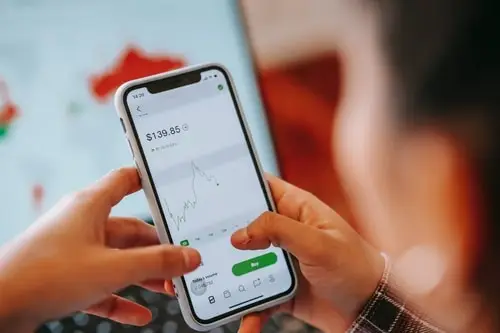
Unlike with online games, your live poker results and bankroll management is calculated automatically. Luckily, there are apps you can use to facilitate that.
Poker Bankroll Tracker
Poker Bankroll Tracker is the app we would go for at PokerListings to stay on top of poker money. You can track your wins and losses, and time spent playing, among other poker stats, and even generate graphs.
Poker Income Tracker
This app is very similar to Poker Bankroll Tracker, except it lets you add more info. Like stakes, locations, and times of your play, and you can generate more visuals too. It’s not as simple but can also be a good poker bankroll building guide, and allow you to see which games are more profitable for you.
Live Poker Manager
This is also a good app to track your cash game and tournament buy-ins, locations, and overall profit. However, it will take you more time to enter all the info, so maybe less user-friendly.
Balancing Modern Approaches
Poker strategy has evolved significantly with solvers and GTO concepts influencing how people approach the game. But even in the era of advanced theories and data-driven play, the old truth remains: no matter how solid your strategy, you can’t outplay a busted bankroll. A wise player merges these new-school tactics with tried-and-true discipline, ensuring those tough stretches never wipe them out completely.
While GTO ranges may help you survive sharp opponents, you still need enough cushion to handle the wild fluctuations that arise. If you’re multi-tabling online or moving up stakes, allow yourself extra buy-ins. A purely theoretical edge doesn’t pay bills during prolonged downswings—ample funds in reserve do.
Mapping Your Comfort Zone
Your bankroll has to reflect your personal tolerance for both monetary risk and psychological stress. If you hate the idea of losing even a fraction of your roll, maintain a bigger buffer. When GTO lines demand three-barrel bluffs in a high-leverage spot, you won’t hesitate if you know you’re bankrolled for the worst-case scenario.
- Online games might push you to adopt more rigid, math-based lines. Live tables might reward a looser, more exploitative approach. In both settings, give yourself breathing room.
- Online volume ramps up variance—more hands per hour means more swings. Incorporate that into your calculations, even if your skill edge is considerable.
The GTO Mindset
GTO insights can actually improve your bankroll management, not just your in-hand decisions. For instance, if your calculations show you only have a 1 BB/100 edge at a certain stake, consider moving down until you achieve a more sustainable win rate. Taking small hits with a narrow edge can steadily drain your bankroll when variance runs against you.
If you’re comfortable with a game’s skill level but feel uncertain about your mental game under pressure, drop stakes temporarily. It’s better to master your discipline and refine GTO spots at lower risk than to tilt away a bigger roll among tougher competition.
Avoid the Dangers of Playing Too High
Some players become aggressive after a big score. Either they play too high, play in games where they’re not a favorite, play negative EV games like blackjack and craps, or just spend too lavishly. Soon they’re out of a large amount and are left wondering “wtf did I do with all my money?!” We recommend finding the right medium (games and stakes) with a minimal amount of risk to maximize one’s profits with the new bankroll.
More Poker Bankroll Tips:
Poker Tools for Beginners
Poker Bankroll
What is a poker bankroll?
A poker bankroll is the money you have available to spend on poker. It’s important to understand that your poker bankroll isn’t all the money you have in the world. Instead, it should be a small percentage of your net worth. To put it another way, your bankroll should be an amount of money you’re comfortable losing.
How big should your poker bankroll be?
Your bankroll should be at least 30X the size of the stakes you’re playing for. So, if you’re playing $0.50/$1 cash games where the maximum buy-in for the table is $100, you should have 30X that amount i.e. $3,000.
In most situations, you should have closer to 50X the buy-ins for a cash game and as much as 100X your average tournament buy-in. The reason you need more for tournaments is because the variance is greater. Finally, if you’re playing the toughest cash games online or live, you should consider having over 100X the buy-in.
What is a good bankroll to start with in poker?
A good bankroll to start with in poker is one you can afford. Basically it all depends on your personal and financial circumstances. For example, if you can spare $500 and losing that amount won’t impact your daily life, start with $500. However, as well as being able to afford that amount, you have to be OK with losing it. If your tolerance for losing money is low, you should choose an amount that’s well below your financial limit.
How do you start a bankroll with $20?
If your poker bankroll is $20 or less, we’d suggest starting with freerolls. These tournaments don’t cost anything to enter and they offer cash prizes. As well as using freerolls to boost your bankroll, try some $0.10 SNGs and $0.01/$0.02 Hold’em cash games.
How many buy-ins should your bankroll be?
Your poker bankroll should have at least 30-50 buy-ins for the stakes you’re playing if it’s live, but, ideally, you’ll have more. To play online, you need at least 100-120 buy-ins.
How many buy-ins do you need to enter 6-max cash games?
Your bankroll for 6-max cash games should be slightly larger than if you’re playing full-ring games. This is to account for the fact you’ll play more hands per hour and, in general, come up against more aggressive players in six-max games. As a general rule, your bankroll should be 10% bigger for six-max games than full-ring games.
Is PLO bankroll management different than Hold’em?
Yes, because PLO is far more volatile than Hold’em. You should have a larger bankroll and play more conservatively if PLO is your variant of choice. A lot of people like to double their bankroll if they’re playing PLO rather than Hold’em. So, instead of 30+ buy-ins per level, you should have 60+.
How do you manage your bankroll in poker?
The best way to manage your bankroll is by following the tips and rules in this guide. We also recommend using tracking apps and software. Programs such as PokerTracker and Hold’em manager will keep tabs on your wins, losses, profit, and overall bankroll. As well as phone apps like Poker Bankroll Tracker.
What is a good poker bankroll tracker?
Alongside PokerTracker and Hold’em Manager, you can use bankroll apps such as Poker Income Tracker, Live Poker Tracker, and ITM Poker Bankroll Manager.
How does GTO poker affect bankroll needs?
GTO play doesn’t eliminate variance. You’ll still face ups and downs. A solid GTO strategy might reduce losses over time, but you’ll want extra buy-ins to ride out cold streaks.
What if I only have a tiny edge at a higher stake?
You risk gradually losing your roll if luck runs cold. Often, it’s better to drop down to a limit where your win rate is bigger, letting you grow your funds more reliably.
Is multi-tabling dangerous for my bankroll?
It can be if you’re unprepared. Though multi-tabling can smooth out the variance by spreading risk across tables, it also increases your total money in play, demanding a larger bankroll.
How do I deal with tilt after a big loss?
Take a break, review your hands away from the table, and return only when you feel calm and focused. If you’re still rattled, consider stepping down in stakes to rebuild confidence without risking more capital.
PokerListings